

Day 3 of the NFL draft is a critical part of roster-building for NFL teams.
It is a perfect opportunity to fill out the back end of the roster with players on cheap deals who can contribute on special teams and provide depth in areas of need. Every once in a while, you could also hit the lottery and find a surprising star.
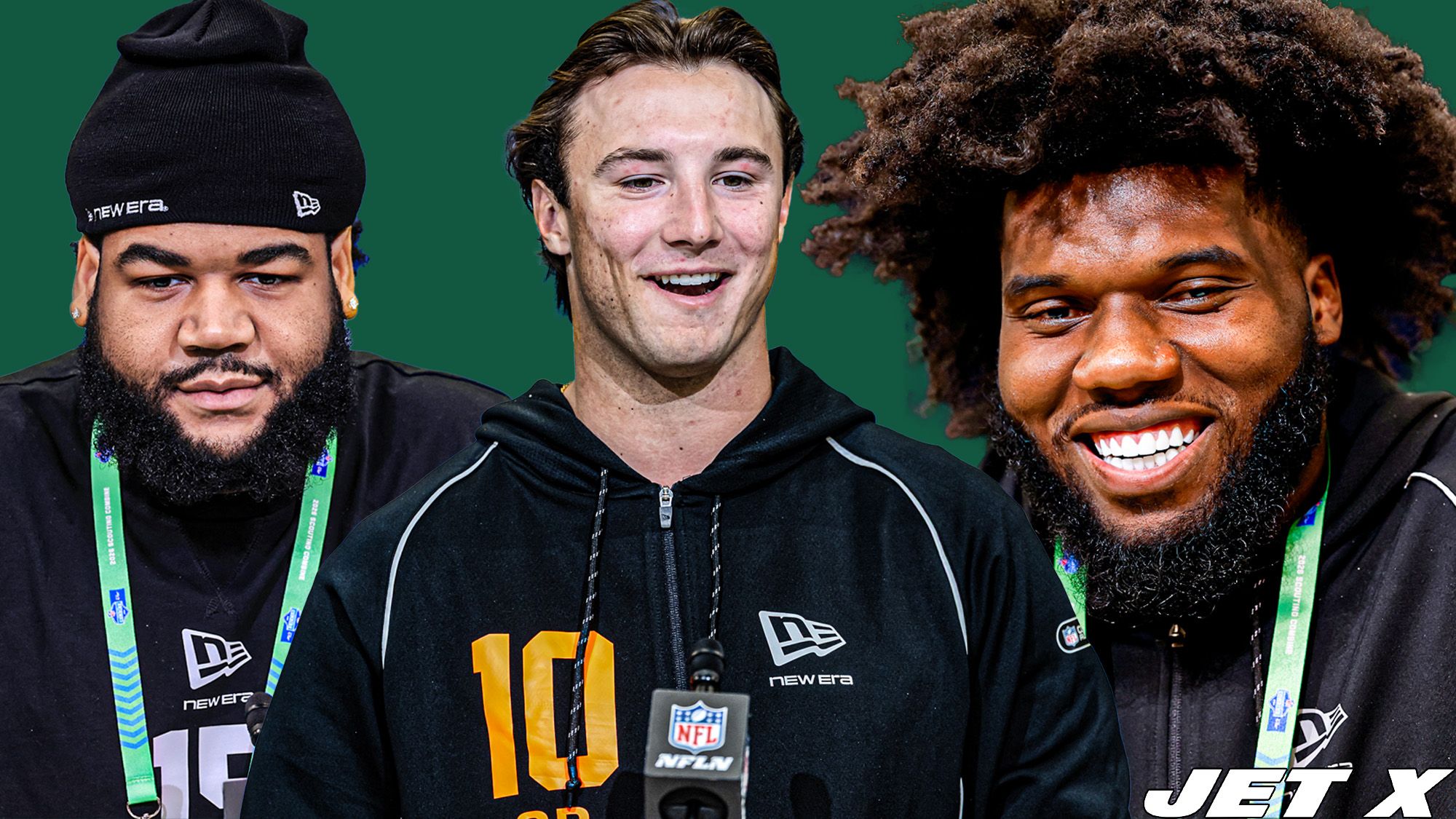
The New York Jets made four selections on Day 3 of the 2026 NFL draft: defensive lineman Darrell Jackson Jr., quarterback Cade Klubnik, offensive lineman Anez Cooper, and safety VJ Payne.
Let’s grade each selection from second-year general manager Darren Mougey.
Round 4, Pick 103: Darrell Jackson Jr., DT, Florida State: A-
The Jets took a very sound approach to this selection.
With New York expected to transition to more of a 3-4 base defense (although Aaron Glenn noted that the team plans to be “multiple”), it is crucial to have multiple nose tackles on the roster. Jackson can provide depth behind the recently acquired T’Vondre Sweat.
In 50 career collegiate games, Darrell Jackson Jr. posted 129 total tackles (12.0 for loss), 7.5 sacks, and a forced fumble. He finished the 2025 season ranked fifth among FBS defensive tackles in run stops (23). Back in 2024, he logged the ninth-best pressure rate among 401 qualified DTs (12.2%) before that number tailed off to just 5.6% last season.
Jackson’s upside is beyond enticing. He didn’t start playing football until his junior year of high school, beginning his transformation from 200 pounds to 315.
As he continues his development, who better to pair him with than Karl Dunbar, one of the most established defensive line coaches in the league? There is still so much more to unlock in the Florida State product.
Even while offering untapped potential, Jackson can contribute immediately to the Jets as a rotational nose tackle.
Round 4, Pick 110: Cade Klubnik, QB, Clemson: C
In the fourth round, the Jets made their widely expected dart-throw at QB, and they traded up to do it. New York sent the 128th and 140th picks (both in the fourth round) for the 110th pick (used on Klubnik) and the 199th pick (sixth round).
After a breakout 2024 season, Cade Klubnik was receiving legitimate No. 1 overall pick consideration. However, after electing to return to Clemson in 2025, his draft stock plummeted. The Tigers posted their worst record since 2010 (7-6), and Klubnik’s production dipped immensely.
However, multiple external factors contributed to his dip in production, including mediocre pass protection, a high rate of drops from his receivers, and pass catchers struggling in contested opportunities.
It is easy to understand why the Jets took a quarterback on Day 3. First, entering the draft, they didn’t have a clear-cut QB2 rostered behind Geno Smith. Second, no one in the room offered any long-term upside.
However, the team’s decision to trade up for Klubnik, which forced them to part with a fourth-round pick, was befuddling. Evidenced by picks such as Malachi Moore in 2025, those fourth-round picks can be used to land immediate contributors. Instead, the Jets used two of them on a developmental quarterback who may not play this year.
My issue isn’t with the prospect; it’s more with the team’s decision to move up for him in the fourth round at that price.
Round 6, Pick 188: Anez Cooper, OL, Miami: B+
The Jets used their lone sixth-round pick to beef up their offensive line depth, which was necessary, especially on the inside, with Xavier Newman and Marquis Hayes slotted as the team’s two primary interior backups.
Cooper has a solid track record in pass protection. This past season, he allowed one sack and 12 total pressures on 550 pass-blocking snaps.
Standing at 6-foot-5 and 334 pounds, Cooper has a massive frame and is known for his “mauler” play style. Per Pro Football Focus, he earned a 78.9 pass blocking grade in 2025, although his 67.4 run blocking grade leaves plenty to be desired.
The two biggest red flags are his lack of versatility and athleticism. While he started 52 games at Miami over four seasons, he played nearly exclusively at right guard, limiting his versatility. He is also not athletic, running a 5.52-second 40-yard dash.
Round 7, Pick 228: VJ Payne, S, Kansas State: A-
This was one of the Jets’ best value selections throughout the draft.
While Payne was mostly viewed as a fourth/fifth round prospect, he slipped all the way to the seventh, and the Jets capitalized.
In 52 college games, Payne tallied 207 total tackles, one sack, four interceptions, 10 pass deflections, a fumble recovery, and four forced fumbles. During the 2025 season, he posted 59 total tackles, one interception, three pass breakups, and two forced fumbles.
Analytically, he logged a 73.3 grade from Pro Football Focus. In coverage, he held opposing quarterbacks to just a 57.4 passer rating. Payne also thrives in the open field, which allows him to play in the box.
While he is not expected to earn a ton of reps early on, joining a crowded safety room with Minkah Fitzpatrick, Dane Belton, Andre Cisco, and Malachi Moore leading the way, Payne poses solid long-term upside for a seventh-round pick.
