

The New York Jets’ defense met its first formidable opponent of the 2026 season in Week 3, and their weaknesses were exposed after a hot start against two struggling offenses.
Jared Goff and the Detroit Lions’ established offensive juggernaut moved the ball at will against New York. They scored touchdowns on four of their eight possessions, avoided any turnovers, and averaged an impressive 47.9 yards per drive.
One of the most glaring problems for New York was the lack of pressure on Goff. They sacked him twice, but according to Pro Football Focus, they pressured him on just 27.8% of his dropbacks, the sixth-lowest rate of Week 3.
The Lions did not even need to get the ball out quickly to keep Goff safe. Goff released the ball in under 2.5 seconds on only 33.3% of his dropbacks, the eighth-lowest rate of the week, showing that the Lions’ offensive line spent most of the game locking up the Jets’ pass rush for extended durations.
When a team’s pass rush goes quiet, the spotlight will be pointed at the team’s top pass rushers. “Did he even play?”, fans ask.
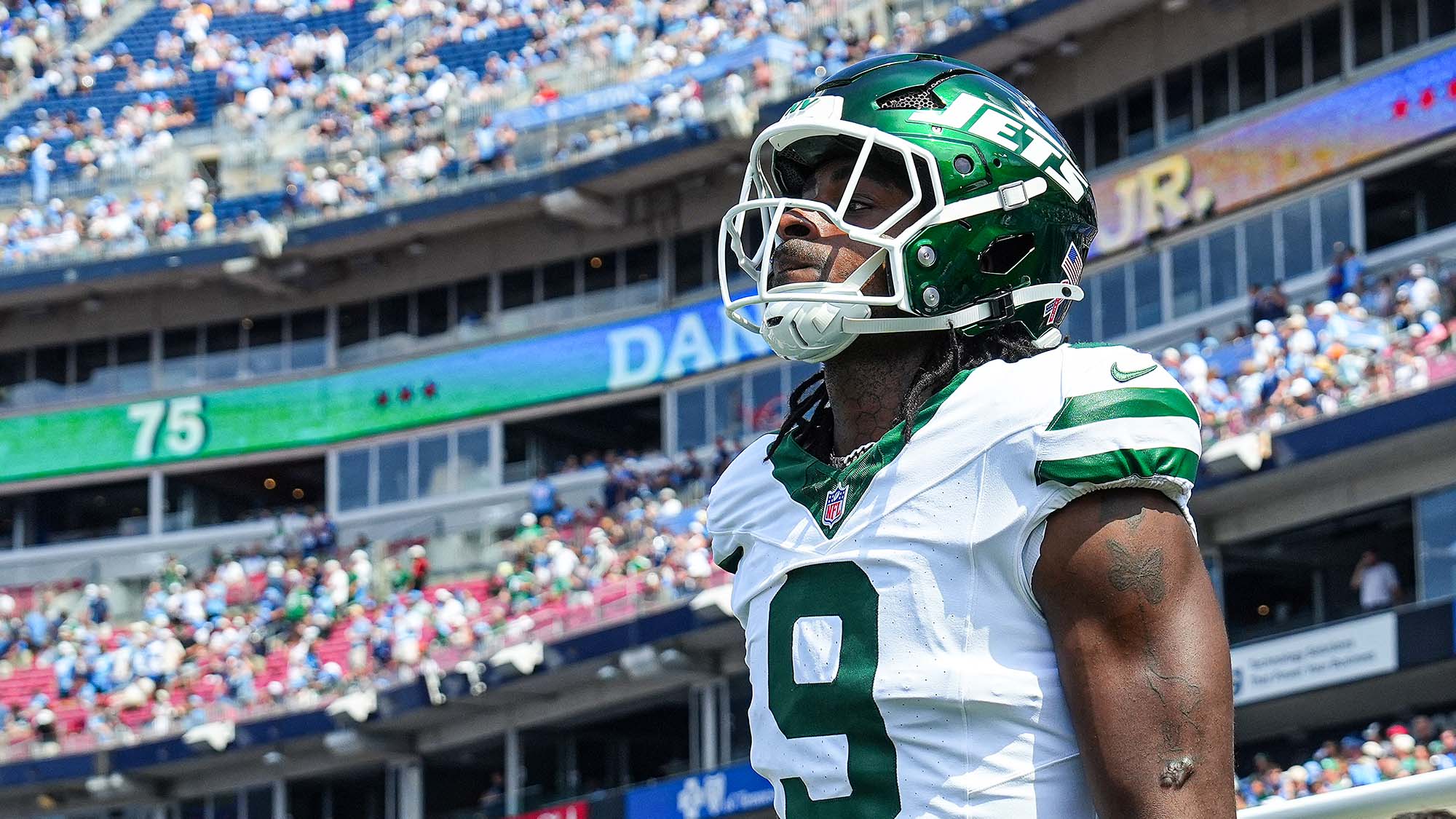
It would have been easy to miss the Jets’ most accomplished pass rusher, Will McDonald, in Sunday’s loss.
Not only did McDonald finish the game with one tackle, no sacks, no hits, and one hurry, but he wasn’t on the field much at all. McDonald played 22 defensive snaps (34%), including just 11 in which he rushed the passer.
It begs the question: Are the Jets under-utilizing their best pass rusher?
Should Will McDonald be on the field more?
McDonald was a standout in the Jets’ season-opening victory. He led the team with five total pressures, one of those being a pretty sack off a spin move.
In that game, McDonald played 25 snaps, making up 50% of the Jets’ defensive snaps. The Jets were leading for most of the game, so a high percentage of those snaps were pass-rush opportunities: 18 of 25 (72%).
In Week 2, however, McDonald’s snap count saw a slight dip, despite the Jets spending much of the second half in the lead. McDonald again played 25 snaps, but that represented just 42% of the pie this time around. He also had his pass-rush snap count cut, getting just 14 pursuits at the quarterback.
Week 3 threw a wrench into the Jets’ EDGE rotation, as Joseph Ossai returned to action. Ossai played 28 snaps, a 43% portion, while the Jets didn’t cut much into the snap percentages of David Bailey (68%) and Kingsley Enagbare (58%).
That meant McDonald was the main victim of Ossai’s return. He played just 22 snaps, a 34% slice, his lowest mark as a Jet since his 2023 rookie season. McDonald’s 11 pass-rush snaps were also his fewest since his rookie year, and it represented less than one-third of Goff’s 36 dropbacks in the game.
Given the trajectory that McDonald was on over the last two seasons, it was strange to see McDonald dip to his lowest snap count since he was playing a backup role as a rookie.
Through Week 1, McDonald had racked up 19.5 sacks and 44 quarterback hits in his last 32 games, which equates to a pace of about 10.4 sacks and 23.4 quarterback hits per 17 games. Those are high-level pass-rusher numbers; for reference, only six players had over 10 sacks and 23 QB hits in 2025, and this is the list:
- Myles Garrett
- Aidan Hutchinson
- Micah Parsons
- Byron Young
- Brian Burns
- Nik Bonitto
Shouldn’t a player with this level of pass-rush potential be higher than fourth in his team’s EDGE rotation?
Or is there a method to the Jets’ madness?
Unpacking the run-stopping dilemma
Every conversation about Will McDonald comes back to the same two words: run defense.
McDonald’s run defense has been questioned since the Jets drafted him out of Iowa State, and little has changed about his reputation in that phase across three-plus NFL seasons. He certainly remains a below-average player in that phase, at best.
The question, though, is whether McDonald’s negative impact against the run is truly so severe that it’s enough to override his positive impact against the pass, at least to the point that it’s worth burying him in a minor role to avoid suffering from his run defense, even at the cost of minimizing his pass-rush opportunities.
So far this season, the answer is no: McDonald does not crater the Jets’ run defense significantly enough to justify burying him in the rotation.
With McDonald on the field this season, the Jets have given up 101 rushing yards on 22 designed attempts, an average of 4.6 yards per carry. With him off the field, counting out QB kneels, the Jets have given up 134 rushing yards on 34 designed attempts: 4.2 yards per carry.
It’s a small sample, but the Jets are allowing 0.4 more yards per carry with McDonald on the field compared to when he’s on the bench.
That’s it.
While that difference isn’t meaningless, it is too marginal to be worth limiting your best pass rusher to less than one-third of the pass-rush snaps.
The on-off metrics back it up. Accounting for both his weakness in the run game and his strength in the pass game, McDonald has been an overall net-positive for the Jets this season.
According to RayCarp, the Jets’ defense is allowing 0.144 fewer EPA (Expected Points Added) per play with McDonald on the field versus when he is on the sidelines. That margin ranks 20th among qualified edge defenders (min. 40 snaps both on and off), and it’s the best mark among the Jets’ top four players at the position.
This isn’t even a small-sample fluke. Last year, the same metric showed that McDonald’s pass rushing outweighs his run defense to make him an overall net-positive.
In 2025, New York allowed 0.179 fewer EPA per play with McDonald on the field, the largest margin in the NFL among edge defenders with at least 500 snaps.
It’s clear: McDonald’s run defense does not hurt the Jets enough to justify minimizing his pass-rush snap count.
Perhaps the Jets could justify McDonald’s diminished role if he were struggling as a pass rusher, or at least being out-performed by his peers, but that’s not the case. He is easily winning his reps at the best pace among New York’s edge rushers.
According to PFF, McDonald has a 27.8% pass-rush win rate in true pass sets, ranking 15th out of 104 qualified edge defenders through Week 3. Enagbare ranks 66th at 11.5%, while Bailey is 79th at 8.0%.
Maybe, though, Glenn and the Jets believe that McDonald is at his most effective in limited spurts, allowing him to conserve energy and rush the quarterback with maximum explosiveness on each rep. However, that theory, too, is debunked by the evidence.
McDonald becomes more efficient the more he plays.
In his career, across 32 games in which he played at least half of the defensive snaps, McDonald has 19.5 sacks on 1,397 defensive snaps. That equates to a rate of 14.0 sacks every 1,000 snaps.
Comparatively, across 18 games in which he played under half of the defensive snaps, McDonald has 3.0 sacks on 266 defensive snaps, which amounts to 11.3 sacks every 1,000 snaps.
The evidence is overwhelming: Will McDonald should be playing more snaps for the New York Jets.
