
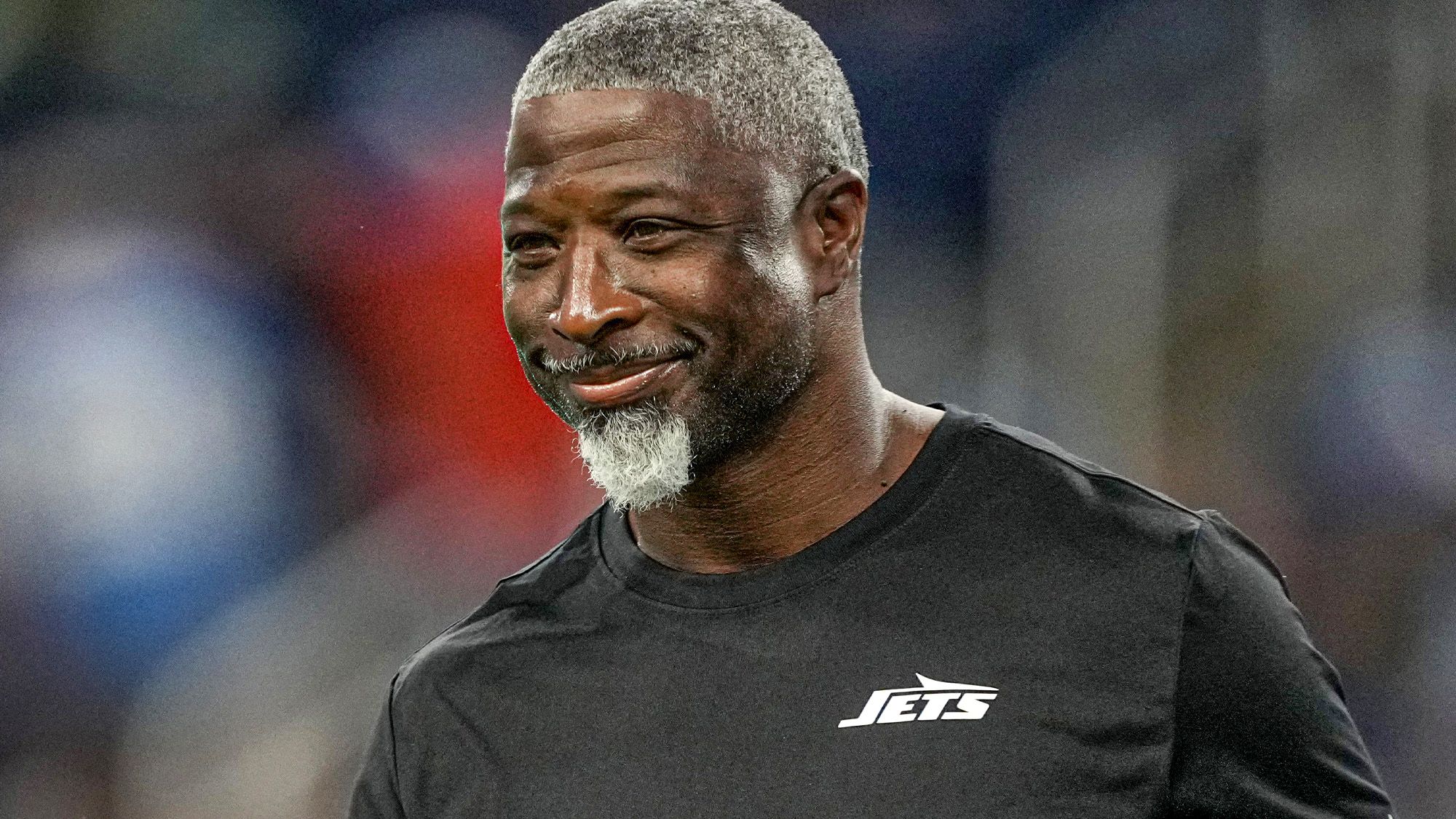
Entering the 2026 season as the New York Jets’ defensive play-caller, Aaron Glenn seemed to have an established play-calling identity.
During his time as the Detroit Lions’ defensive coordinator, he built a reputation as a man-coverage-heavy coach. That was over four years, too. It wasn’t a small sample size.
Going into this year, there was no tangible evidence to suggest that his scheme would undergo any drastic changes. It’s precisely why I took the time this summer to assess how every notable Jets cornerback has fared in man coverage.
Surprisingly, though, over four games, Glenn has largely steered away from his historical “man-heavy” identity.
Has it worked?
Glenn’s schematic change this year
According to NFL Pro, the Jets’ defense has played zone coverage on 78.5% of coverage snaps this season, the highest rate in Glenn’s career as head coach or defensive coordinator. That mark also ranks 16th in the league, putting New York right around the league average.
Jets CB Brandon Stephens has been very solid in zone coverage this year, allowing 0.4 yards per zone-coverage snap, the seventh-fewest among outside cornerbacks with at least 50 coverage snaps.
Meanwhile, on the other side of the field, Azareye’h Thomas has surrendered just 0.5 yards per coverage snap in man coverage, the sixth-fewest among qualified boundary CBs (minimum 25 snaps).
In Thomas’ case, that number shows how consistent he has been from snap to snap one-on-one situations. However, he still needs to do a better job of eliminating the big plays in zone coverage. While he has logged two pass defenses in man coverage on five targets, the Florida State product has also allowed two touchdowns.
Thomas can also stand to improve his zone coverage consistency as he acclimates to Glenn’s new zone-leaning system. In zone coverage, Thomas has allowed 8 of 9 passes to be completed for 63 yards on 66 coverage snaps. On the same number of zone plays, Stephens has allowed 4 of 5 passing for 48 yards.
Thomas has the makings of a defensive building block, especially in Glenn’s system. His biggest focus is clamping down in the red zone after allowing short touchdown passes in two of the first three games.
Like Stephens, slot cornerback Jarvis Brownlee Jr. has also been a standout in zone coverage. Brownlee has allowed 2 of 5 passes to be completed for 17 yards in zone coverage. His 79.5 zone coverage grade, per Pro Football Focus, ranks seventh-best among all cornerbacks.
Altogether, through three games in Glenn’s altered, zone-leaning system, the Jets’ defense has played up to par, and then some.
While they allowed 31 points in Week 3, the Detroit Lions are a high-powered offense who have scored that exact mark in all three of their matchups this season. Yes, there were certainly areas where the unit needed to be better, particularly on Detroit’s final offensive drive, where they scored a touchdown in four plays to regain the lead after New York erased a 14-point deficit. In Weeks 1-2, though, the Jets’ were dominant defensively.
It also frustrating that the Jets have yet to break their grueling 20-game interception drought. Overall, though, the defense has been above league average in most metrics.
This week’s matchup against the Chicago Bears will be a huge test, especially in the run game and through the air, even without Caleb Williams. Ben Johnson is an offensive savant, and his offense still put up 27 points on Monday Night Football with Case Keenum at the helm. Yes, 38-year-old Case Keenum.
The good news is that nobody knows Johnson more than Glenn. When Glenn was the Lions’ DC from 2021-24, Johnson was also the organization’s offensive coordinator. Now, they will face off against each other on different sidelines as head coaches for the first time.
It’s a matchup that will reveal a lot about Glenn’s tendencies. Johnson still hasn’t revealed a quarterback for Sunday’s game, but it seems hard to turn away from Keenum after a killer primetime outing. However, Tyson Bagent is still regarded as one of the league’s top backup quarterbacks.
Glenn has done a solid job so far tailoring his scheme to his personnel’s strengths. That is crucial for defensive play-callers in today’s game. Every play-caller has their tendencies and what they prefer, but it’s an ever-changing game.
While there’s a lot to criticize Glenn for as a head coach, most notably game management, it’s important to separate the head coach from the defensive coordinator.
He absolutely needs to be better as a head coach, especially since he is now in his second season in that role. Still, it should not take away from his work as a play-caller. For now, he has passed the latter test.
