
The New York Jets aren’t learning from their mistakes. Every week, the same problems show up, and they keep costing New York victories.
That continued Sunday in the Jets’ brutal 38-33 loss to the Las Vegas Raiders, dropping them to 2-6.
At the end of the day, the Jets continue falling victim to the same trend: they simply can’t execute when it matters most.
No matter how close they keep coming to victory, there are just no results or signs of progress in this particular area.
Where is the progress?
On Sunday, the Jets put together arguably their best offensive performance of Aaron Glenn’s tenure.
Geno Smith and the Jets’ offense scored on their first six possessions (the first time the franchise has done that since 2008) while finishing with 439 yards and averaging 7.2 yards per play. Braelon Allen rushed for a career-high 147 yards, while Adonai Mitchell set a career-high in receiving yards with 142.
The offense finished with 33 points, while outgaining the Raiders’ offense by over 100 yards (439 to 333), yet the Jets still managed to lose. Part of it can be attributed to a kick return touchdown allowed by New York’s special teams, but the main difference was how each team performed in the biggest moments.
Look at third down, for example. The Raiders converted on seven of their 11 third-down situations, which is a crazy-high 63.6% conversion rate. The Jets, meanwhile, went 4 of 11 (36.4%).
Furthermore, the Raiders scored a touchdown on all four of their trips to the red zone, while the Jets found the end zone on just two of six red zone trips.
That just can’t happen. It’s nearly impossible to win while being that significantly outperformed in high-leverage situations, no matter how well you play otherwise.
Beyond the concerns with “Aaron Glenn the head coach”, his defensive play calling has become lackluster, too. This is the second consecutive game that the Jets allowed a team on a four-plus-game losing streak to march onto their field and enjoy an offensive explosion.
Execution is part of the equation, but New York appeared to be at a coaching disadvantage in both of those games. Glenn was outschemed by Bobby Slowik and the Dolphins last week before Klint Kubiak and the Raiders coached circles around him on Sunday.
As we discussed before the game, it was well-known that the Raiders would count heavily on their two-tight end packages. Yet, Glenn had no plan to stop Las Vegas from consistently feeding the tight end duo of Brock Bowers and Michael Mayer. Kubiak was able to scheme up opportunities for his preferred matchups whenever he needed a big play.
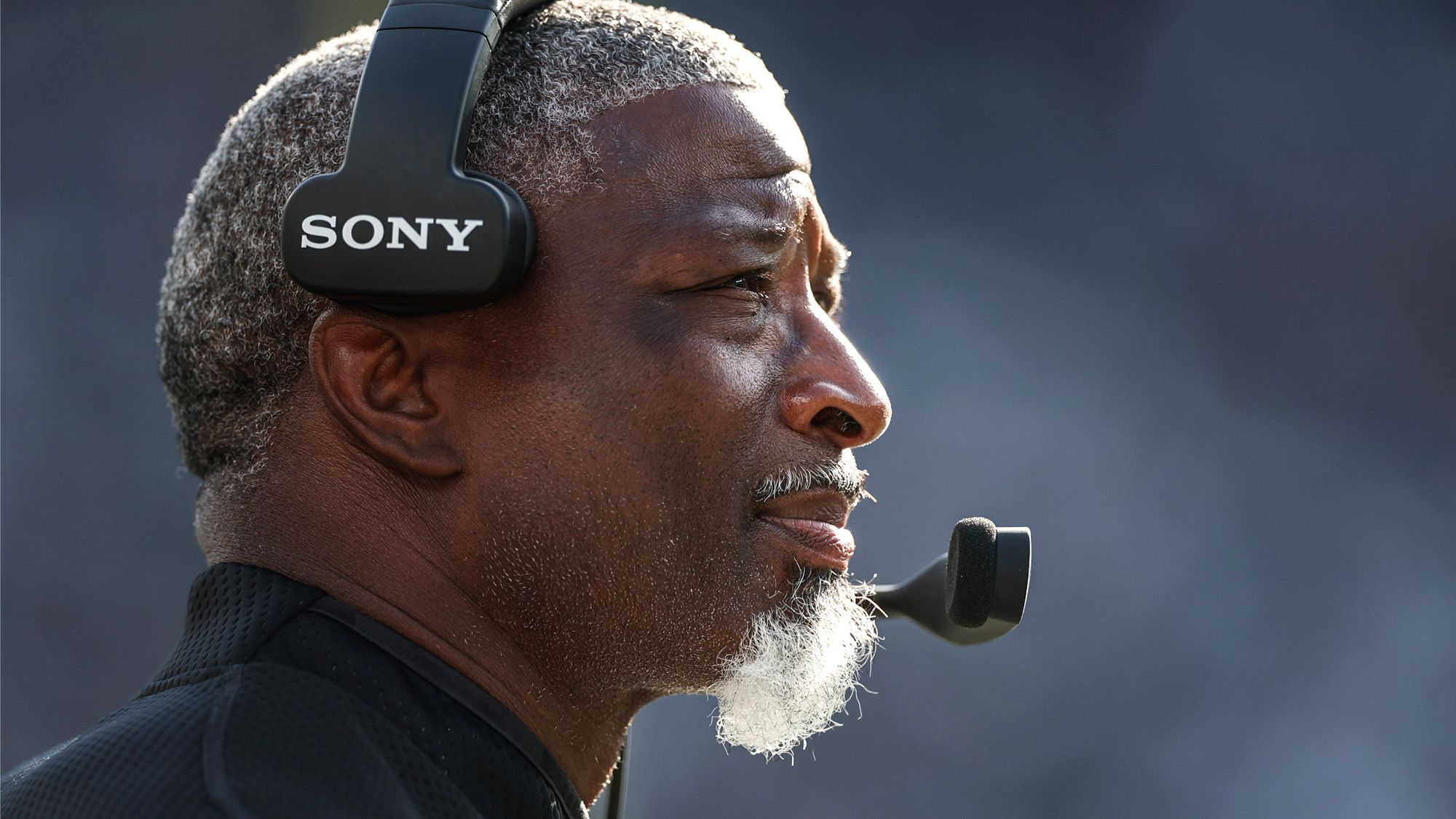
When the same issues keep popping up for a team, whose fault is that? The common denominator is the head coach and play caller: Glenn.
Eight games into the season, the Jets continue to struggle mightily with situational football on both sides. If they were trending in a positive direction, this two-game homestand against struggling opponents should have been the point of the season where they hit their stride, but instead, New York succumbed to the same problems.
Obviously, both the players and coaches must share the team’s 2-6 record, but it has become apparent that the Jets are at a weekly disadvantage with Glenn at the helm. Across 25 games, he has failed to oversee meaningful progress in areas that are holding the team back.
As Glenn’s sample size grows, his odds of being the Jets’ long-term answer at head coach continue to shrink. Now the owner of a 5-20 record, it’s difficult to point to any particular way in which he is an asset to the team. Earlier this season, his defensive play-calling seemed like a potential strength, but that has evaporated after his defense was run off its own field by two struggling offenses.
With the Kansas City Chiefs and the Buffalo Bills looming over the next two weeks, the Jets missed their opportunity for “get-right” victories. Unless Glenn has a miracle up his sleeve, his chances of returning in 2027 may soon be spent.
