
At 2-6, some New York Jets fans have started tuning out the on-field play and are instead focused on what the team could do this offseason from an asset standpoint and on the coaching front.
Aaron Glenn’s record as the Jets’ head coach currently sits at 5-20. With each passing day, the chances of him returning for a third year continue to decrease.
As a result, fans’ interest in the potential coaching cycle this offseason has kept rising. Many folks remain dead-set on the idea that the Jets should chase the next young, innovative offensive mind.
But what if that guy doesn’t have play-calling experience, though? After all, when looking at the list of non-head-coach offensive play-callers around the league, not many appealing head coaching candidates stand out.
Does play-calling experience have to be a requirement, though?
It’s worth exploring the possibility of New York hiring an offensive coach who hasn’t called plays before.
How much should play-calling experience be valued?
The value of play-calling experience is that it is directly traceable. That coach can be credited or blamed for most situational decisions, designs, and so forth. Execution matters, too, but for the most part, you can clearly assess a play-caller’s impact.
It gets murkier when you consider hiring a coach without play-calling experience.
First off, it’s difficult to tell what he was responsible for. A play-caller is directly tied to offensive results. When you talk about OCs who don’t call plays, more questions come up, and that’s fair. It’s less clear how their role affected their team’s success, or lack thereof.
Just because a coordinator does not call plays, though, it does not mean they should be ruled out as a head coaching candidate. Plenty of non-play-callers have landed HC jobs over the past few years, including Zac Taylor and Mike McDaniel. Three of the most successful in recent seasons have been Kevin O’Connell, Dan Campbell, and Super Bowl champion Nick Sirianni.
But that raises another question: How should the Jets evaluate non-play-callers if they go down that route?
The goal should be to prioritize coaches who have spent time in successful systems and, more importantly, have played a legitimate role in the success. There is obviously a difference between being in the building alongside a mastermind and actually contributing significantly to the operation; that’s the hard part of evaluating a non-play caller for an HC job.
The Jets, or any team considering hiring an OC without play-calling experience, need to understand what the coach does throughout the week and even on game day. How involved is he in game planning? Is he responsible for certain packages? Does he have a game-day role even if he isn’t calling plays? Does he have input in making adjustments?
Those are the questions that should impact the Jets’ decision.
Calling plays gets all the attention, but much more happens throughout the week. The preparation from Monday through Saturday is just as important.
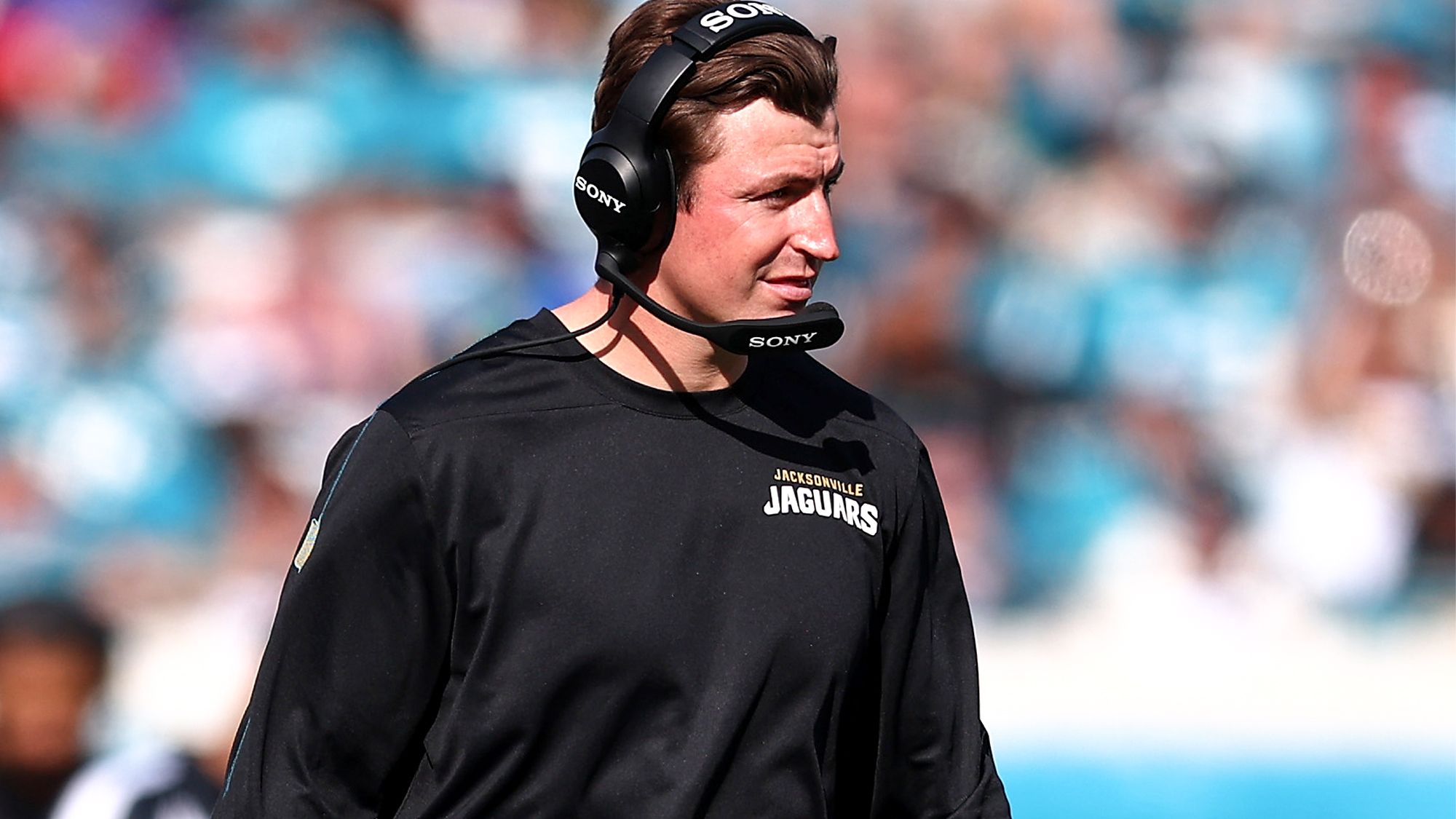
One excellent potential candidate for the Jets who fits the bill? The Jacksonville Jaguars’ offensive coordinator, Grant Udinski, who interviewed for the Cleveland Browns’ head coaching job this past January.
In his second season as Jacksonville’s OC, Udinski has yet to call plays. Head coach Liam Coen handles those duties.
However, if you listen to Jaguars quarterback Trevor Lawrence talk about Udinski, his impact is obvious.
“I’ve never really met anyone like him,” Lawrence said of Udinski. “The way he approaches the preparation process, the attention to detail, just the game planning in general. There are no stones left unturned in his approach.”
Lawrence’s comments about Udniski show can hear that non-play-calling OCs across the league can have impactful roles.
This is precisely the type of candidate that New York should target if they go the non-play-caller route. While Udinski isn’t the one calling the plays, but he’s heavily involved in the preparation behind those decisions. That’s a skill worth coveting.
Obviously, there is more to evaluating a head coaching candidate. Not every good coordinator, play-caller or not, is guaranteed to have success as a head coach. Many more components go into being a team leader.
It’s important to consider the Jets’ objectives moving forward, though. This offseason, their most crucial objective will be drafting a young quarterback in April. With that in mind, the Jets need someone who can be trusted to develop that QB.
Whoever takes over this team, assuming the Jets move on from Glenn, will be responsible for developing New York’s next franchise QB. Having someone who is experienced working with young QBs, even if they haven’t called plays, is valuable.
Of course, play-calling experience would be a plus. There is no denying that. However, the Jets shouldn’t center their head coach search solely on that one factor.
We’ve also seen plenty of successful play-callers struggle after becoming head coaches. As Jets fans know better than anyone, there are no guarantees, regardless of a head coach’s background.
If the Jets search for a new coach this offseason, their goals should be simple: land the guy they think has the best chance of developing a franchise QB.
If that coach has play-calling experience, great. If not, so be it.
