
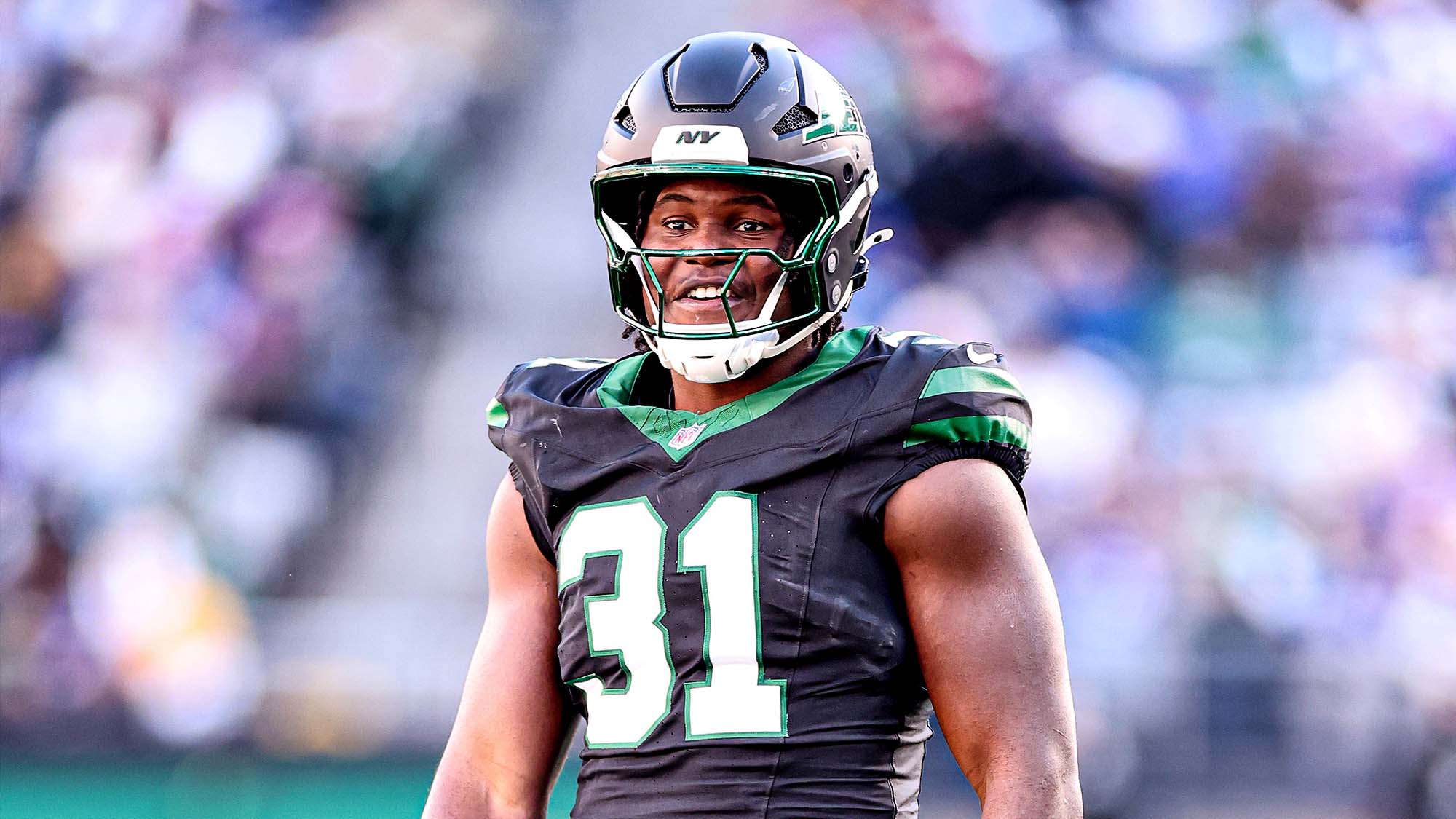
When it comes to having a flair for the dramatic, David Bailey’s rookie season with the New York Jets has been one for the ages.
Nine games into his debut NFL campaign, Bailey has lit up the box score, racking up on-ball plays at a record-setting pace. The Texas Tech product has recorded 7.5 sacks, 12 quarterback hits, five forced fumbles, three pass deflections, 10 tackles for loss, and 45 total tackles (to be clear, some of these stats overlap, but you get the idea; he makes a ton of plays).
The criticisms of Bailey’s play have lied in the details. Despite his gaudy box-score totals, he has received some flak for his pass-rush win rate, rush lane discipline, gap integrity against the run, tackling, and penalty proneness, among other issues that are lost when focusing solely on the box score. At times, it doesn’t feel like his actual impact, via the eye test, matches up with the flashiness of his traditional stats.
Well, in Bailey’s ninth career appearance, the turntables turned. While it doesn’t necessarily mean he had his best game as a pro, it was a step in a positive direction for the 23-year-old as he looks to bring his all-around game together.
David Bailey improves in silence vs. Buffalo
In the Jets’ 31-12 loss to the Buffalo Bills, Bailey had the least active game of his career from a production standpoint. On top of having no sacks, it was just his second career game with no quarterback hits, while he had a career-low one tackle. His one pressure also tied a career low.
Having said that, Bailey’s performance in the quieter aspects of the position were about as sound as they have looked all year.
In the first quarter, Bailey showed excellent play recognition on the edge to deflect a pair of Josh Allen passes into the flat. The first helped force a punt, while the latter helped set up a fourth-down situation on that set of downs, although the Bills would convert.
Bailey entered the game with just one pass defended in eight games, so it was promising to see him make two of those plays in a game. For a player who has a tendency to occasionally chase the quarterback too aggressively and lose track of what’s going on around him, it was a mark of progress for him to sniff those passes out, ditch his rush, and get in the passing lane. It’s especially promising that he did it early in the game during Buffalo’s scripted portion of plays, suggesting that Bailey may have seen something on film that tipped him off.
In the pass-rush game, Bailey actually did his job quite well, even if the production was as lackluster as it has been all season. When you face Josh Allen, the first goal should be to keep him in the pocket; sacks and pressures are bonuses. Bailey executed his role in this regard.
Allen finished the game with just five rushing yards, the seventh-lowest total of his career in a game that he fully played. He also had one of his quieter games through the air, throwing for just 101 air yards on his 21 pass attempts, a measly 4.8 completed air yards per attempt. That’s what can happen when you don’t let Allen extend plays to the sideline.
The Jets played with good rush-lane discipline to keep Allen contained and prevent him from hurting them with his legs, either as a runner or passer. Bailey, who played a team-high 20 pass-rush snaps, was a key part of that. At times this season, Bailey has been victimized by mobile quarterbacks for rushing too aggressively to the outside, ceding ample room to step up through the B-gap. He didn’t let that happen often on Sunday.
Despite a solid effort against Allen, New York’s horrendous run defense (201 yards and 3 touchdowns allowed) caused them to allow 31 points, but Bailey was not one of the players responsible for that effort. He had one of his better games from a run-stopping fundamentals standpoint, even if he only made one tackle against the run.
Across 10 running back carries toward Bailey’s edge, the Bills gained 39 yards, a below-average 3.9 yards per carry. That’s a full yard below Buffalo’s season average of 4.9 out of the running back position.
So, no, the stat sheet wasn’t flashy for Bailey, and that means you won’t see him on this week’s Rookie of the Week ballot. But he did his job in ways that don’t generate headlines: playing the passing lanes, keeping the quarterback contained, and handling his assignments against the run.
These are among the areas that have been Bailey’s weaknesses so far, limiting his overall impact despite the flashiness in the box score. That’s why Sunday was a big day for him. If he can keep improving in the quieter areas of his position, while maintaining his dominance as an on-ball playmaker, he will be on track to become a true all-around game-changer on the edge.
