
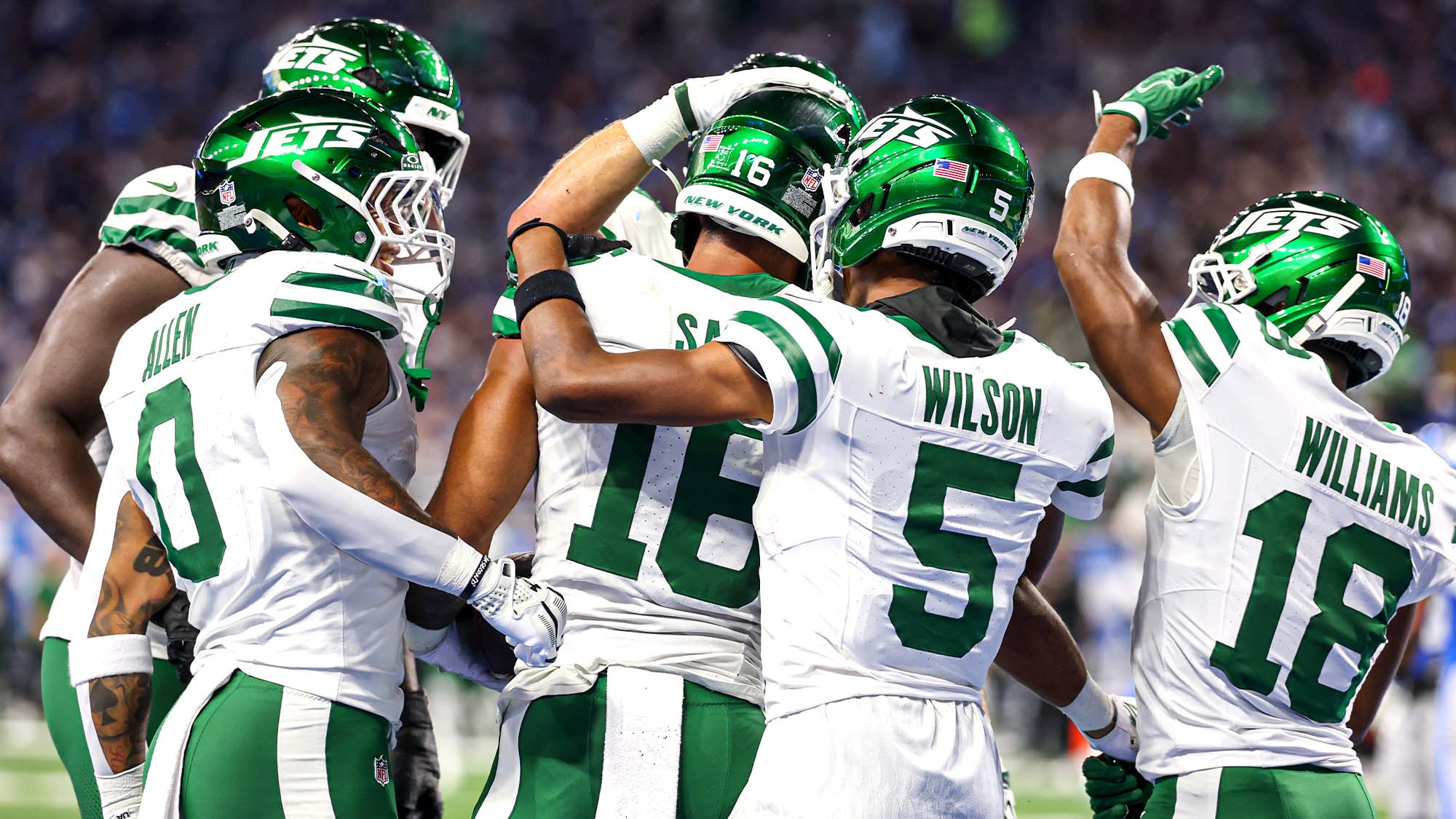
The 2-8 New York Jets are faced with a classic NFL dilemma: Their head coach wants to win to save his job, but the organization at large should be more focused on evaluating players who could have a role in the future.
It’s a catch-22. Jets head coach Aaron Glenn is solely focused on playing the players who give his team the best chance of defeating the Los Angeles Chargers; he has no incentive to care about the organization’s future when he knows he will not be a part of said future without winning games this year. However, the franchise will miss out on valuable forward-looking evaluations if Glenn overly prioritizes win-now moves.
Here are two lineup changes that would satisfy both Glenn’s win-now pursuits and the franchise’s long-term evaluative goals.
1. More Kenyon Sadiq, less Isaiah Williams and Jelani Woods
The Jets made the bold choice to select a tight end with the 16th overall pick. He’s showed that type of talent when the ball has been thrown to him, ranking among the top tight ends in categories like contested-catch rate, YAC per reception, and separation rate. Yet, the Jets hardly use him; he has seen 33 targets in 10 games (3.3 per game).
Kenyon Sadiq is not just a 21-year-old first-rounder who needs to be evaluated; he is a dangerous weapon who is being underutilized. It isn’t even for a good reason; he cedes snaps to Isaiah Williams, a player on the roster for special teams, and Jelani Woods, a TE4 who was claimed off waivers last year.
Despite playing in all 10 of the Jets’ games this year, Sadiq has run out to catch a pass on just 160 of the team’s 333 total dropbacks, less than half (48.0%). That shouldn’t happen moving forward. Both Williams and Woods can have their snap counts cut to open new opportunities for Sadiq.
Williams has run 123 routes out of the slot this year to Sadiq’s 74, despite Sadiq’s slot versatility being one of the main reasons why he was viewed as worthy of the 16th overall choice. This makes little sense, not just because of the difference in investment, but because of the difference in results. Sadiq has done much more with his receiving opportunities than Williams, averaging 1.49 yards per route run to Williams’ 0.85, a 75% bump. Why not give most, if not all, of Williams’ slot routes to Sadiq?
Woods has run 47 in-line routes this season to Sadiq’s 74. At this point, there isn’t much of any reason for Woods to be running any routes at all. He has struggled as a blocker and has only caught four passes for 39 yards. Sadiq’s blocking is a question, but it can’t be too much more of a liability than Woods’ blocking, and Sadiq needs the development, anyway.
Getting Sadiq out there in favor of two fringe-roster players should be the no-brainer to end all no-brainers, both for the short and long-term good of the team.
2. Start D’Angelo Ponds in the slot
The Jets seem deathly afraid to use second-round rookie cornerback D’Angelo Ponds.
First, they stuck with Jarvis Brownlee over him, despite Brownlee’s on-field struggles and off-field failure to attend meetings. This past week, despite Brownlee being inactive, the Jets elected to use safety Malachi Moore in the majority of their nickel packages—with Minkah Fitzpatrick dropping down to the slot in most of those situations— instead of handing the full-time slot role to Ponds.
The hesitancy is understandable. Ponds has struggled mightily in his limited action this year; on just 51 coverage snaps, he has committed four penalties and allowed four receptions for 72 yards and a touchdown.
However, the alternative options have not been much better. Moore coughed up a 45-yard touchdown in Sunday’s loss, while Brownlee has allowed three touchdowns of his own this season.
When the available options have comparable floors, it seems obvious to roll with the player who has the highest ceiling, both for short and long-term purposes. Letting Ponds go through his rookie bumps as the full-time slot corner is the best move for not only the Jets’ future, but Glenn as well.
