
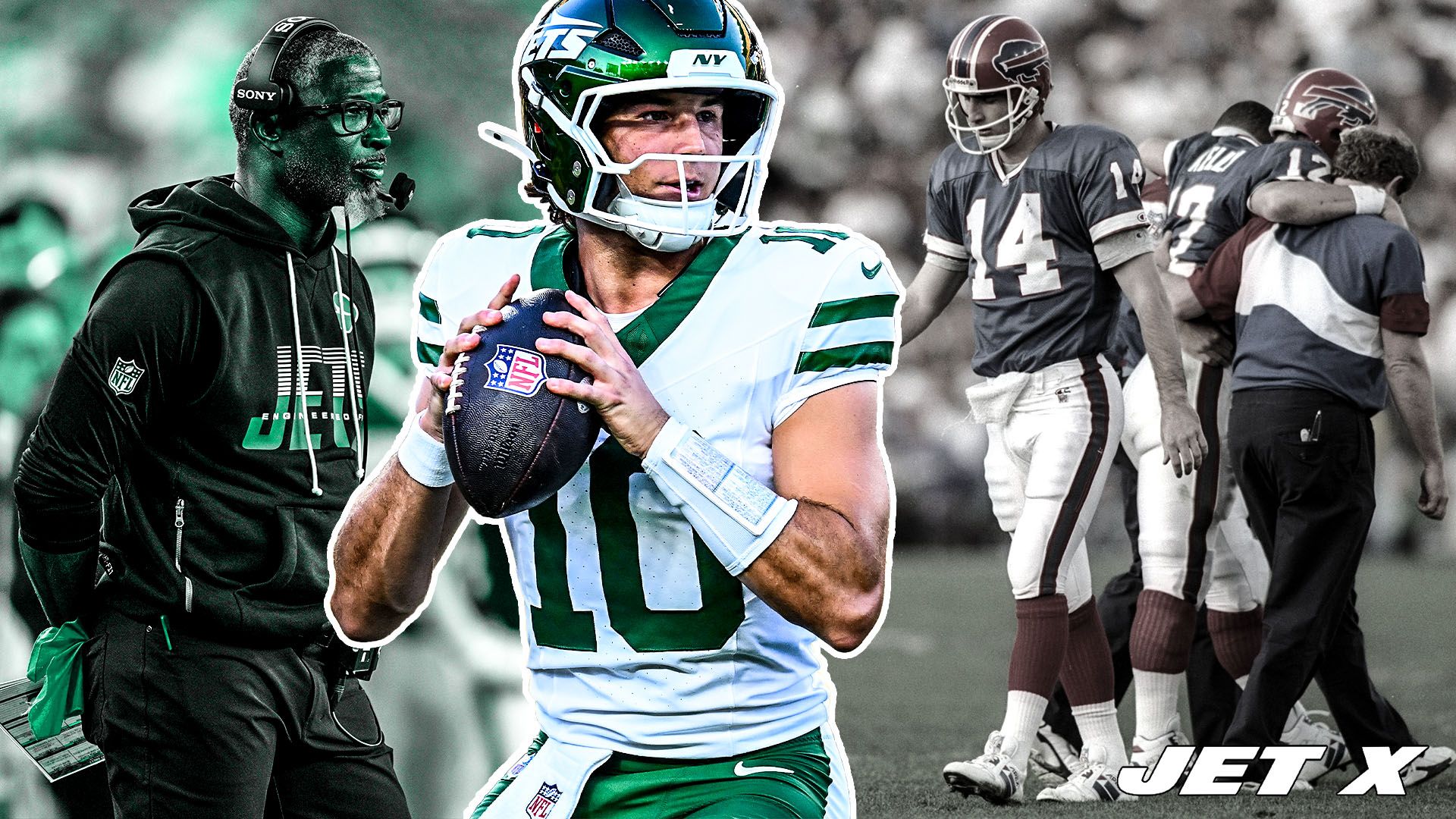
Cade Klubnik is not ready to assume a backup quarterback position in the National Football League. There’s nothing wrong with that analysis, and that isn’t meant as a slight on the young Clemson product.
The eyebrow-raising ideas come from the other side. After all, at the heart of the conversation is a fourth-round rookie.
All New York Jets fans heard — following the revelation of the team’s initial 53-man roster — was how wildly Aaron Glenn and company handled the QB2 slot on the depth chart. From the newspapers to TV’s talking heads, the noise was both consistent and loud.
Though warranted, the criticisms somewhat miss the mark by flying past the heart of the matter: The possible reasoning behind the organization opting for this specific type of QB2.
The QB2 ‘type’ is the story
It’s almost impossible to fully appreciate the 41-year-old man who could wake up with some Advil, roll out of bed, field a phone call, and rope a football on an intermediate out-breaker target who snags it outside the numbers.
Vinny Testaverde is a rarity.
The Jets’ 2005 season doesn’t shine brightly in the fans’ hearts. Once again, Chad Pennington endured a season-ending arm injury (rotator cuff), helping squash Herm Edwards’s squad to a 4-12 mark.
As forgettable as it may have been, this was when the Jets rang Testaverde after watching enough of Brooks Bollinger.
Not only was he 41, but he was also out of football. A mere couple of weeks later, the Jets pointed at him to lead the offense.
While the season’s end result is far from nostalgic, everybody learned the man could still sling it. So much so that fans wouldn’t bet against him throwing a rope near the sideline, on time, at his current age.
That’s one type of QB2, the readymade backup whose natural talents allow him to pepper the ball after morning ham and eggs.
Steve Bono backing up Joe Montana in Kansas City, Earl Morrall playing second-fiddle to everybody (at one point or another), and even current Jets offensive coordinator Frank Reich holding Jim Kelly’s clipboard all represent a certain type of QB2: the grizzled, readymade backup who thrives when called upon, no matter the randomness of the situation.
This is the Tyrod Taylor type, the guy who intentionally carved out his very own slice of pro football heaven. This is the man who accepted his situation far sooner than others, while doing everything possible to signal his acceptance of the QB2 role.
As sweet as this idea is for head coaches, this is also a rarity, especially in the modern game.
Reasons for the Klubnik QB2 type
Simply put, the 2026 New York Jets chose a different route at QB2. Instead of the readymade backup-type, they went with the rookie — the mid-round rookie.
The Jets opted for the youngster-and-hope-to-develop route, with no alternative of note on the roster.
On one hand, it’s understandable — even if it feels incredibly dangerous.
General managers find it extremely difficult to find legitimate backup quarterbacks in a 32-team league. Just look around today’s landscape: How many bonafide backups exist?
The previously mentioned Tyrod Taylor is certainly one of them. Jameis Winston absolutely qualifies, as do Marcus Mariota and Joe Flacco. There are others, but, for the most part, they’re tough to come by.
Another factor boils down to the nature of today’s practice schedule. With practice time severely slashed — courtesy of the brutal-to-football-practice-time 2012 CBA — whichever quarterback is slotted No. 2 will receive the lion’s share of the non-QB1 reps.
Ensuring Klubnik can take as many reps as possible throughout the season is critical.
Moreover, in a perfect world, franchises aim to roster just two quarterbacks. The more relaxed practice squad rules provide flexibility to keep a QB3 in-house, and maximizing non-quarterback spots is an appropriate nod for deserving special teams units and coaches (here’s looking at you, Chris Banjo).
At the same time, it’s fair to wonder if it’s the right move.
The Reid and McVay examples
Ty Simpson, whom we reviewed extensively, going as far as to like him more than Fernando Mendoza during draft season, is currently the Los Angeles Rams’ QB3. Seventh-rounder Garrett Nussmeier, who was once considered a top-of-draft prospect, is the Kansas City Chiefs’ QB3.
Veterans Stetson Bennet IV and Justin Fields are the current backups in Los Angeles and Kansas City. For head coaches Andy Reid and Sean McVay, rostering three quarterbacks was worth the trouble.
Granted, both the Rams and Chiefs enter the 2026 season in a much different position than the Jets, but that’s precisely the point here: The team’s QB2 often signals a transparent self-reflection of where the football program’s current progress lies.
Veteran Andy Dalton remains a free agent, yet he still wants to play football. He also has an existing connection with Frank Reich, thanks to their time together in Carolina.
While nobody’s foolish enough to argue that Dalton has a rosier future than Klubnik, it’s nearly impossible to claim the youngster is the better quarterback right now. Even those who claim Klubnik is the better player than Dalton right now aren’t taking into account the intricacies the QB2 role demands — something Dalton understands.
In the event Geno Smith goes down in Week 1, what happens?
A kid who’s simply not ready to play is thrown into the fire. He’ll have every chance to prove he is, indeed, ready to play, but based on his play this past summer, no legitimate claim to the contrary could be made.
The type means more than the player
When nut-cutting time arrives, the human leading the charge is what matters most. If Cade Klubnik truly has the goods and surprises everybody as a rookie, the QB2 type becomes meaningless.
Here’s the problem…
Not even the Jets genuinely know if Klubnik has the goods.
They may think he does, or believe he can fulfill those lofty goals they fell in love with during the NFL draft process, but until he steps into the fire, with his brain moving a million miles a minute, it’s educated guesswork.
Yes, the individual (Klubnik) will either sink or swim his own career in due time. In a far less dramatic way of putting it, his play will settle his NFL future.
Whether it evolves into starting-quarterback-caliber play, unplayable status, a career backup role, or anything in between, the idea that the player is in control of his own destination remains undefeated.
For the 2026 New York Jets, however, the QB2-type they chose is the far more important story, as it concerns Cade Klubnik and the team’s current status.
If Aaron Glenn’s team were projected and expected to win 10 games this season, it’s hard to believe this current situation would suffice.
