
There are good reasons why the New York Jets are only 1.5-point road underdogs in their season opener, despite coming off a 3-14 season that saw them outscored by over 200 points.
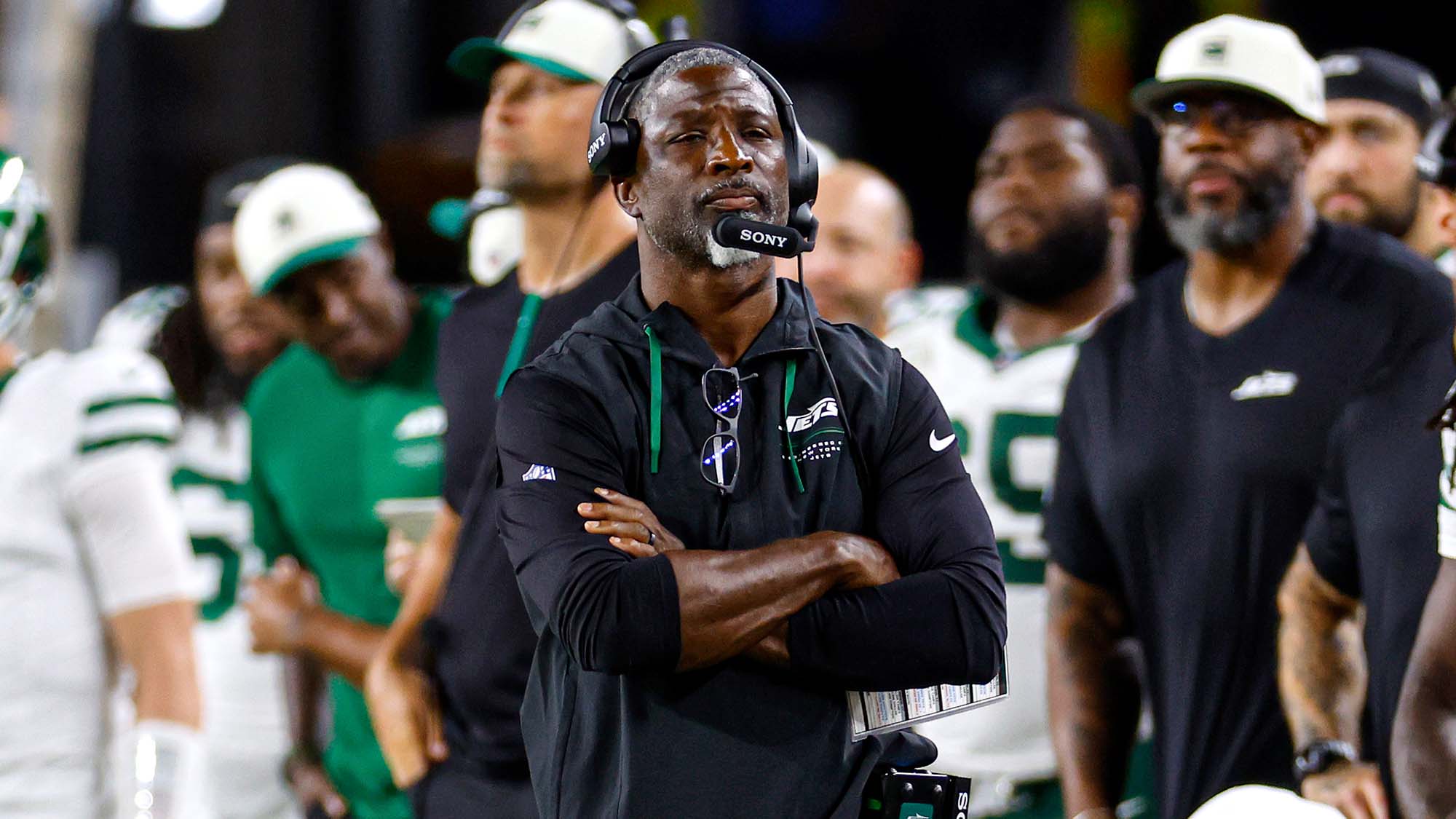
New York matches up well with the Tennessee Titans in numerous areas. Defensively, nose tackle T’Vondre Sweat is a major mismatch against Titans center Austin Schlottmann, while the high blitz rate of play-caller Aaron Glenn will pose issues for young quarterback Cam Ward.
Plus, second-overall pick David Bailey will have an ideal matchup to tee off on the sack- and fumble-prone Ward.
Offensively, the Jets are equipped to run the ball outside successfully against a Titans defense with edge-setting question marks, while star receiver Garrett Wilson will have the advantage against Tennessee’s cornerbacks.
One edge in the Titans’ favor, though, could negate the Jets’ advantages: Their wide receivers against New York’s cornerbacks.
If the Jets’ questionable cornerback unit cannot hold up against a talented Tennessee receiver trio, it might be too much for New York to overcome.
Why Tennessee’s wide receivers will cause problems for New York
The Titans’ wide receiver unit is arguably the greatest strength of their roster. Carnell Tate, Calvin Ridley, and Wan’Dale Robinson could be one of the league’s better three-deep groupings.
Ridley offers a steady veteran presence. He may be 31 years old, but before an injury-plagued 2025 season, he was coming off back-to-back 1,000-yard seasons. Even across his seven appearances in 2025, despite battling injuries and the shaky quarterback play of Cam Ward, Ridley still generated 1.89 yards per route run, the second-best mark of his career.
Tate, the fourth overall pick in this year’s draft, is a high-upside player who could make a major impact right away. His college profile looks precisely like that of a future NFL star.
Tate is an excellent separator and has outstanding skills at the catch point, evidenced by his 12 for 14 performance on contested targets in 2025. The only major concern is his speed (4.53 forty time), but it didn’t stop him from dominating at Ohio State.
Robinson, who joined the Titans on a four-year, $70 million contract this offseason, is a reliable safety blanket out of the slot. He led the NFL with 675 receiving yards out of the slot in 2025, while his 3.2% drop rate out of the slot (2 drops, 60 receptions) was fourth-best among wide receivers with at least 50 slot targets.
Even behind the primary trio, the Titans have solid depth. Their fourth and fifth receivers, Chimere Dike and Elic Ayomanor, both had four touchdowns as rookies last season.
Tennessee’s solid wide receiver unit directly clashes with New York’s arguable No. 1 weakness on defense, their cornerback unit.
Projected boundary starters Brandon Stephens and Azareye’h Thomas bring upside to the table, but neither player is proven.
Stephens is coming off a season where, despite some stretches of solid play, he ultimately allowed eight touchdowns and no interceptions on throws into his direction (per Pro Football Focus), which is not an ideal ratio, to say the least.
Thomas, a 2025 third-round pick, showed plenty of exciting flashes in his rookie year, but at 22 years old with only five career starts under his belt, he remains a mystery as Week 1 approaches.
The slot could be where New York has the most trouble. Robinson proved himself as a reliable high-volume target on underneath passes in 2025. The Jets might not be ready to corral him this week.
Second-round rookie D’Angelo Ponds projects as New York’s starting slot corner throughout the season, but after missing essentially all of training camp, Ponds might not be ready to start in Week 1. That would leave the slot duties to Jarvis Brownlee Jr., who has struggled mightily in coverage throughout his NFL career.
Titans quarterback Cam Ward is facing some difficult circumstances this week. It’s his first game in a new offensive scheme, with four new starters, while playing against a blitz-heavy defense after a season in which he had the NFL’s lowest success rate against the blitz. That’s rough.
For a young quarterback in that type of situation, few things are more helpful than having a go-to target who can quickly separate on underneath throws. It gives the quarterback a safety blanket he can rely on from down to down for easy completions, helping him get in a rhythm, build confidence, and keep the chains moving.
Whether he is matched up against Brownlee or Ponds, Robinson has a great chance to be that type of safety blanket for Ward on Sunday. That could be all Tennessee needs to negate New York’s advantages.
If Robinson is consistently beating his man one-on-one on slant routes, whip routes, and other short routes that can be targeted in under 2.5 seconds, then Glenn’s blitzes won’t rattle Ward, and Bailey won’t have time to get home for strip-sack opportunities.
From there, once the Jets try to clamp down on the short game, Ward can build off his early confidence to take some favorable downfield shots against one-on-one coverage, testing Stephens and Thomas’ ball skills against Tate and Ridley.
On paper, the Jets match up well against the Titans in many areas, but Tennessee has a critical advantage that could be enough on its own to wipe out many of the things in New York’s favor. It will be imperative for Glenn and the Jets to figure out how to keep Robinson and the entire Titans wide receiver unit quiet on Sunday.
If they fail to do so, the Titans’ talented young quarterback will start to get very comfortable, very quickly, and once you let the opposing quarterback get comfortable, everything unravels from there.
