

Six weeks into the 2026 NFL season, the New York Jets are sitting pretty in the AFC East’s “Moral Standings”:
- New York Jets (5-1)
- Buffalo Bills (5-1)
- New England Patriots (4-2)
- Miami Dolphins (0-5)
It’s been a scorching hot start for the Jets, who have come out morally victorious in five of their first six games, the franchise’s best moral start since 2010, per the Elias Sports Bureau (please sense the sarcasm before citing this, aggregators…).
The Jets recorded a legitimate victory in Week 1 over the Tennessee Titans. Of course, that also counts as a moral victory, so it brought them to 1-0.
They followed it up with a Week 2 moral victory over the Green Bay Packers, as the Jets outgained the more established Green Bay team by 86 yards and held a 10-point fourth-quarter lead before losing in overtime, partially due to fumble-bounce luck and a special teams mistake. No biggie, this type of loss is a green flag for future legitimate wins. Chalk it up as a 2-0 moral start.
In Week 3, the Jets went on the road against a strongly favored and far more proven Detroit Lions team and were tied deep into the fourth quarter before coming within 28 yards of a game-tying or game-winning score. Yep, the moral scoreboard favors the Jets here: 3-0.
Week 4 brought an end to the moral momentum, as the Jets were thoroughly outclassed by the Chicago Bears in a 23-12 loss that was far more lopsided than the score lets on; New York yielded the largest first-down differential in franchise history. Nothing to feel good about there: 3-1.
Week 5 saw a return of the good vibes, as the Jets out-grinded the 3-1 Cleveland Browns in a 17-12 win. That brings them to four weeks of moral success.
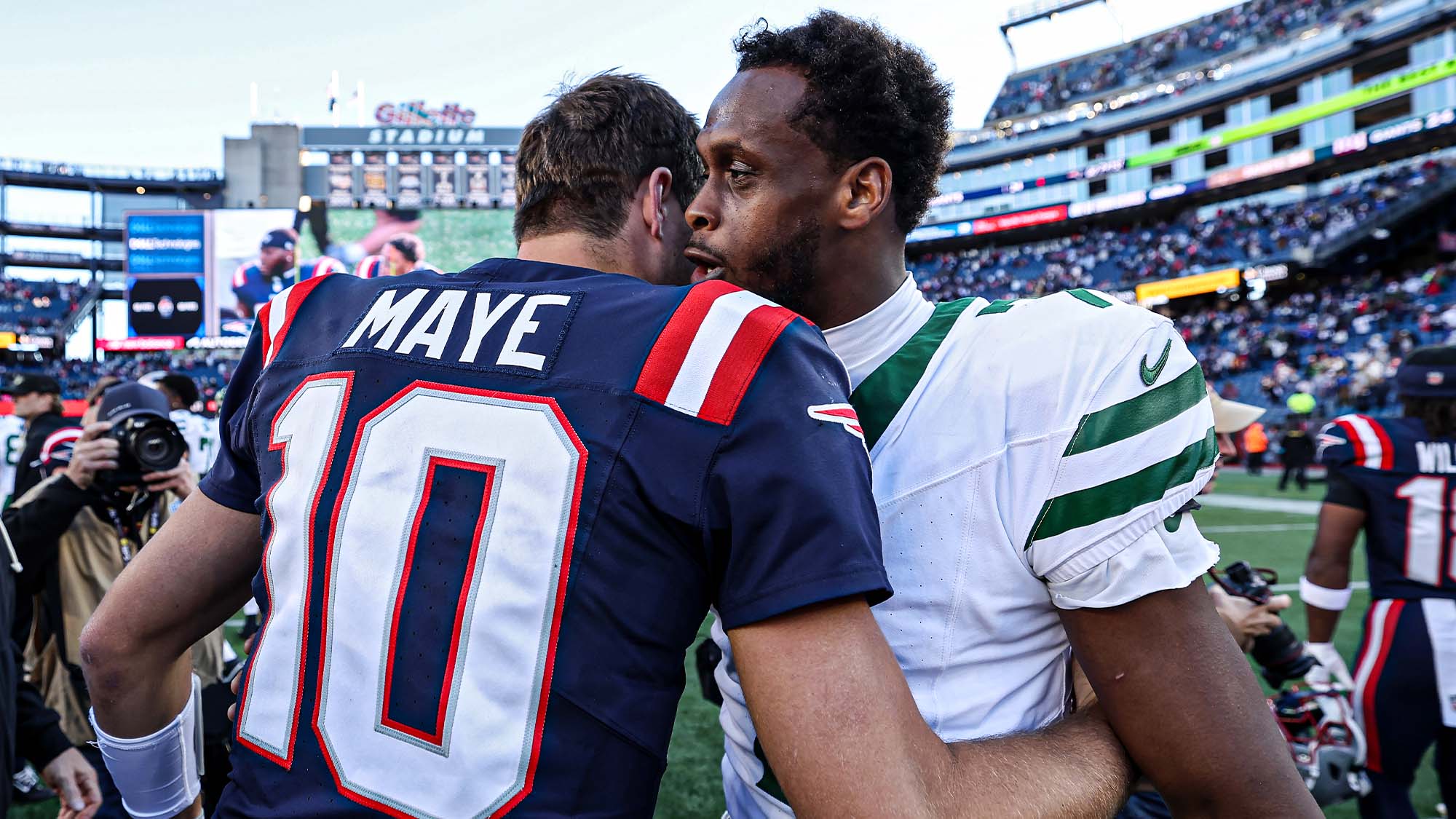
While Week 6 saw the Jets fall back behind on the scoreboard, they stayed ahead of the moral curve. They covered the spread in New England, a place where they are usually blown to smithereens, and often looked competitive with the defending AFC champions in a one-score loss. Sounds like 5-1.
Stop right there.
This is the logic that the Aaron Glenn-led Jets, and their most fervent defenders, have consistently used to defend the performance of a regime that now owns a 5-18 record, including 0-7 in the AFC East (the worst divisional start for a head coach in Jets franchise history). While this narrative carried some validity early on, both when the Jets were losing close games early in 2025 and again in 2026, it has worn out its welcome after 23 games.
The idea behind touting “moral victories” is that they should be viewed as seeds that will grow into real victories in the future. Theoretically, it makes sense to believe that if a team consistently loses by narrow margins, especially if they look competitive in the process and often do it against strong opponents, they are “closer” to breaking through and stockpiling wins than a team that frequently loses by wide margins or generally just looks incompetent.
This is where the fallacy comes in: One-score losses are not an accomplishment in the NFL.
As of the conclusion of Week 6’s Sunday games, 56 of the NFL’s 92 games this year were decided by one score (8 points or fewer). That’s 61%.
More than three out of every five games are decided by a single touchdown. So, when an NFL team walks onto the field, staying within one touchdown is the expectation. Failing to do so implies that the team had a woeful day at the office, barring a massive talent disparity between a juggernaut and a tanking squad.
The Jets have stayed within one score in five of their six games this year. That does not deserve much praise or suggest that they are on the verge of a breakthrough to elite status, though. It simply means they have graduated from being a historically bad team in 2025 to being a regular bad team in 2026.
Ultimately, there are three types of teams in the NFL: Horrendous teams that usually get blown out, teams that lose more close games than they win, and teams that win more close games than they lose.
The first group only includes a handful of teams each year, and it isn’t hard to escape it, as, by design, being that bad should yield the necessary resources to climb to the second group. That’s precisely what happened to the Jets, as they used the plethora of draft picks and cap space yielded by 2025’s disaster to build a roster that is competent enough to compete in any game.
Leaping from the second group to the third group, though, is the hardest leap to make, and it’s the one that separates the haves from the have-nots in the NFL. Even if the gap is separated by just one score on the scoreboard, it’s actually an enormous chasm that can only be bridged by coaching, quarterbacking, timely playmakers at crucial positions, and overall organizational cohesion.
Sunday’s loss to the New England Patriots exemplified the difference between a team that has what it takes to win close games and a team that does not.
Sure, in totality, the Jets looked quite competitive in a road game against the defending AFC champions. They were separated by one first down and six seconds of possession time, while they had the same number of penalties. The Jets even won the turnover battle.
But in the moments that mattered most, one team had the fortitude to consistently execute, and the other did not.
The Jets could move the ball up and down the field as much as they wanted, but when they really needed a yard or two to ensure a drive ended in points, it was the Patriots’ defense that stepped up. New York had two promising first-half drives stalled by failed rush attempts on fourth-and-short in New England territory.
And while the Patriots’ offense sputtered at times, often burying themselves into tough third down situations, OC Josh McDaniels consistently out-schemed Aaron Glenn to create wide-open answers for the red-zone and third-down conversions they needed. A team can struggle on the majority of plays, but if they step up more often than not in the highest-leverage situations, they will accomplish the goal that ultimately matters in a close game: gaining the advantage on the scoreboard.
As much as the Jets looked competent for much of Sunday afternoon, and as much as A.J. Brown tried to hand New York the win, it never felt like the Jets were in control of the game, as it always felt inevitable that New England would make the next big play to tilt the scoreboard in their favor.
With 1:46 remaining in the first half, the Jets had more than twice as many first downs as the Patriots (11-5), but still trailed 10-3 in the game. This type of trend should be a positive sign of what’s to come for a football team, but instead, it just turns out that the Jets wasted their opportunities to take control of the game when they had the Pats on their toes.
And that’s ultimately the point, both on an in-game level and a season-long level: No matter how close the Jets might consistently get, it will never matter until they become successful at the game’s most important skill: actually capitalizing on that closeness. It starts with consistently getting that one last yard they need to turn a promising long drive into seven points, and from there, they will start turning these moral victories into real victories.
For a while, the Jets’ constant closeness warranted optimism that, perhaps in time, they would take the next step and learn how to get that last yard they needed. Now that this has gone on for 23 games, though, it’s clear that the Jets, as currently constructed, just aren’t built to get that final yard, at least right now.
New England has a playmaking quarterback who can put on a cape when all hell breaks loose, quality schemers on both sides of the ball, and a head coach who has established a winning culture and general organizational cohesion. The Jets, as constructed, do not have any of those things, even if their roster, on paper, from top to bottom, may be comparable to New England’s and many others across the NFL.
The Jets have enough talent to ensure that most of their games at least come down to the wire, but they do not have the aforementioned tide-tilting pieces necessary to turn those one-score losses into wins on a consistent basis, and until they do, they will continue settling for moral success while the real-world “W” column remains dormant.
