
New York Jets general manager Darren Mougey was busy on Tuesday afternoon. The first-year executive placed two linebackers on injured reserve, signed a linebacker off his division rival’s practice squad, and executed a trade for an up-and-coming player in the secondary.
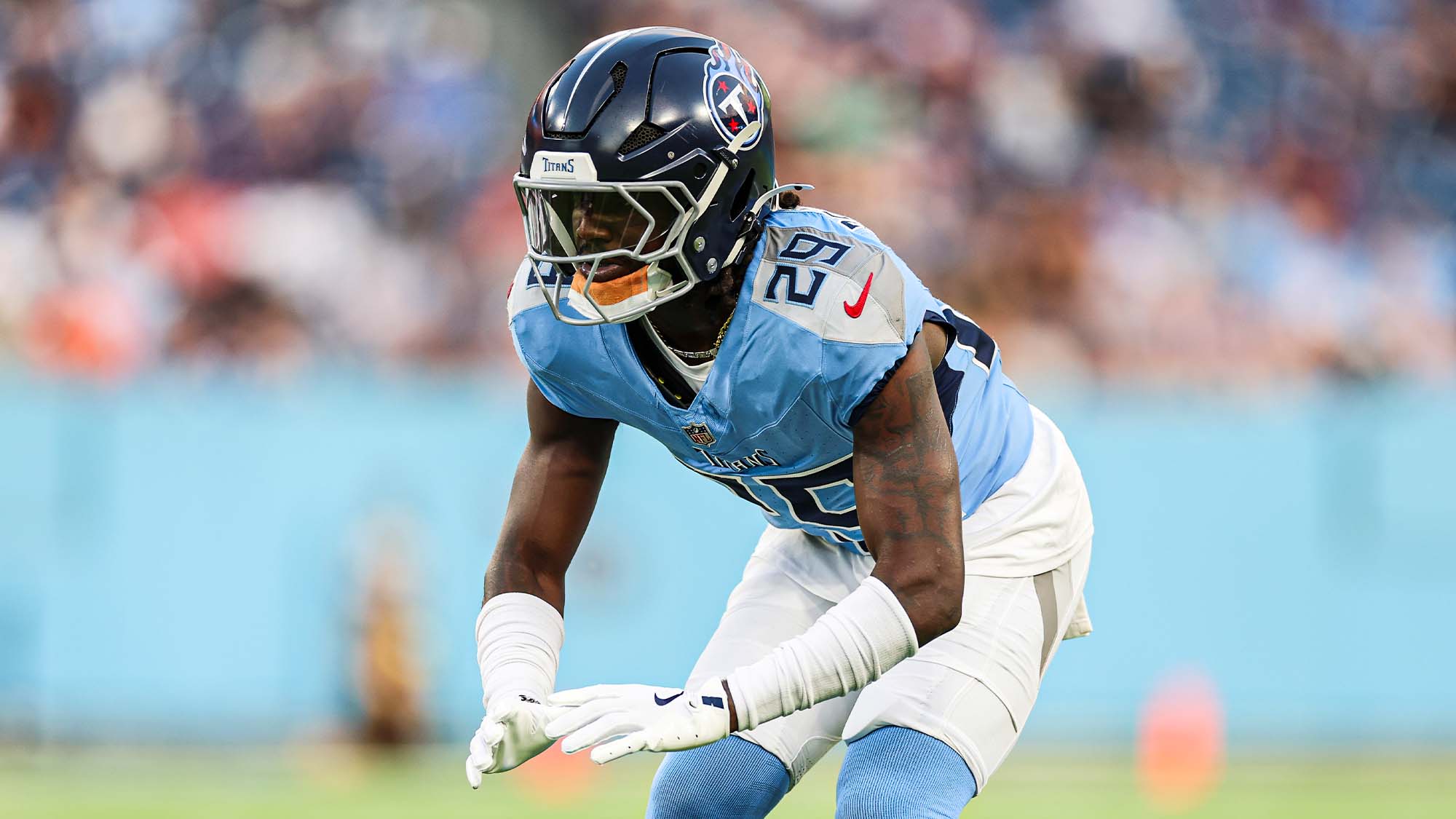
Former Tennessee Titans cornerback Jarvis Brownlee was traded to New York for a late-round pick swap in 2026. It’s a timely trade for the Jets, who have fielded one of the worst pass defenses in the league so far. Brownlee, a young player with good tape, adds upside to the fledgling unit.
Drafted in the fifth round of the 2024 NFL draft, Brownlee was a bright spot for a bad Titans roster in his rookie year. He recorded 75 tackles and broke up nine passes while endearing himself to Titans fans as a physical player who wasn’t afraid of stopping the run.
Mougey made a shrewd move by acquiring Brownlee. There are three main reasons why the fanbase should be excited about it.
Low risk, high reward
Late-round pick swaps are always a beautiful thing for the team getting a player out of the deal. Either the acquisition plays well and outplays the compensation yielded to acquire him, or he struggles, and the team simply moves on without having lost any total draft picks.
That is why the term “low risk, high reward” is an accurate description for trades like these.
New York and Tennessee exchanging 2026 seventh and sixth-round picks is nothing more than the Titans essentially gifting the Jets a chance to work with a second-year player to see if they can get anything out of him.
This is the type of move smart organizations make. Whether the player pans out or not, the team gave up very little for a chance to improve an area of need.
Mougey is making a trend out of this kind of deal. In August, he made two deals involving pick swaps to address defensive needs, acquiring Harrison Phillips and Jowon Briggs to bolster the defensive tackle unit.
Early in his tenure, Mougey is displaying signs of having a smart process by prioritizing this type of trade. He is bringing talented players into the building without sacrificing much future draft capital to do it.
Extra years of team control
Let’s say, for the sake of this exercise, that Brownlee works out for New York. The Jets will have acquired a valuable player on a rookie contract with two more years of team control after 2025.
Team control is important in trades like this. In some cases, organizations will give up higher draft capital because of the extra year of control they have with the player. The Jets getting two years of control for only a late-round pick swap is very rare, highlighting how smart this move is.
If Brownlee works out, New York will fill a hole in the secondary with one move that cost very little both monetarily and picks-wise.
Jets need answers, why not?
New York has one of the worst secondaries in the league. Brandon Stephens and Michael Carter II have both struggled tremendously to begin 2025. Things haven’t shown signs of improving.
From Mougey’s perspective, why wouldn’t he look to aid the secondary in a clearly desperate moment of need?
Brownlee brings a kind of swagger and physicality that the Jets are sorely missing.
Brownlee is unlikely to start right away when the team takes on Miami. Still, Mougey’s decision to make the trade while the secondary is struggling shows he is willing to act when the situation calls for it.
And in the case of a player like Brownlee, there’s a good chance he may be on the field producing sooner rather than later.
