
When the New York Jets doled out a three-year, $36 million deal to a cornerback who allowed the second-most receiving yards at his position in the 2024 regular season, it turned quite a few heads in the Tri-State Area.
So, when Brandon Stephens responded by delivering a string of surprisingly quiet games in coverage to begin his Jets career, fans started to come around on the initially bewildering signing. Midway through the 2025 regular season, it seemed as if Jets fans and the New York media had accepted Stephens as a high-quality starter and an excellent value signing by the Jets.
But was Stephens crowned too early?
How good has Brandon Stephens actually been for the Jets?
Stephens’ most recent game was a microcosm of his 2025 season in New York. It showcased both the areas where he has excelled and those where he has struggled.
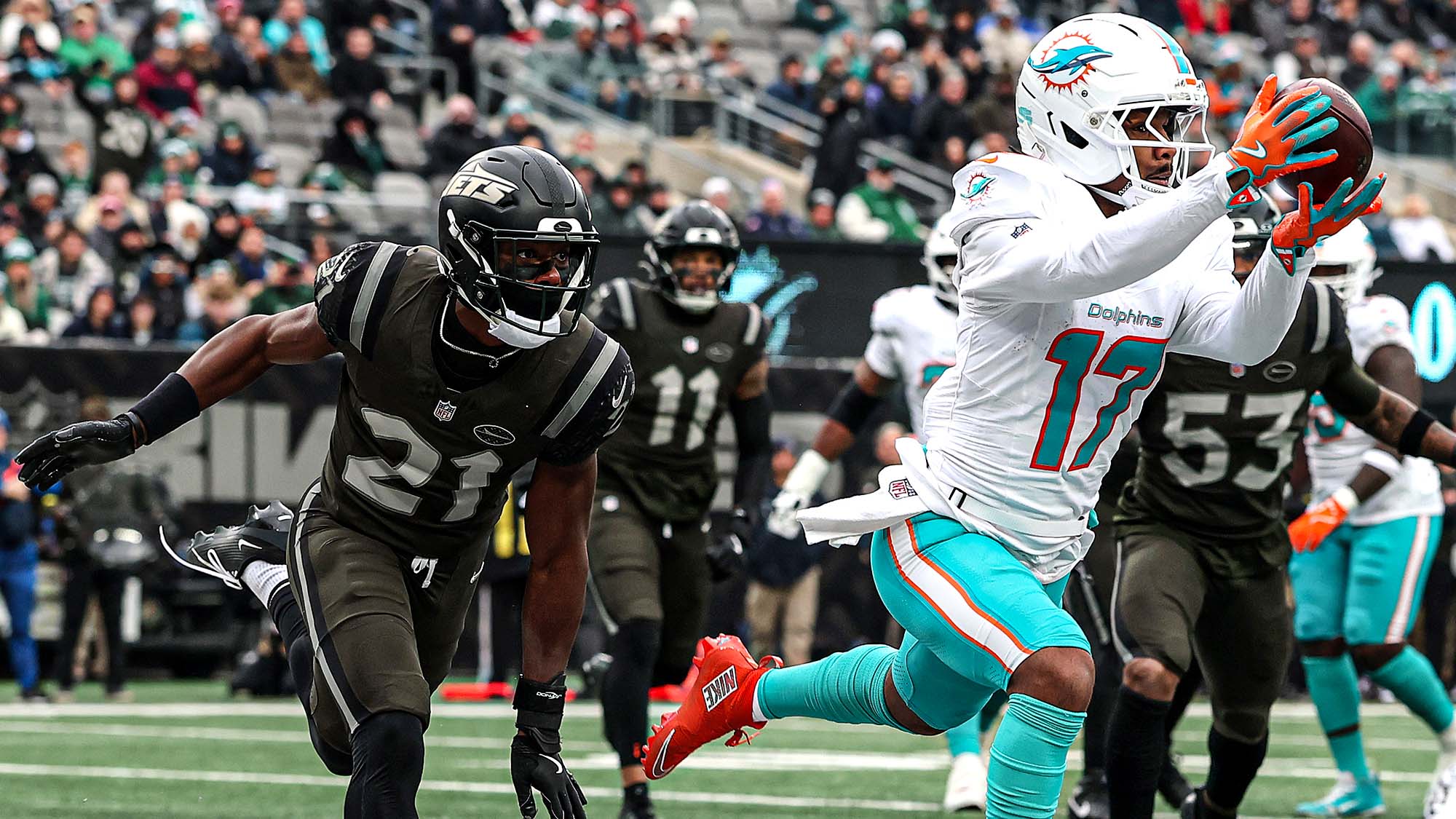
On the opening drive of the Jets’ eventual 34-10 loss to the Miami Dolphins, Stephens was beaten badly for a three-yard touchdown by Jaylen Waddle. Stephens mysteriously chose to give Waddle a free release to the inside, allowing him to break wide open for an uncontested touchdown reception.
It was about as ghastly of a red-zone man-coverage rep as you could get from your top cornerback.
While that play was a killer for the Jets, Stephens settled in afterward. He finished the game allowing 3-of-3 passes into his coverage to be completed for 18 yards and two first downs. Outside of the touchdown, Stephens allowed two catches for 15 yards and one first down.
This performance summed up Stephens’ season.
The highs and lows of Brandon Stephens
In terms of preventing yardage (the primary area where he struggled in Baltimore), Stephens has done a solid job for the Jets. Across 13 games (457 coverage snaps), Stephens has allowed 36 receptions on 57 targets for 349 yards. He’s allowing 0.76 yards per coverage snap, which ranks 19th-best out of 71 qualified cornerbacks (min. 300 coverage snaps).
Here’s the problem: Stephens has yielded a touchdown-to-interception ratio of 6-to-0. His +6 margin of touchdowns to interceptions is the worst among defensive players.
Stephens’ six touchdowns allowed are tied for the fourth-most among cornerbacks. Among the eight cornerbacks who have allowed at least six touchdowns, Stephens is the only one without an interception.
Stephens has gone 457 coverage snaps without an interception, the fourth-most at his position.
With such a stark difference in his production between these two sides of the cornerback position, how should we evaluate Stephens’ overall impact?
On one hand, Stephens spends the majority of each game holding his own in coverage. On the other hand, he’s as bad as it gets when it comes to winning the battle of high-impact plays; he allows plenty of touchdowns and does not make up for it with any takeaways.
Ultimately, it likely means that Stephens should be viewed as somewhere around a league-average cornerback.
Touchdowns and interceptions are not everything for a cornerback; it is highly beneficial to the Jets’ defense that Stephens has allowed a low rate of yardage per snap. It shows that Stephens is winning his reps on a down-to-down basis.
However, the TD:INT ratio cannot be brushed aside, either. If you give up a touchdown every other game and never make up for it with takeaways, it’s hugely damaging to the team’s chances of winning each week, regardless of how well you’re performing otherwise.
For evidence of how damaging Stephens’ TD:INT ratio is, look no further than the Jets’ overall defensive metrics. Stephens’ individual struggles are a leading cause of the Jets’ team-wide issues in these areas.
The Jets have gone an NFL-record 13 straight games without an interception. While that is obviously not all Stephens’ fault, he bears a significant portion of the blame; he has started all 13 games at cornerback and leads the team in both coverage snaps (457) and targets (57). If anyone should have at least one interception, it’s him.
Meanwhile, the Jets are 25th in the red zone, allowing a touchdown on 62.5% of trips. Once again, that isn’t all Stephens’ fault, but it doesn’t help that he has allowed a team-high four red zone touchdown receptions.
Expanding our analysis to other aspects of Stephens’ game, he usually stands out positively. He has committed only two penalties and has also tackled well, missing just six tackles. His 9.4% missed tackle rate ranks 18th-lowest among 86 qualified corners (min. 400 defensive snaps).
Where Brandon Stephens’ value stands entering the 2026 offseason
Overall, it’s fair to say that Stephens has been a slightly above-average starting cornerback for the Jets. He’s limiting yardage at an above-average level, avoiding penalties, and tackling well. However, a league-worst TD:INT ratio cannot be brushed aside, especially when his issues in those areas are among the leading causes for two of the Jets’ most glaring team-wide weaknesses.
The Jets have Stephens under contract for two more years, with cap hits of $14 million in both 2026 and 2027. Currently, his 2026 cap hit of $14 million is projected to rank 19th among cornerbacks; however, this ranking is likely to drop after future contracts are signed.
That makes Stephens a fair value for the Jets. The No. 19 ranking is identical to his current ranking in yards per coverage snap among qualifiers. His TD:INT ratio greatly dampens his value, but his low penalty number and reliable tackling help pull his value back up. Ultimately, the Jets have gotten what they paid for. So far, Stephens is not a steal nor a bust.
Stephens isn’t going anywhere in 2026; he’s played well enough to keep his job, and the Jets would not benefit from dumping him, anyway, as a release would cause them to lose over $5 million in cap space. He is on track to start for the Jets in Week 1 of the 2026 season.
However, the Jets shouldn’t ignore the cornerback position when looking to upgrade their team this offseason. Sure, it stands out as one of their stronger positions, particularly on defense, but that does not mean it is solidified enough to be left untouched.
While Stephens has played up to his contract, he’s far from great enough to discourage the front office from seeking potential competition in the starting lineup. With a barren roster, the Jets should be looking for upgrades wherever they can. As solid as Stephens may be, the Jets shouldn’t preclude themselves from trying to find a corner who’s even better.
Turnovers and red-zone efficiency are two of the most critical swing factors in the NFL, and so far, Stephens has been a liability in those areas. He’s been a solid overall player, but not the type of playmaker who flips games. If the Jets can find a cornerback who is capable of that, be it in free agency or with an early draft pick, they should not hesitate to invest in him just because of Stephens’ presence.
Four games remain for Stephens’ body of work to fluctuate. Perhaps he will rack up five interceptions over this stretch. Maybe he will revert to his Baltimore form. When it’s all said and done, his numbers could look a lot different than they do right now.
As things stand through Week 14, though, Stephens has played up to his contract. He is a slightly above-average starting cornerback, one who has done a solid job with fundamentals but struggles mightily when it comes to preventing game-changing plays and creating some of his own.
