
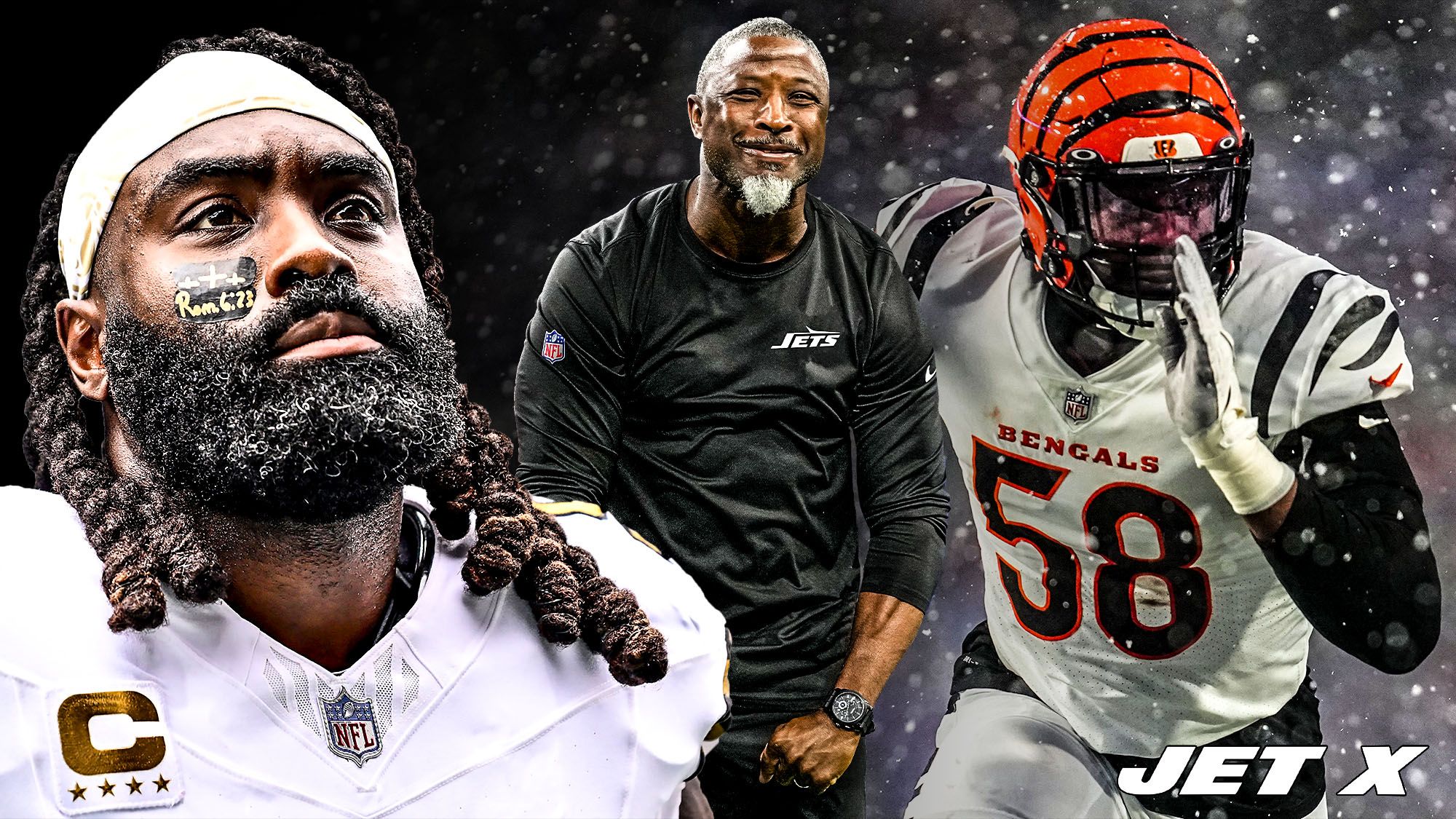
The New York Jets’ intentions on the open market were clear and authoritative: defense, defense, and a little more defense.
While that idea is good enough for many of the older-school, hardened football folks who frequent Jet X, it travels even further. Aaron Glenn targeted hard-nosed, run-defense-first gamers who have no problem getting their hands dirty.
Precisely how does the Jets’ 2026 defense look when viewed within the structure of a specific package? This is why we’ve gathered today.
New DNA: Physicality and run-defense intent
- Minkah Fitzpatrick (S)
- Demario Davis (LB)
- Joseph Ossai (EDGE)
- Kingsley Enagbare (EDGE)
- David Onyemata (IDL)
New York initially kicked off Monday by trading a seventh-round pick to the Miami Dolphins for veteran safety Minkah Fitzpatrick. How productive the 29-year-old safety still is at this stage remains to be seen — as we’ll hit the tape in the coming days.
Interestingly, he’s the lone free-agent signing who doesn’t fit into the defensive front.
Demario Davis needs no introduction. Drafted in the third round of the 2012 NFL draft — Mike Tannenbaum’s last as Jets general manager — the 37-year-old backer returns to Florham Park, NJ, for his third stint with the Jets.
Davis will undoubtedly hold down the MIKE in Glenn’s defense. Wearing the green dot as the unit’s leader, he provides the heavy-handedness (fill, spill physicality) the Jets desperately need alongside Jamien Sherwood.
Joseph Ossai, 25, comes from the Cincinnati Bengals. From early indications, he’s a stout run defender on the edge, rarely shying away from violent acts.
Kingsley Enagbare, 26, is a unique case. The fifth-round choice by the Green Bay Packers in 2021 started 3 of 17 games for his original team in 2025. He projects to slide into the Jets’ defense as a second-team EDGE.
Lastly, David Onyemata, 33, is a Glenn favorite. Having spent the last three seasons with the Atlanta Falcons, Onyemata crossed paths with Glenn while with the New Orleans Saints.
Onyemata clocks in around 310, which adds yet another 300-plus-pound big-heavy to the Jets’ front. Following a familiar pattern, Onyemata’s run defense shines more than any other production trait (ranking 8th of 134 qualified IDL per PFF).
Defensive front configurations
Obviously, this configuration depends on future acquisitions, but only Monday was needed to understand the Jets’ intent.
Also, apologies in advance, but these projections include Arvell Reese as the Jets’ No. 2 pick in the 2026 NFL draft. If Glenn wants physicality and run defense, it’s becoming more likely that Reese is the selection in April.
3-4 Eagle
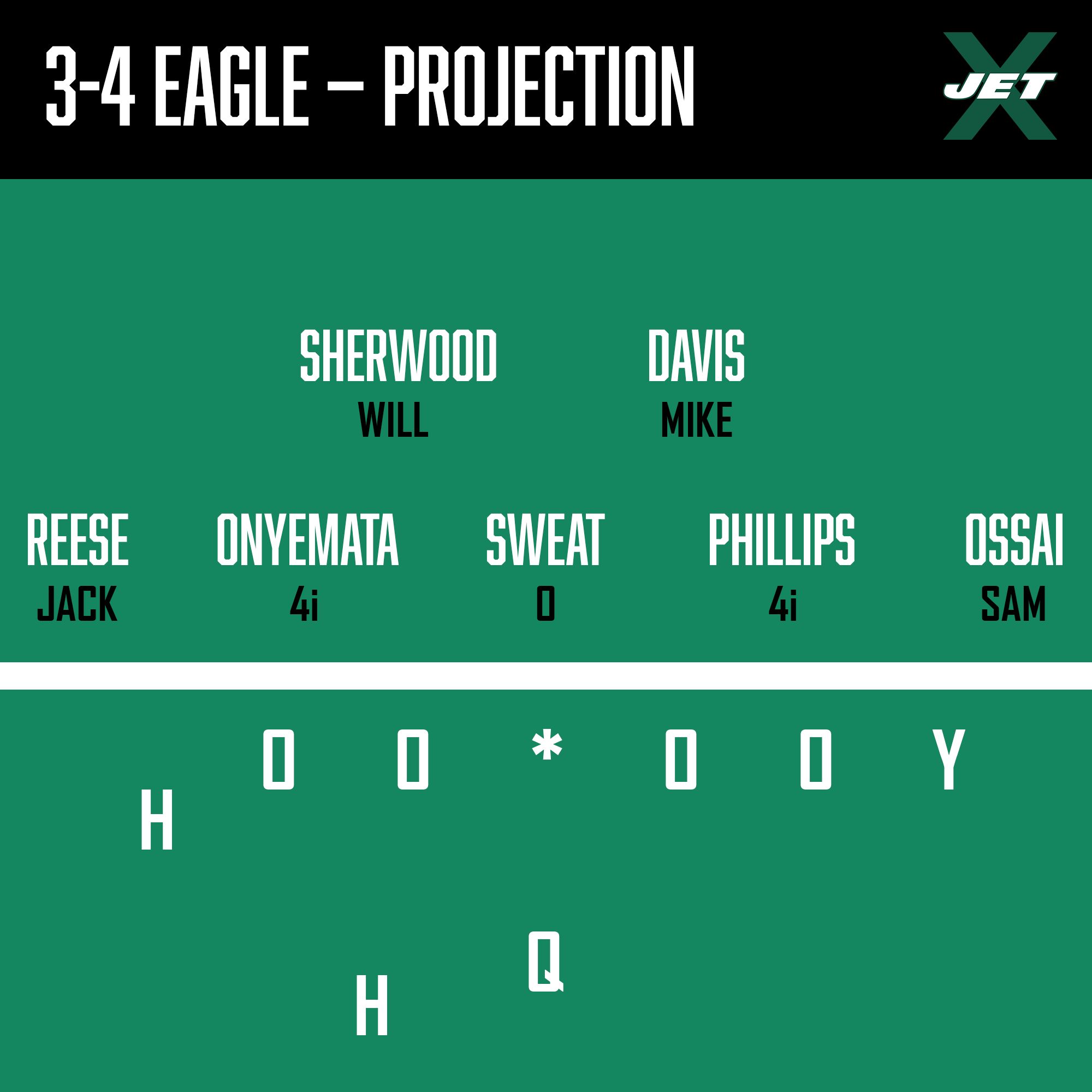
Kicking things off is a base 3-4 front. The two 4i-techs, featuring run-stuffing interior defenders David Onyemata and Harrison Phillips, work in both the 3-4 Eagle and the 3-4 Bear.
A 3-4 Okie front could invite Jowon Briggs to enter the game in favor of Onyemata or Phillips.
3-4 Under
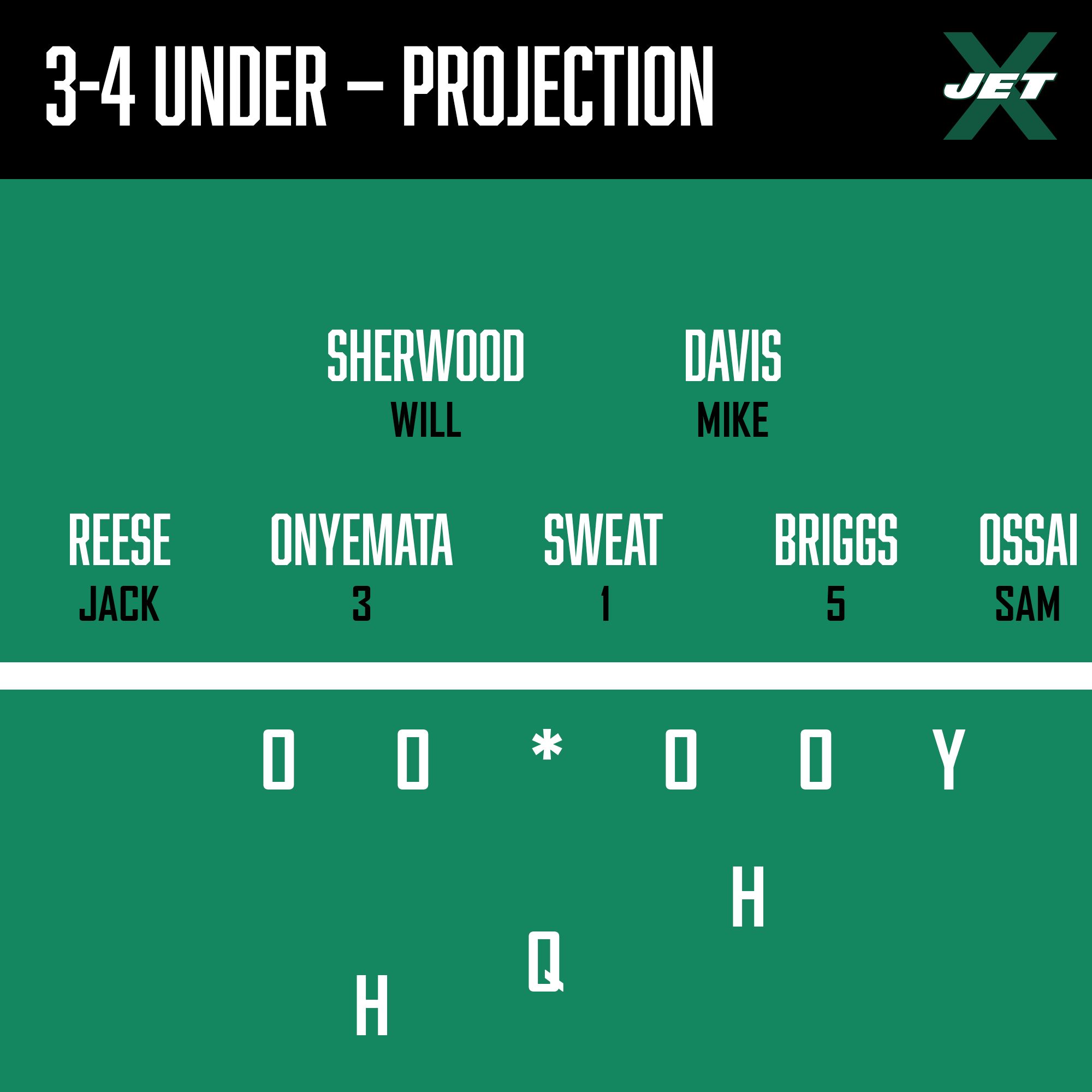
The 3-4 Under plays nicer for Briggs, as he bumps out a bit, closer to the edge. (Granted, he’ll be asked to hold up at the point of attack on the strong side.)
4-3 Over
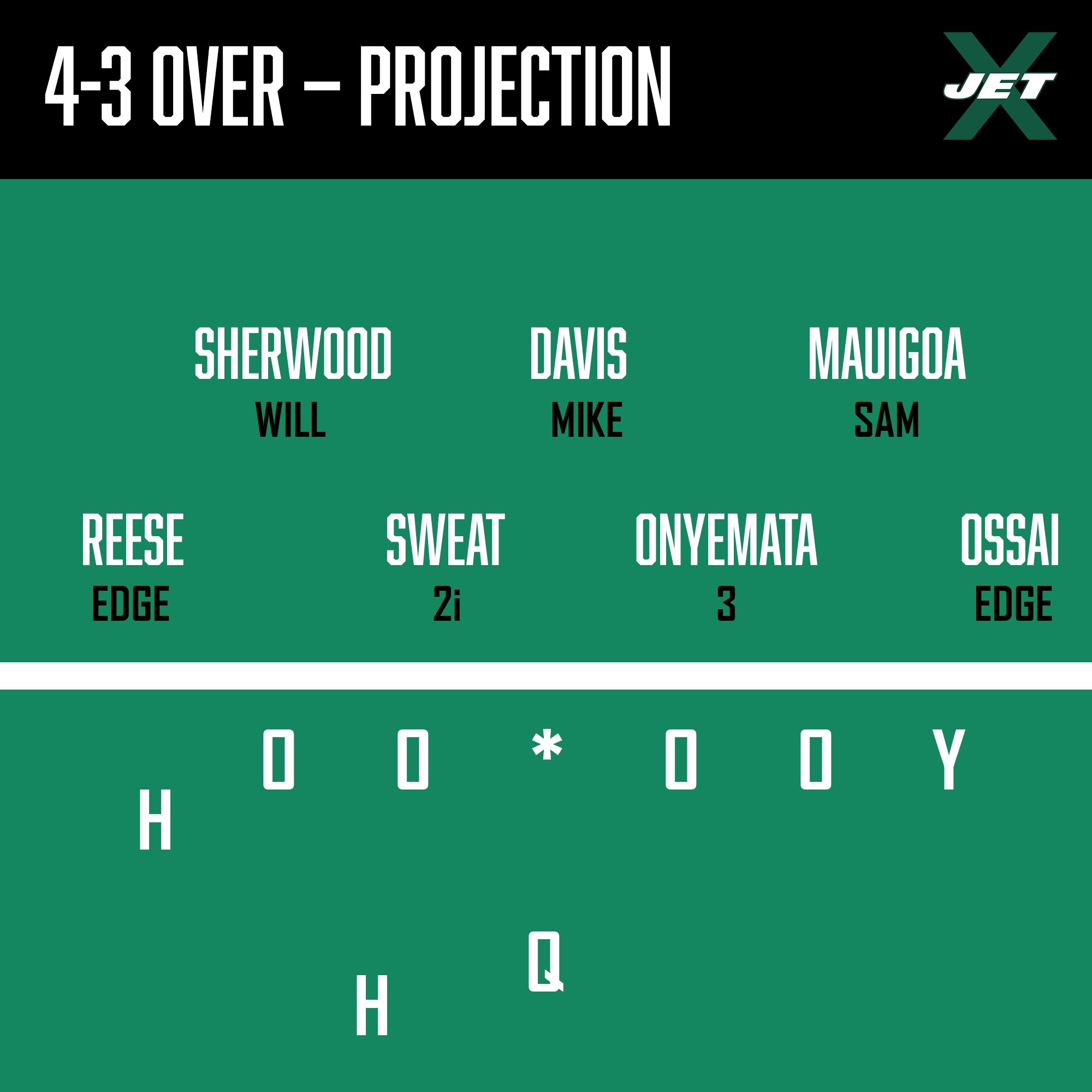
Switching to the 4-3 over eliminates one of the three 300-pound interior defenders in exchange for sophomore linebacker Francisco Mauigoa.
5-Down 3-3-5 (Nickel)
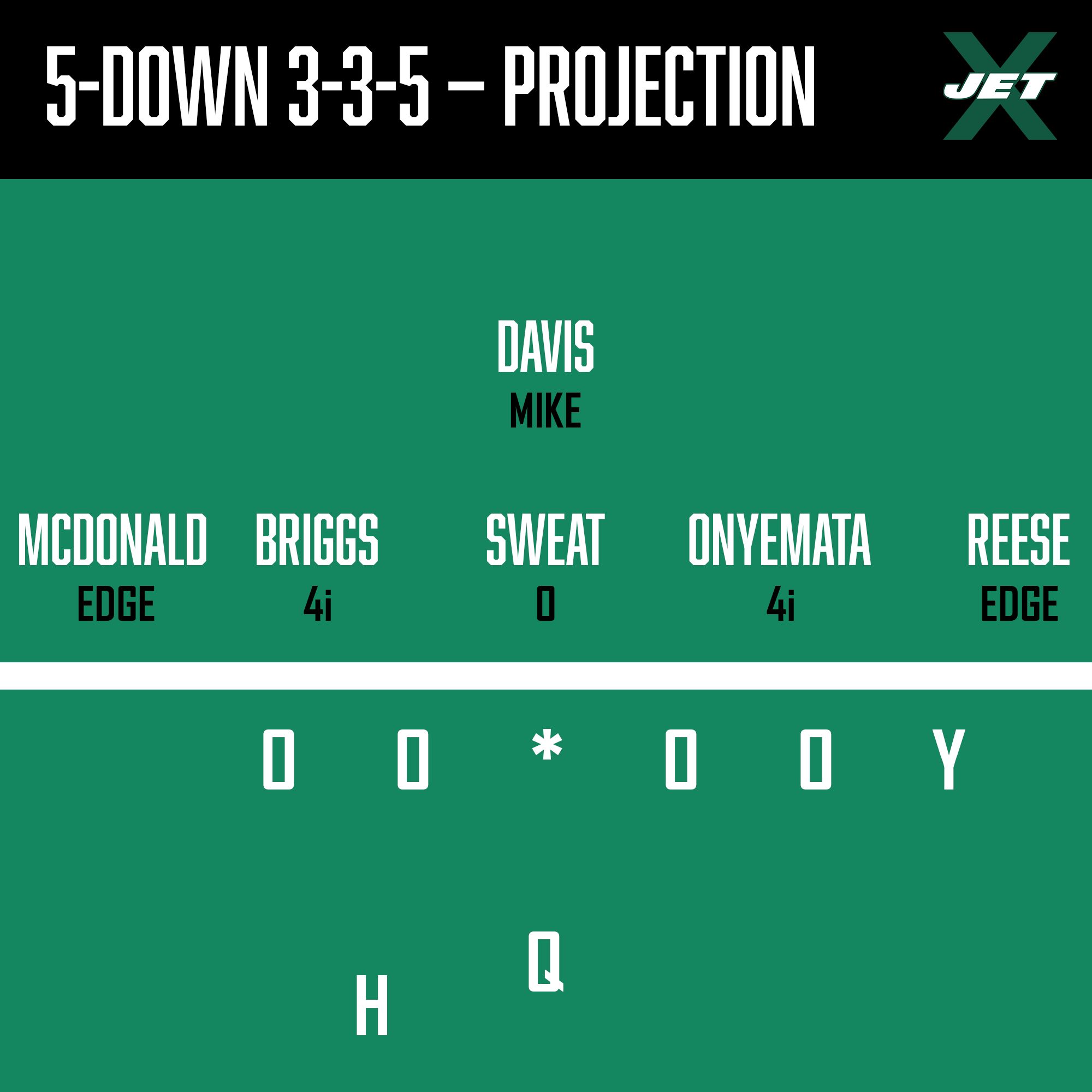
The 5-down 3-3-5 nickel allows Will McDonald to get onto the field. However, more than base vs. nickel, the Jets intend to use McDonald in subpackage situations — when passing is much more likely (passing downs).
Doing everything possible to avoid McDonald in balanced run-pass downs is optimal. Based on the early indications of the offseason, this seems to be the plan.
Mint (Nickel)
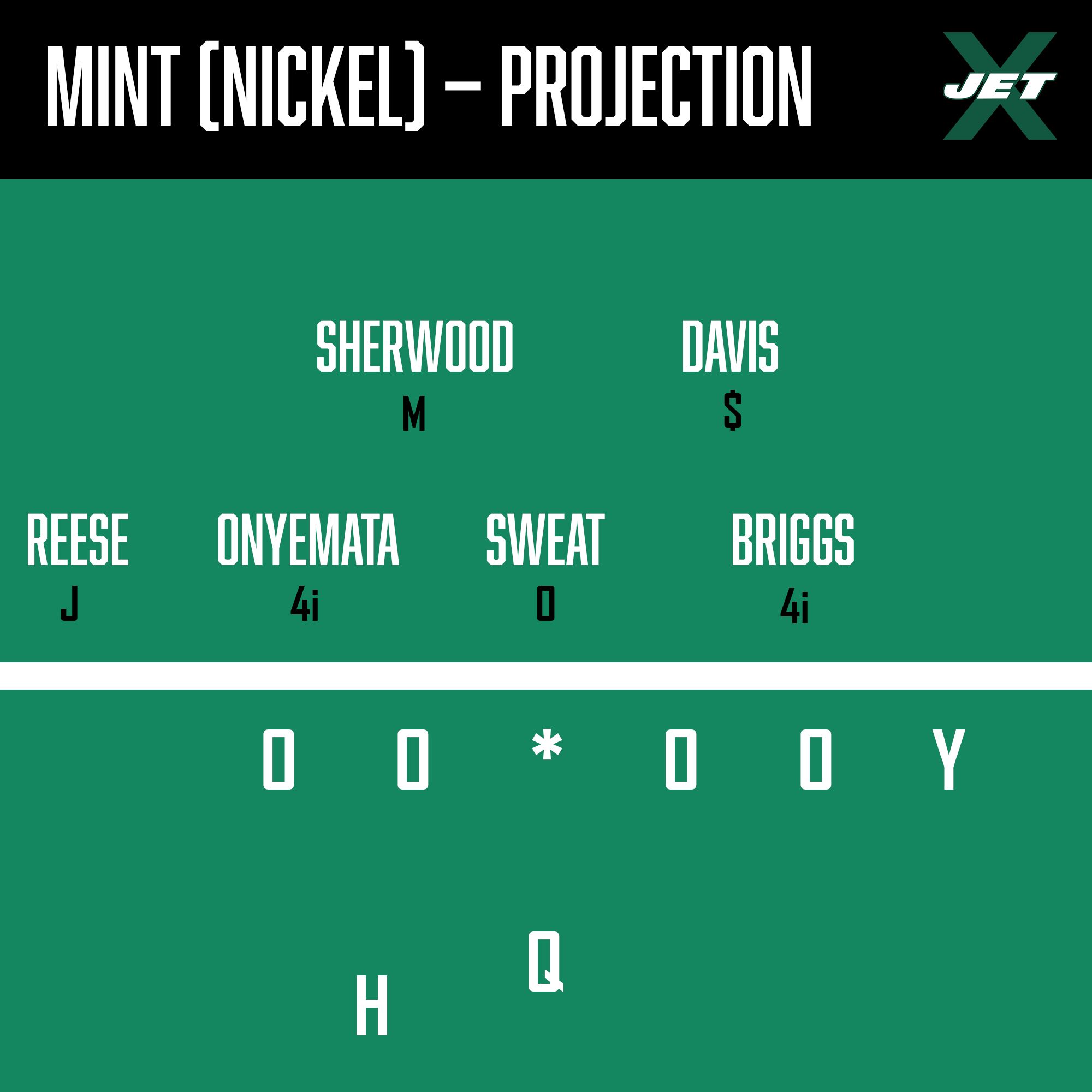
The mint front — a variation of tite, which merely signals two 4i-techs inside to prevent spread offenses from doing damage between the tackles — places Davis at the money and Reese as the jack, opposite the fifth defensive back on the passing-strength side.
4-Down Wide (Nickel)
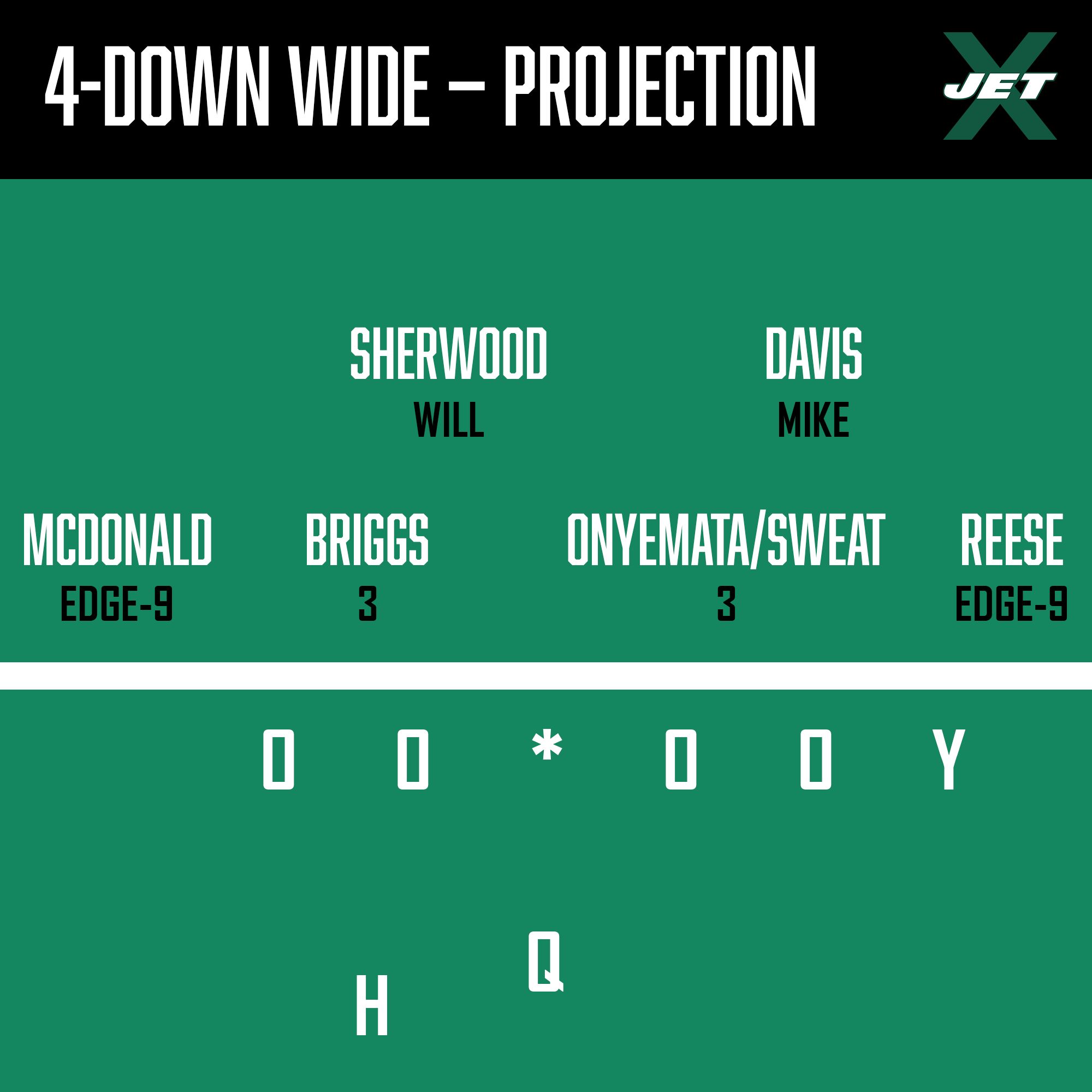
Lastly, the 4-down wide nickel is something modern Jets fans are accustomed to, thanks to the four years Robert Saleh spent here. It’s a 4-3 variation look that spreads the defensive tackles, and even allows smaller rushers to play one of the inside roles — as long as it’s a passing down.
Single- or double-A-gap looks can be used, which could also be where they place Reese. (Mug looks can commence within the 3-3-5 as well.)
If Aaron Glenn commits fully to 3-4 principles and react-attack up front (more 2-gapping; well, as much as possible in today’s game), there are plenty of mug opportunities out of the 3-3-5 as well.
