

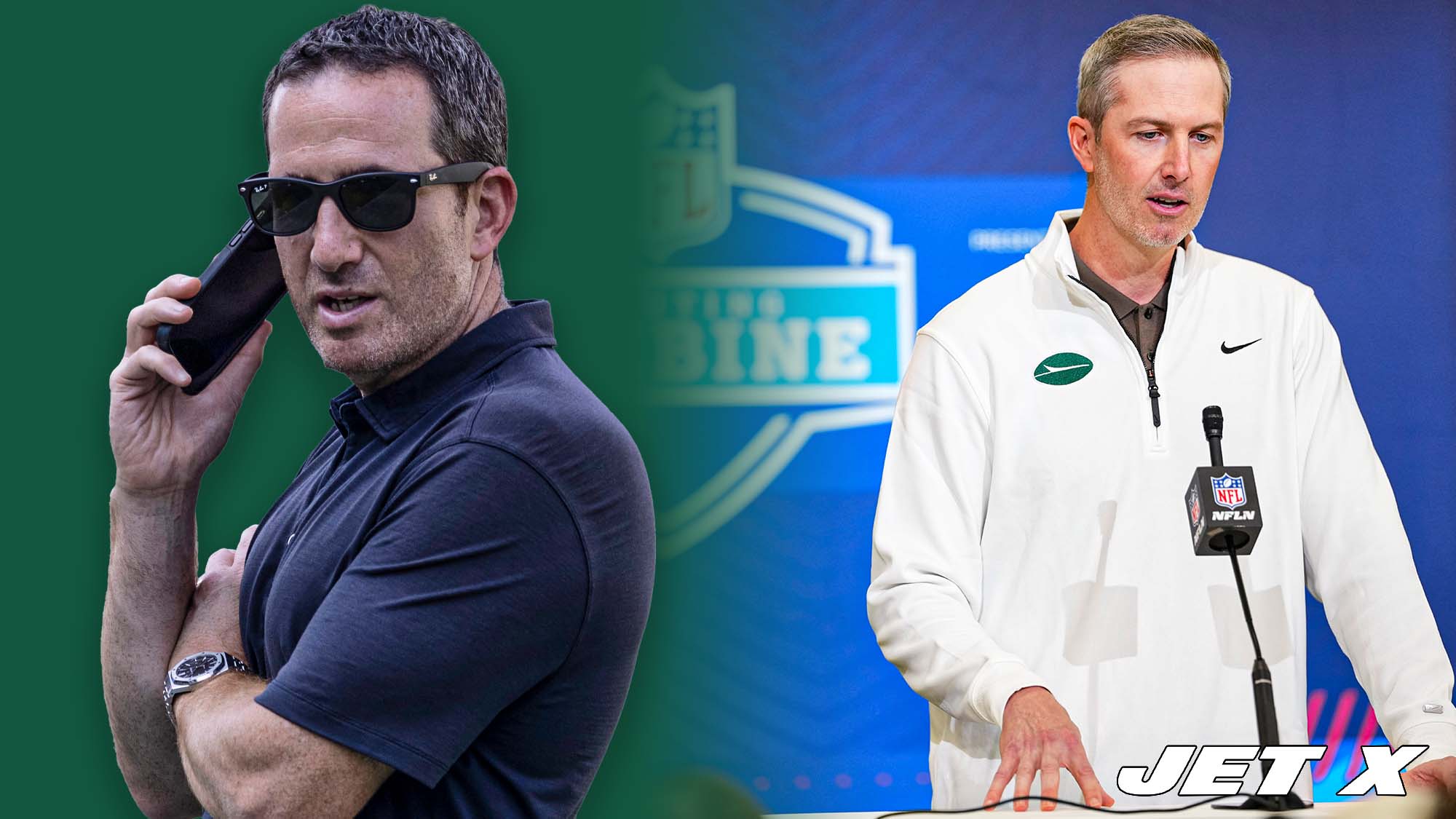
No NFL general manager is going to hit on every acquisition made in a single offseason.
The goal for each executive, though, is to minimize the fallout when an acquisition doesn’t work out. This has been a problem for the New York Jets for some time.
Not anymore—at least, not since Darren Mougey has been in charge.
Over the last calendar year, the Jets’ general manager has worked the phones to acquire talent and capital to improve the roster in his image. Fan favorites have come and gone. Rough cap decisions have been made.
And now, the Jets can see a light at the end of the tunnel. There is hope that things might finally be changing.
As New York’s general manager reshapes the franchise’s future, he is mirroring the rise of one of the best executives in modern sports.
Mougey’s parallels to Howie Roseman
If you take a straw poll on who NFL fans, analysts, executives, and players think is the best general manager in the sport, Philadelphia Eagles executive Howie Roseman may come out on top.
For good reason, too.
Roseman took over the Eagles in 2010 and, despite some bumps in the road to start, has built one of the most consistent powerhouses in the game. Philadelphia has appeared in three of the last nine Super Bowls, winning two.
More importantly, Roseman has been active and flexible on the trade market, quickly moving off players who struggle or might bring back a hefty return package.
Philadelphia will never say no to trade discussions that could improve the team, especially when it comes at little consequence to them. A big reason for that is their understanding of asset management and the needs of other teams.
Roseman is notorious for “winning” trades simply by giving opposing organizations what they want. From star acquisitions like Darius Slay and A.J. Brown to departures like Carson Wentz, Philadelphia’s ability to accumulate value on the trade market is something other organizations have always tried to emulate.
For the first time in a long while, it feels like the Jets are finally on that path.
Mougey’s strong offseason
In just a single calendar year, Mougey has transformed the Jets through smart free agent signings and trade acquisitions. The latest move, shipping away failed quarterback Justin Fields for a 2027 sixth-round pick, was Mougey’s 12th trade since last August.
The common denominator in all those deals was Mougey’s understanding of the asset(s) he had and holding out for the best possible return. The packages Mougey has acquired for New York’s most appealing players have left the Jets with a surplus of picks, young players, and cap space moving forward.
The Jets’ 2026 offseason has featured an emphasis on those exact points. New York walked in with a plethora of needs. Instead of signing big-name free agents, Mougey struck early with a vast quantity of friendly deals to veterans who are upgrades over their predecessors.
New York also has four picks within the first 50 overall selections in April’s draft.
There isn’t a move that Mougey made this offseason that could be considered a massive overpay. Even Geno Smith, an aging quarterback whom the team acquired by swapping late-round picks, will cost the team just over $3 million in cap space.
Mougey has built a collection of assets that make the Jets an intriguing team to keep an eye on over the next few years. He will never be perfect. But for the first time in a long time, the Jets aren’t making short-sighted mistakes that can hurt them in the future. Everything they do is intended to maintain flexibility in the future.
It’s something Roseman has done for decades in Philadelphia.
Mougey is in the early stages of a similar path. For the young GM, it says a lot that his name is even being mentioned alongside the likes of a two-time Super Bowl-winning executive.
