

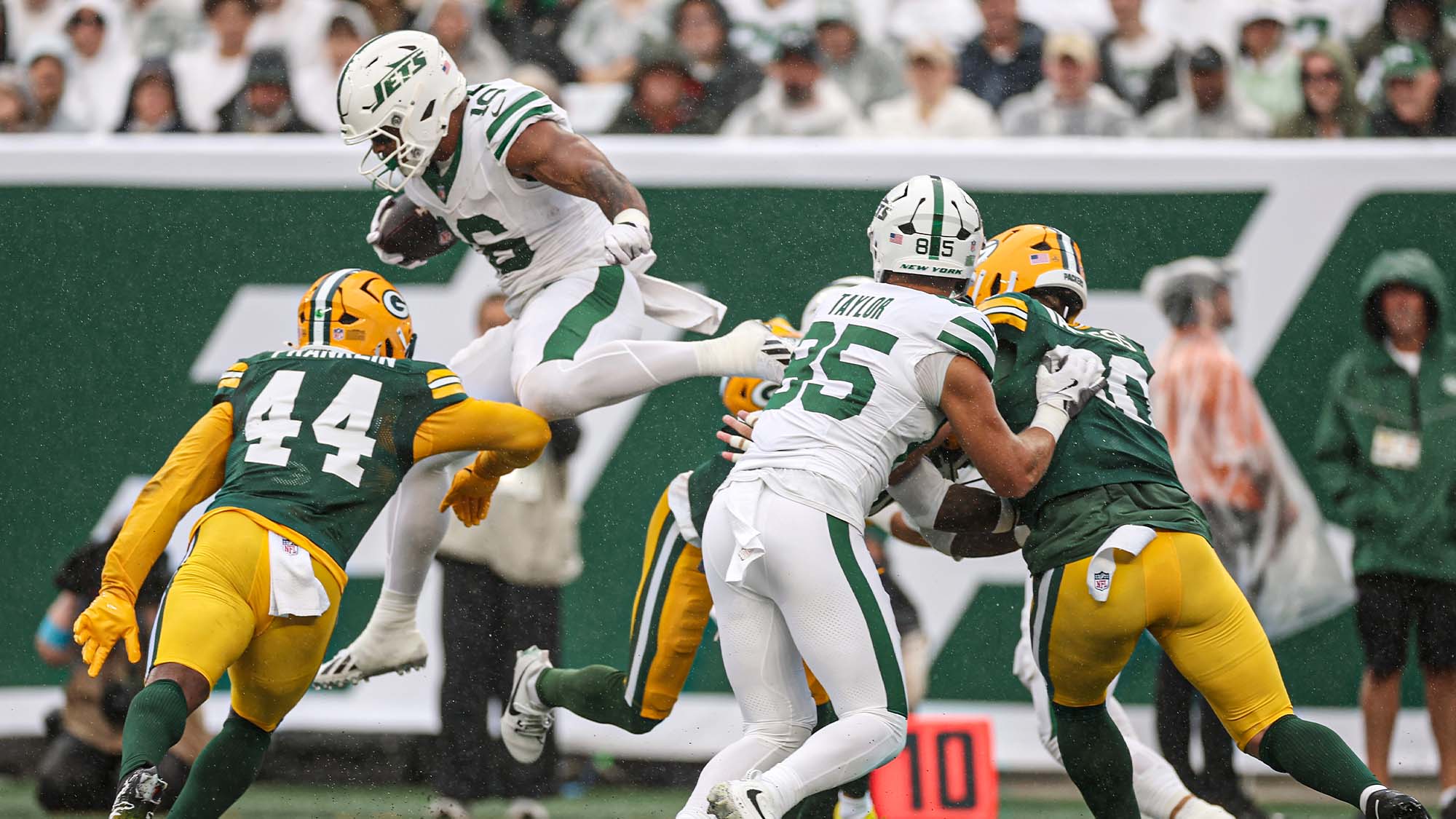
It isn’t often you see NFL teams draft a tight end in the top half of the first round nowadays.
In April, Oregon’s Kenyon Sadiq was chosen 16th overall by the New York Jets, making him just the seventh tight end drafted in the top 16 over the last 20 drafts.
When a tight end is drafted that early, he immediately faces high expectations.
Tight end is one of the league’s least valued positions from a salary-cap standpoint, but the NFL draft’s wage scale is determined solely by draft slot and does not account for position. This means that a tight end chosen 16th overall will be much more expensive relative to his peers than a player chosen at nearly any other position that might be considered in that slot.
Consider that Sadiq’s four-year, $22.3 million rookie contract, which is fully guaranteed, already places him 13th at the tight end position in terms of fully guaranteed money. Compare that to the player drafted one slot after Sadiq, Detroit Lions offensive tackle Blake Miller, who ranks 38th at his position.
Therefore, it stands to reason that a team must think extremely highly of a tight end prospect to draft him that early.
As the Jets enter Week 3, the time has come for them to show why they believed Sadiq was worthy of being one of the highest drafted tight ends in the last two decades.
Week 3 offers a chance for Sadiq to be unleashed
Sadiq’s first two weeks have been relatively quiet. He had a three-yard touchdown run in Week 1, but hasn’t received a carry otherwise. In the passing game, he’s been targeted only six times, catching five passes for 38 yards, no touchdowns, and no first downs.
All of Sadiq’s targets were under 10 yards downfield, including three behind the line of scrimmage. His ADOT (average depth of target) is precisely 0.0 yards.
It was completely expected, though, that Sadiq’s target diet would look like this in the early goings of the season.
Sadiq missed the entire preseason and most of training camp, so it makes sense that the Jets have essentially restricted him to designed touches and checkdowns. It allows him to rely on his athleticism to make plays while he accumulates experience and chemistry in the offense. He didn’t need any feel for route timing or camaraderie with Geno Smith to take a handoff and flaunt his 10.0 Relative Athletic Score.
Heading into Week 3, though, it’s time for the Jets to ask more of Sadiq than to essentially be a “gadget guy”.
The Jets’ TE1, Mason Taylor, is out with a thumb injury for Sunday’s game against the Detroit Lions. That means Sadiq, who has only played 39% of the Jets’ offensive snaps so far, is in line for a significant uptick in snaps.
Plus, the Jets are battling injuries at wide receiver, which could redirect even more downfield pass-game responsibilities to Sadiq. Starting wideout Adonai Mitchell was limited in Friday’s practice with a finger injury that he suffered during the week; he was seen with a large wrap around his right hand.
All signs point to Sadiq seeing a major boost in both snaps and targets.
From a target perspective, the next step for Sadiq is to complement his designed touches by getting involved in the downfield passing game. It’s understandable that the Jets have not used him there yet; he hardly practiced until the lead-up to Week 1, so they did not want to ask a rookie with little practice time to run important routes down the field.
If receivers running downfield routes have not mastered the proper timing and spacing that their scheme asks of them, they will put the quarterback at risk of throwing interceptions. You need your quarterback to be able to trust the guys who are running high-leverage routes in the progression.
Geno Smith may not have had that trust in Sadiq just yet over the first two games, given not only their lack of practice time together, but also Sadiq’s inexperience.
A rookie tight end is already a wild card in general, but as a prospect whose route-running game carried question marks coming out of college, Sadiq’s reliability as a downfield route-runner was enough of a concern before he missed practice time. Once it was clear that he would miss most of camp, the Jets were wise to take it slow with him in the offense.
But as their Week 3 matchup with the Lions approaches, the time has come to test the waters with Sadiq as a high-priority target, for multiple reasons.
Not only will Sadiq’s increased involvement be somewhat necessitated by injuries, but he’s been back at practice for 25 days now, on top of playing two regular-season games. He’s had time to learn the playbook and gel a little bit with Smith.
Above anything else, though, Detroit is the perfect opponent for the Jets to unleash Sadiq against.
The Lions’ defensive struggles are well-documented. They are allowing the second-most points per game (35.5), largely due to a woeful pass defense, which ranks 31st with 310.5 yards per game allowed.
Specifically, though, the Lions have struggled mightily to stop tight ends.
Detroit has allowed a league-high four touchdown receptions to tight ends. They have also allowed 187 receiving yards to tight ends, ranking second-worst.
The Jets could not have asked for a better opponent in a game when Sadiq will be asked to step up.
Across the board, the Lions’ defensive depth chart is rife with favorable matchups for Sadiq. The Jets can put him almost anywhere and feel confident that their 16th overall pick will be able to out-athlete his matchup, regardless of his lack of his experience.
Detroit has already been without starting safeties Brian Branch and Kerby Joseph, who began the season on the PUP list. Now, the Lions will also be without Thomas Harper (ankle), one of three safeties whom Detroit has relied on to fill the void.
On top of their backup-filled safety unit, the Lions also have an exploitable target at linebacker, Jack Campbell.
The 2025 All-Pro is off to a brutal start. Campbell has already allowed two touchdown receptions this season, tying him with Giants rookie Arvell Reese for the most among linebackers. Both of Campbell’s allowed touchdowns went to tight ends.
When matched up against tight ends, Campbell has allowed all four targets to be completed for 34 yards, with those receptions leading to two touchdowns and two additional first downs. In addition, he committed a holding penalty on Bills tight end Dawson Knox, wiping out a red zone sack.
The Jets were smart to ease Sadiq into the offense over the first two weeks. But the time has come to show why he was the 16th overall pick. Between Taylor’s injury, Mitchell’s hand, Detroit’s susceptibility to tight ends, and Sadiq’s accumulated experience with the offense, the Jets could not have scripted a better opportunity to unleash the freak.
