
The New York Jets endured a heart-wrenching 20-17 overtime loss to the Green Bay Packers on Sunday.
It was frustrating defeat for the New York faithful in attendance for the home opener, as throughout the game, it felt like New York was the better team. The Jets held a double-digit lead in the fourth quarter before squandering it and losing in overtime, and they finished the game with a +86 differential in total yardage.
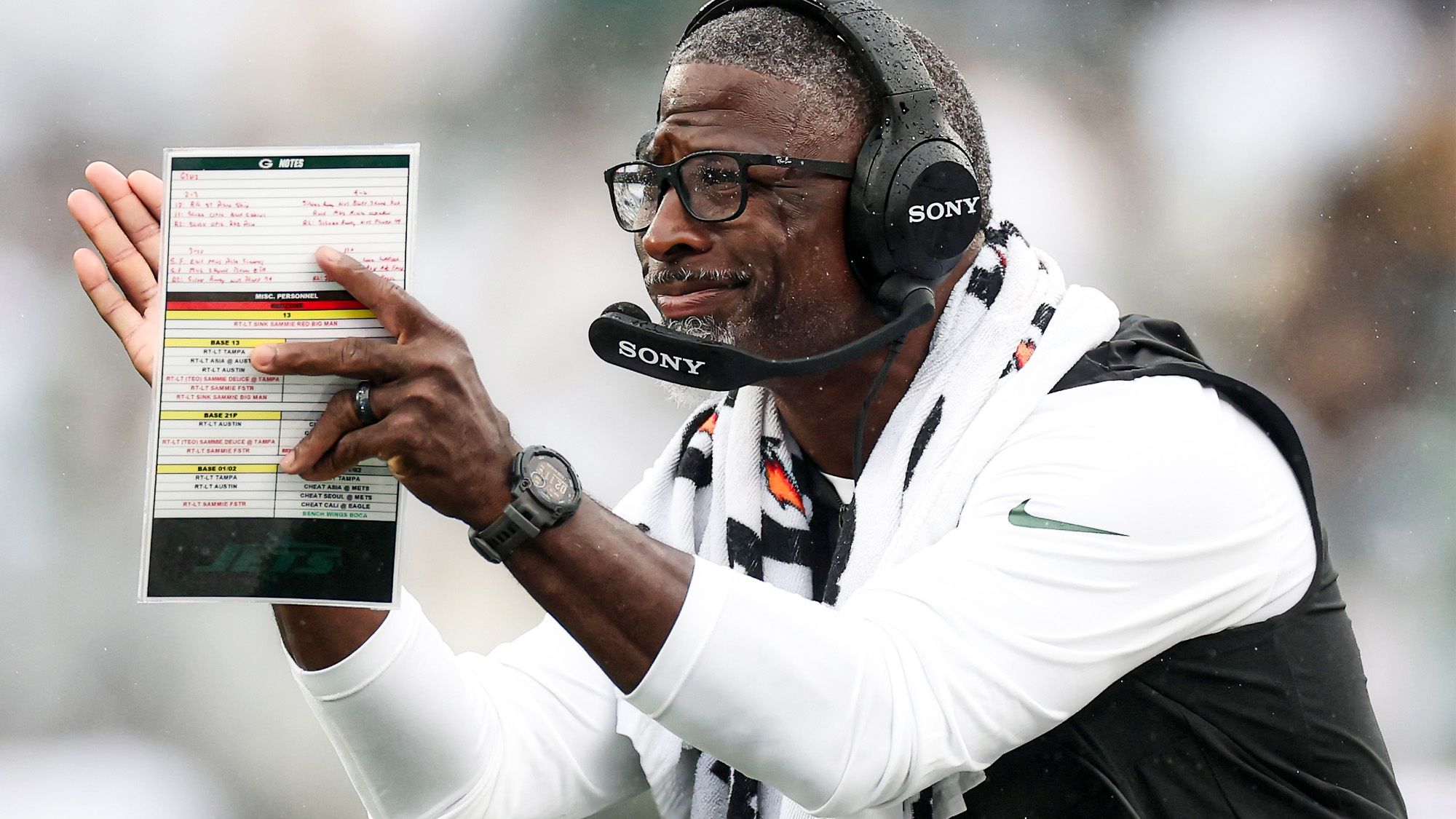
This one falls squarely on the team’s coaching staff, particularly Aaron Glenn and Frank Reich.
The Jets coached themselves out of a win
There is a strong case that the Jets lost this game because of Reich and Glenn.
Could the players have executed better in certain areas? Absolutely, but Reich and Glenn were horrific, particularly in crunch time.
After Week 1, we broke down Glenn’s progress in fourth-down decision-making, an area where he struggled much of his first season as head coach. While that may be true, his game-management skills don’t seem to have improved.
Following an odd end to the first half during New York’s season opener that many folks didn’t discuss because the team came away with a win, he made several puzzling decisions with the clock against Green Bay on Sunday. It started at the end of the second quarter.
With around four minutes remaining in the half, the Jets were tied 7-7 and getting the ball back, but Glenn had already burned all three timeouts, including one on a lost challenge that was not worth attempting based on the replay.
Despite the lack of timeouts, it was a perfect opportunity to tack on some points before halftime and double-up on the Packers, as the Jets would be getting the ball out of halftime. This is where Reich comes into play.
With roughly four minutes to take the lead, there was little aggression, and it never felt like they were looking to score. Ultimately, they didn’t reach midfield, and the clock ran out.
The clock mismanagement continued into the end of the second half, when the Jets and Packers were tied 17-17. After the Jets failed on fourth-and-1 with 1:20 remaining, Green Bay took possession at midfield with 1:15 left. Jordan Love threw two incompletions before completing a five-yard pass to Christian Watson on third-and-10.
That set up fourth-and-5 at the Jets’ 45-yard line with just under a minute remaining and the clock ticking.
At that point, Glenn had two timeouts in his pocket. Calling one would have forced Green Bay to make a decision quickly: attempt a 63-yard field goal with a rookie kicker at MetLife Stadium in less-than-ideal weather conditions, or punt the ball back to Geno Smith and the Jets’ offense with just around a minute remaining.
Instead, Glenn did nothing. Literally nothing.
Matt LaFleur, a successful and experienced head coach, took full advantage of that. He let the play clock expire, accepting a delay-of-game penalty that benefited Green Bay as the 10-second runoff came into play, taking the clock down to 11 seconds as it continued to run on the whistle.
Eventually, they stopped the clock with two seconds remaining and attempted a Hail Mary, which ended with a Kingsley Enagbare sack, sending the game to overtime.
The Packers never even had to punt.
That is what makes this sequence so odd. Smith and the Jets’ offense had just marched from their own 30-yard line to midfield in less than two minutes on the previous possession. There was no guarantee that Smith would have won the game on the final drive, starting from deep inside his own territory with under a minute left and one timeout, but Glenn should have given the offense a chance.
Even if he didn’t want to give the offense an opportunity, he should have called timeout to force the Packers to punt. Letting them run the clock down and attempt a last-second Hail Mary is unacceptable.
Glenn’s management of that situation raises significant questions. It didn’t seem like he knew what he was doing, and LaFleur fully capitalized on it.
Games like this one come down to those little details. Coaching battles can win and lose matchups, and that was evident on Sunday.
Glenn’s mistakes alone didn’t cost the Jets a win; Reich also played a role. Before we get into his questionable decisions, it should be noted that his adaptation to the modern-day game has been impressive so far.
While it’s only been two weeks, Reich’s play-calling has been solid overall, especially in Week 1.
However, in crunch time, his play-calls were puzzling. He had multiple opportunities to close the game, and his unit failed every time.
After Green Bay cut the Jets’ lead to 17-14 with 7:58 remaining in the game, New York needed a sustainable drive to ice the game. They didn’t need another touchdown, as a few first downs could have drained the clock and given the team a chance to tack back on to their lead.
So, it was far from a do-or-die situation for the offense (they had the lead), but it wasn’t a situation to shut down completely.
Instead of trying to add points to the board, the offense played very conservatively. Smith opened the possession by finding Adonai Mitchell for 11 yards before Reich followed that with two consecutive runs to Breece Hall, which gained four combined yards.
On third-and-7, Smith threw underneath to Isaiah Williams for four yards, forcing the Jets to punt.
The clock burned down to 4:49, but the Jets did not get close to putting more points on the board. On the punt, Skyy Moore had a monster 63-yard return. The Jets’ defense didn’t allow the Packers to score a go-ahead touchdown despite excellent opening field position at the Jets’ 31-yard line, but they still hit a game-tying field goal.
Reich’s process became even more questionable during the Jets’ final possession in regulation. After two completions to Garrett Wilson for 19 yards, which quickly got the Jets to their own 49-yard line, the team faced a manageable third-and-2.
Then, he suddenly abandoned the passing game, which had been the most encouraging element of their offense. The Jets couldn’t get the rushing game going, averaging 2.5 yards per carry for the game.
On the third-and-short, the Jets ran the ball up the middle with Hall for a one-yard gain, setting up fourth-and-short. This time, he dialed up another shotgun run between the tackles, but with Braelon Allen. He was ultimately stopped for no gain.
While Jeremy Ruckert had a bad whiff that allowed Green Bay to stop the Jets short, it was just an odd play call. Running the ball hadn’t really worked all game for the Jets, especially between the tackles (they had been successful running outside in the second half), and they had momentum in the passing game. Why go two consecutive shotgun runs up the middle with only two yards to go? It was very predictable, and the Packers picked it apart right away.
The historical context adds just how difficult it was for the Jets to lose this game. They held the Packers to 199 yards, benefited from over 100 penalty yards, and had a positive turnover margin (+1). Since 1941, teams went 44-0 when they met all three conditions.
The Jets became the first to lose.
Now, that doesn’t fully clear the players. For the first time under Chris Banjo, the Jets’ special teams unit fell short. The offensive line allowed consecutive sacks in overtime, and the Jets just weren’t as efficient as they were last week.
Still, they outgained the Packers by 86 yards. They also finished with five more first downs while converting eight of their 19 third-down tries (42.1%), compared to Green Bay’s one on nine attempts (11.1%).
That further proves that the difference for New York today came in high-leverage coaching situations. That is how a team can hold nearly every broad statistical advantage and still lose, while making NFL history.
The Jets should have won Sunday. Glenn and Reich played a major role in why they didn’t.
