
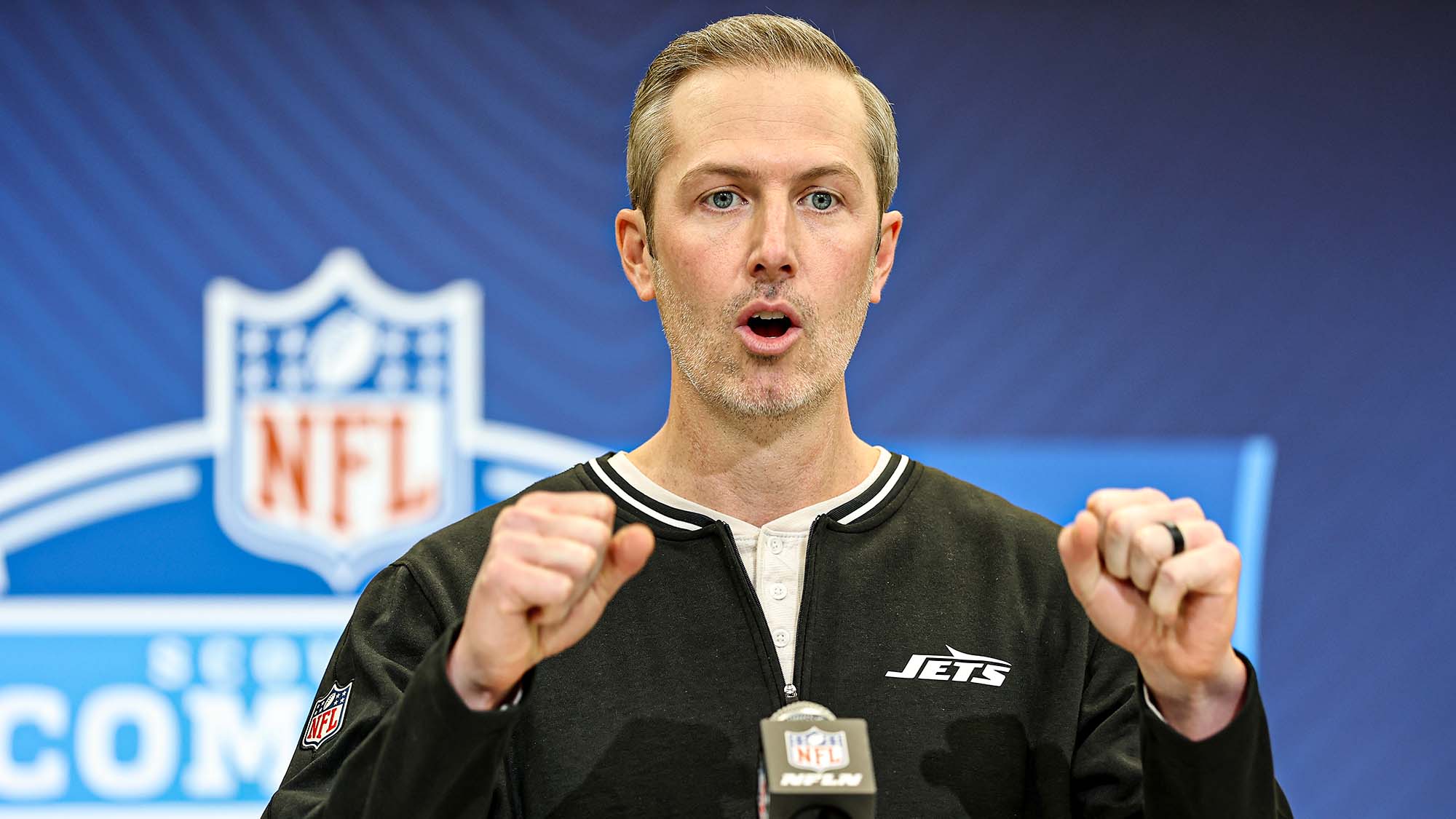
When he was first hired in January, New York Jets general manager Darren Mougey was viewed as the second fiddle behind head coach Aaron Glenn. His laid-back, businesslike approach to answering questions made him more of a “Robin” to Glenn’s “Batman” persona.
After the 2025 trade deadline, though, it’s clear those roles may now be reversed.
New York parted ways with All-Pro cornerback Sauce Gardner and All-Pro defensive tackle Quinnen Williams, acquiring three first-round picks, a second-rounder, and two players in return.
For some fans, trading away the team’s two best defensive players is a sign that the organization is kick-starting another rebuild. For others, it’s an opportunity for the new regime to bring in players who better fit its system.
In regards to Mougey, though, the moves made at the deadline — and throughout the regular season — reflect a general manager who not only is competent but understands where the modern NFL is headed.
Mougey’s commitment to modern football
The old adage that “defense wins championships” has become obsolete in today’s NFL.
Sure, teams with elite defenses can win consistently, but without a great offense to match, they rarely go far. That’s been the reality for the Jets in recent years — a strong defense that simply wasn’t enough to carry the team.
No defense in the modern league can do that anymore.
New York had been flawed from the foundation. Built on the belief that a defense stacked with highly paid stars could carry a merely competent offense, the team found itself stuck in neutral.
Mougey is trying to correct that. The only way, he believes, is to stockpile enough draft capital to build around a rookie quarterback on a rookie contract, surrounding him with quality talent.
The focus, as Mougey has shown, should be on the offense — and the quarterback position.
With eight picks in the first two rounds of the 2026 and 2027 drafts, that plan appears well underway.
The Jets’ plan
Mougey’s approach has been straightforward: find players who fit the coaching staff’s scheme and move on from those whose production no longer matches their value or contract.
Gardner and Williams were excellent players for the Jets. But as strong as they were at premium positions, their impact no longer aligned with what the team needed.
For all of Gardner’s talent, he wasn’t an elite tackler and didn’t make as many plays on the ball as other top corners. Williams, once a dominant pass rusher, had evolved into more of a run-stuffing tackle.
Teams still need those types of players to compete — but winning teams can often find comparable production at a fraction of the cost.
That was the silent argument Mougey made at the deadline.
While analysts may argue that New York created new holes by dealing away key pieces, Mougey’s moves signal a philosophical shift. A top quarterback prospect can elevate an entire roster in ways even elite defenders cannot.
Gardner and Williams couldn’t mask the team’s quarterback shortcomings. So the Jets used their trade value to pursue the one thing that could: a future franchise quarterback.
Mougey’s decisions show that he not only understands what wins in the modern NFL but also how to acquire the assets needed to turn the Jets around long term.
There are still fair questions about the coaching staff. But it’s clear Mougey has the organization moving in the right direction.
