
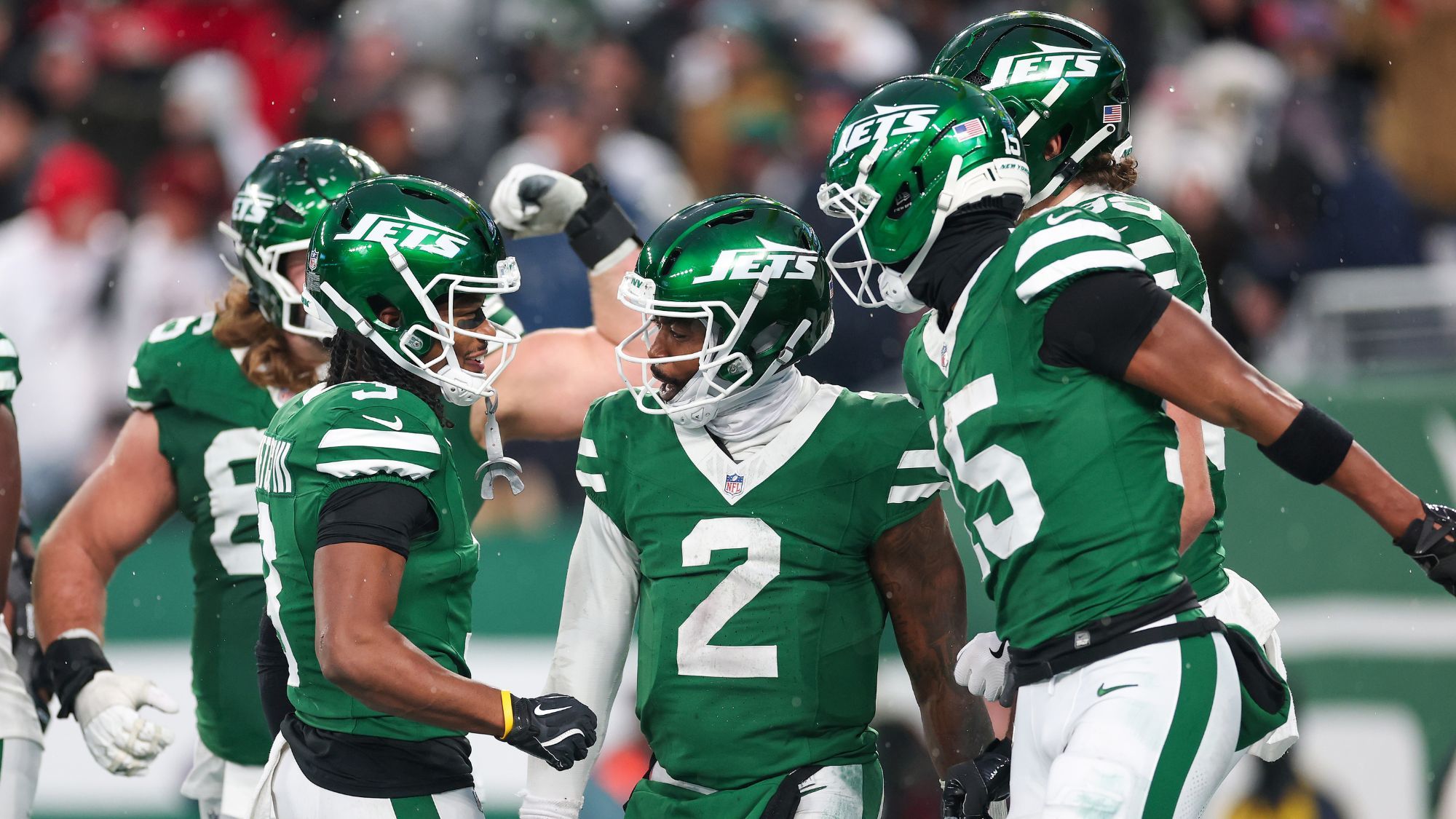
New York Jets head coach Aaron Glenn made a quarterback change following the team’s Week 11 loss, benching 26-year-old Justin Fields for veteran Tyrod Taylor. Upon the switch under center, fans immediately grew curious about what the offense might look like with a more consistent option at QB.
While Fields showed flashes throughout the season, they were far and few between, much like his prior two stops in Chicago and Pittsburgh. Taylor, a 15th-year veteran, offered a much steadier option for New York.
Granted, two games are a small sample to judge how a new starter has truly changed an offense, but the difference from Fields to Taylor has already been night and day.
Both the numbers and the eye test back it up.
Key statistical improvement
Through Fields’ 11 starts, New York ranked 27th in dropback EPA (Expected Points Added), one of several key metrics that highlighted his horrific year in the green and white.
Since Taylor took over as the team’s starter, Gang Green has risen to 12th in that metric.
The veteran has shown confidence and poise when pushing the ball downfield. One of the most significant issues with Fields was that he would primarily settle for checkdowns and was often afraid to take chances on deep passes.
Fields’ ADOT (Average Depth of Target) of 7.2 yards ranks 35th among 40 qualified signal-callers, while Taylor’s ADOT of 9.5 yards sits at fourth among qualified QBs.
The overall offensive improvement
With the Jets sitting at 3-9 and still over a month of the season left to be played, these final weeks matter more than people think. New York’s offense is built around young players with real upside who are expected to be back in 2026, and this stretch is a legitimate chance for the staff to evaluate those pieces in extensive game action.
Under Fields, evaluating the rest of the offense became nearly impossible. His hesitance to push the ball downfield limited the passing attack and prevented the Jets from getting a proper look at their core offensive talent behind Garrett Wilson.
Now, it’s a different story. As his ADOT shows, Taylor is attacking downfield, giving the Jets a cleaner evaluation window. Not only is it far more fun to watch from a fan’s perspective, but it’s also helping integrate newly acquired players into meaningful roles without Wilson, most notably Mitchell and John Metchie III.
Mitchell, in particular, is benefiting from the change. The separation has always been there, going back to his rookie season in Indianapolis, but the production never matched it. On film, he routinely created clean throwing windows, only for the ball to arrive late, go elsewhere in the progression, or miss him entirely.
Taylor is proving to be the right quarterback to capitalize on Mitchell’s separation. His willingness to target receivers who win early is giving Mitchell chances he simply didn’t get with Fields.
The result: for the first time, Mitchell’s separation is translating to actual production, providing the Jets with hope that they may have landed a legitimate playmaker for years to come.
Without making the change at quarterback, the Jets may have never gotten to see what Mitchell’s ceiling looks like.
