
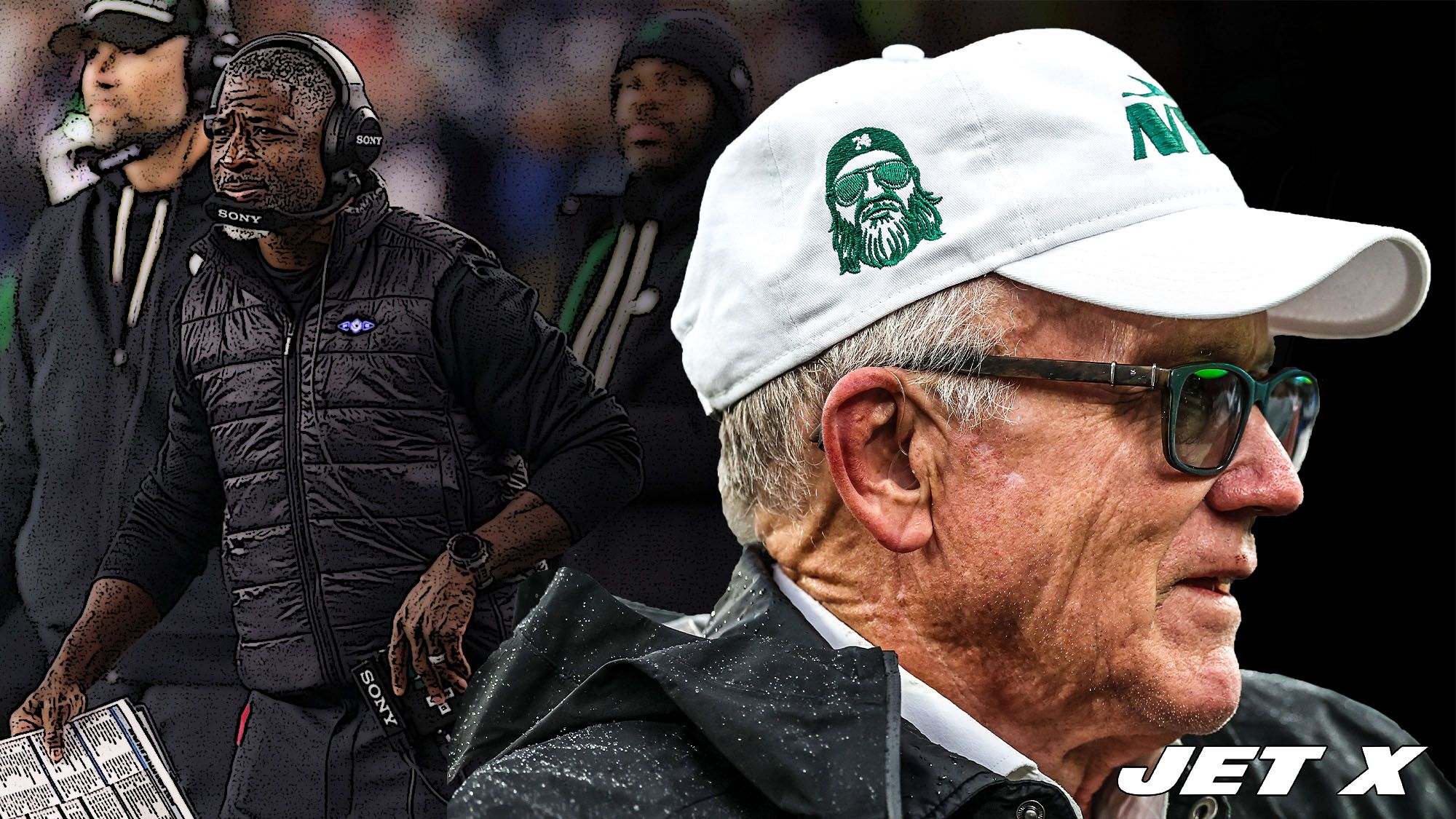
Look, there’s no easy way to admit the reality of this situation. It’s brutal beyond belief, and could bring a grown man to his knees, dying inside before crawling up into the fetal position over in the nearest corner.
Still, the truth of the matter is simple: The nerds have won.
A glance around the league suggests that very idea. Many of the head coaches who are assumed to be “bad at parties” are dominating the game. Many of the sideline bosses who capitalize on innovation—rather than motivation—are flipping teams’ fortunes over the course of a single offseason.
This, in turn, has the older-school, defensive-first personalities shedding invisible tears. Not even they can argue against the idea of the offensive play-callers dominating this league.
Whether it’s first-year head coaches like Ben Johnson in Chicago and Liam Coen in Jacksonville, or stalwarts like Andy Reid and Sean McVay, who have dominated the sport for quite some time, the logic and odds are clear …
The head coach, whose voice is heard through the mic in the quarterback’s helmet, enjoys a built-in advantage.
Checkers has transformed into chess
First, let’s bring some basic logic to the table: The level of physicality seen today is nowhere near that of yesteryear. Does evidence even need to be brought to the table?
Moreover, thanks to the fact that the sport’s physicality has decreased to never-before-seen lows, the randomness of each play has also been reduced. Think about it: Physicality naturally ramps up randomness thanks to a one-on-one battle resulting unexpectedly.
So, what does that mean?
Well, with physicality cleared out of the way, speed becomes the de facto most critical element on each play. With that, play-callers can better predict how a design will unfold—which theoretically serves both sides of the ball, yet provides the offensive play-caller a significant advantage (thanks to the defense consistently locked in reactive mode).
All of this ultimately leads to the idea that game plans must be flawless. Better yet, the game plans that are quarterback- and offensive-driven are more tightly connected among all three units.
The CEO-type coach, who neither calls plays on either side of the ball nor speaks to the offensive and defensive leaders (with the green dot on their helmets), is the man in the middle of all three phases.
Purely by way of the rules—that discriminate against defenders and anybody who dares to touch the quarterback or launch a physical hit—the offensive head coach, particularly by way of a quarterback expertise and as an offensive play-caller, enjoys a built-in advantage.
Of the last eight Super Bowl teams (the AFC and NFC champions), all eight of the appearances feature offensive-minded head coaches:
- Andy Reid (3)
- Nick Sirianni (2)
- Sean McVay (1)
- Kyle Shanahan (1)
- Zac Taylor (1)
Only one of these appearances was of a coach who didn’t call the offensive plays (Sirianni), and only one had never officially been a quarterbacks coach (McVay, who would never be mistaken for someone illiterate in quarterback language).
Old-school principles be damned
Those who hold tightly to the idea that “football is still football,” and the principles have not drastically changed, are doomed to fall well behind. Count New York Jets head coach Aaron Glenn as one of the modern NFL guys who firmly believes in these principles.
Not only did Glenn publicly discuss the critical importance of fundamentals this past summer during training camp, but he also ran live, to-the-ground, open-field tackling drills.
Hey, great. There’s nothing wrong with an NFL head coach emphasizing the fundamentals of the game and even incorporating live drills in July and August. Well, I take that back, sort of … There’s something very wrong with the idea if the coaching staff’s priorities and vision are misplaced.
Something of this old-school nature can only be considered complementary.
The same can be said for accountability, penalties, effort, and field position. By no means are these traits wholly obsolete these days; it’s more so that they can only complement the item that moves the needle, by far, the most.
Strategy and tactics lead the way
“It’s about strategy, stupid (not the economy).” Tom Brady let it fly Saturday night when calling the Chicago Bears’ thrilling overtime win over the Green Bay Packers, by stressing the importance of a team’s “tactics.”
The Jets chose to dump Aaron Rodgers for Justin Fields this past offseason, which meant Aaron Glenn was attempting to hop on the league’s running-quarterback revolution. Unfortunately, he chose to take this path at the worst possible time: when the top running-quarterback offenses all fell apart simultaneously (Baltimore, Washington, and even Philadelphia to some degree).
Perhaps more importantly, Glenn chose a slow-release and inefficient quarterback during a time when short passing efficiency has never been more valuable. The last five NFL seasons account for the lowest yards-per-completion numbers in the history of the sport (10.9 marks from 2022-24, and an 11.0 mark in 2021 and 2025).
Obviously, Fields didn’t work out this year. Worse yet, there hasn’t been much to hang their hat on from a short-passing-efficiency standpoint.
While offensive coordinator Tanner Engstrand and offensive line coach Steve Heiden have shown promising signs, nothing from a top-level game plan perspective screams “modern tactics” or “innovation.”
Instead, the same line about believing in the process, ensuring the right players are in-house, the effort is present, and the penalties are minimized, are the words that reign supreme.
Yet, insanely, something as discussed as penalties is overblown in far too many ways. The 11-4 Jaguars are tied with the 12-3 Denver Broncos with 7.9 penalties per game, which places them 31st in the league.
Thanks to the new ways of the league, throwing flags are highly subjective. In the old days, as John Madden would say, a flag could be thrown for offensive holding on every play. These days, the same can be said for defensive backs (via holding, illegal contact, and defensive pass interference), as well as all defenders (via any physicality).
Trying to eliminate penalties the old-fashioned way is … well, old-fashioned. The more efficient way is to achieve it through precise placement on the field (strategy) or by overcoming unfortunate luck.
When play-callers like Sean Payton and Liam Coen are present, penalties don’t impact the game in a way an old-school mind may believe they would.
Chasing talent is fool’s gold
Yet again, the New York Jets are set to enter the next attempt at a rebuild. And, yet again, the idea of “rebuild” becomes convoluted, sadly.
While it’s true that the Jets’ trade-deadline deals, which shipped Sauce Gardner to Indianapolis and Quinnen Williams to Dallas, were the right moves, believing those moves are the surefire genesis of positive things to come is disturbingly misguided.
This is no longer the early 1990s. Glenn cannot pull a Jimmy Johnson; it’s impossible.
The pre-salary cap era of the NFL allowed teams to dominate based on an incredible talent-level advantage. That’s how the early-1990s Dallas Cowboys teams flipped the script on the disappointing 1980s squads.
That’s not to say Johnson was a poor coach, obviously. It simply devotes more to the idea that talent could be skewed to harsher degrees from team to team in those days.
These days, under this hard cap, the talent is much more evenly spread across the league. Couple that with the lack of physicality and eye on offensive efficiency, and suddenly, it’s impossible to ignore the importance of strategic coaching abilities.
Believing “talent” will solve the New York Jets’ current ills is akin to contributing to the old “definition of insanity” idea (see the Robert Saleh era). The only way for Woody Johnson’s Jets to dig themselves out of this hole is to take a long, hard look in the mirror and understand just how dramatically the sport and the league have changed.
If talent were the significant factor here, there’s no doubt that the Jets would have accidentally made the playoffs at least once in the last 15 years. Considering one-third of the roster changes each offseason, there’s no way around that.
The odds are much more prudent that the processes within the organization, attached to the idea of who’s best to lead the team from the sideline, are failing the team.
When hiring a head coach, it cannot boil down to which man best motivates the interviewer. It must boil down to which coach possesses the traits that move the needle the most in today’s game, within the current rules.
It’s not a coincidence that the New York Jets haven’t made the playoffs since 2010, one of the final years of the then-evaporating NFL as we used to know it—the one that actually showcased a level of familiar physicality, which, in turn, ramped up the value of motivation.
It’s no coincidence that Rex Ryan began struggling as the NFL shifted toward less physicality and more offensive efficiency. Or, perhaps more aptly worded, it’s easy to spot why Rex’s old-school principles struggled more when the rise of the offensive nerd occurred.
It’s no coincidence that the New York Jets have been struggling since the league underwent significant core changes. The only way it changes for them is if they come to this realization.
