
Back in the day, the average fan could spot a football team with ease.
The Bill Parcells-led New York Giants were a physical and rush-oriented team. The Bill Walsh-invented San Francisco 49ers were an east-west, quick-timing finesse squad that loved passing the ball. The 1985 Chicago Bears were as suffocating on defense as could be.
Even the beloved Rex Ryan-led New York Jets were easy to spot. They were unabashed, violent, and quarterback-pressure dominant, while relying on their famed ground-and-pound offense.
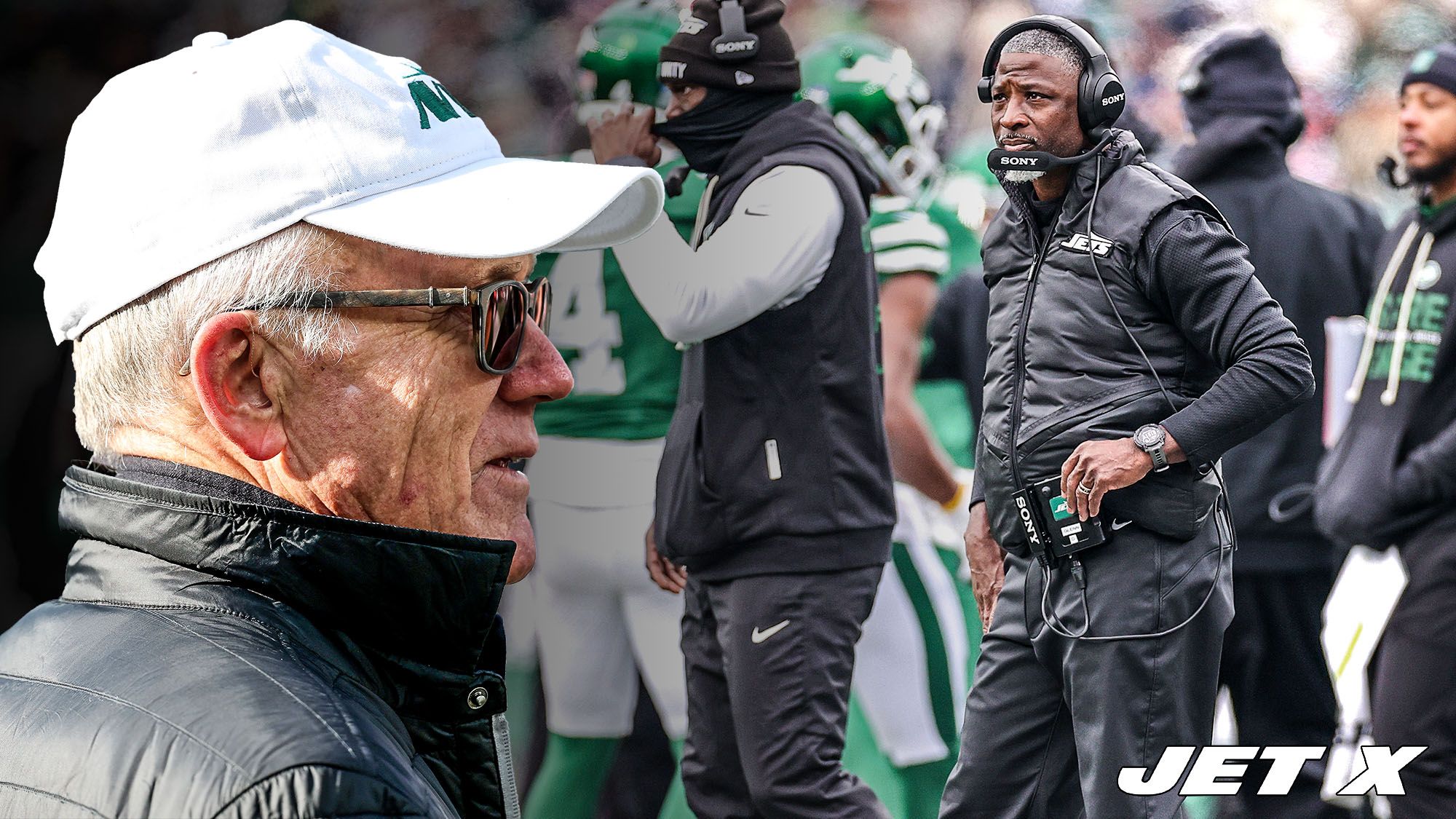
It’s across this line of thinking that current Jets head coach Aaron Glenn touched on during his day-after Monday presser.
“Listen, we have a way that we want to play every game,” Glenn said a day after his team’s embarrassing 42-10 loss to the New England Patriots. “We have a way (we want to play). Like the question [that was previously asked], there’s a philosophy on what I think wins games. To me, I look at our brand as, ‘Man, this is how we are going to go about doing things, and it doesn’t matter who is in the game because those guys are coached, those guys are in meetings, and we expect you to play to a high level.'”
When pressed a bit further about this envisioned brand, the Jets head coach cited an example from this season.
“Yeah, well, we were playing Jacksonville, and I showed the team this (example),” Glenn said. “I thought it was very impressive [in regards to how we controlled] the line of scrimmage, us running the ball and being physical, being violent.”
The Jets were clobbered by the Jacksonville Jaguars that day, 48-20. They also ran the ball effectively, to the tune of 130 yards on 32 carries (for 4.1 yards per carry).
Sure, a good chunk of those yards were easier to gain considering the game situation—with the Jags up big in the second half—but it was also UDFA quarterback Brady Cook’s first NFL start, which is no small task to overcome.
Either way, all of this is hardly the point.
Pay no matter how poorly the Jets performed on this day. Don’t worry about how well they may or may not have run the football. It’s all a distraction from what matters most.
The idea that Aaron Glenn deploys such a staunch brand of football for his team is the real takeaway. Glenn’s vision regarding a specific identity is what really stands out as troublesome—and it’s been this way since he took the job last winter.
Glenn’s insistence on playing a specific brand of football in a brandless NFL is the fundamental problem with the New York Jets.
The modern NFL is cookie-cutter
Quick, think fast: What’s the best way to describe the Kansas City Chiefs’ team identity? What is that prominent brand of football that best sums up the Andy Reid-Patrick Mahomes era?
They score … points?
They surely don’t pound the rock (and don’t call me Shirley). They’re most definitely not a defensive-led squad, though I personally love defensive coordinator Steve Spagnuolo, whose crunch-time brain is all-time tremendous.
Would we label their team identity as a “passing squad?” Seriously, what is it; what is their identity? And if their brand of football revolves around passing, how would other top-tiered teams have any other contrasting identity?
The only identity any successful team can have in the modern NFL is as follows: Take what the other unit allows.
We’ve been over this too many times before. The current type of football we’re experiencing contrasts with the one we loved 15 years ago. The nerds have won.
The focus on coverage penalties, coupled with player safety, has led to a point where all successful teams must abide by one underlying football gospel …
Never force an identity, and always arrive at the party with an original game plan.
Original game plans
What exactly is the Los Angeles Rams’ team identity? What is their brand of football?
Sean McVay, one of the best modern football coaches, mollywopped the Minnesota Vikings in the playoffs last January. How exactly did he do it?
McVay understood what he was facing. He knew Brian Flores’s tendencies, which relied on early-down run blitzing, attempting to force the opposing offense into second-and-long situations, thereby shoving them behind the chain-management game.
Therefore, he came out passing—strategically.
The Rams passed the ball on 9 of the team’s first 10 plays and 15 of the team’s first 17 plays. All told, that first half featured a Los Angeles offense that simply would not play into Flores’s hands, instead, chucking the ball over the lot.
Well, not really. “Chucking the ball over the lot” isn’t required these days, not when yards-per-completion is at an all-time historic low. The efficiency of the three-step-drop game affords offensive play-callers the right to put forth a balanced game plan without even having to rush the ball once.
In other words, McVay brought originality to the table. He didn’t force a specific identity on the biggest day of the franchise’s season (up until that point).
Glenn and the Jets wouldn’t even know where to begin when thinking of such an idea. Despite ranking sixth in rushing this season, with 126.7 yards per game, they’re one of the worst December football teams in NFL history.
The fact that the NFL is so cookie-cutter is precisely why each weekly game plan must be uniquely original.
Only borrowed, never duplicated
The most frustrating aspect of the Aaron Glenn era for Jets fans is that they have been here before. These sad, frustrated people have just experienced this very thing.
The franchise’s previous head coach, Robert Saleh, made the same mistake.
From the outset, Saleh preached a team identity that represented the antithesis of this league, at least in recent times. Coming to New Jersey with Mike LaFleur, Saleh preached the importance of having a physical rushing attack, while waxing poetic about the Kyle Shanahan system.
Guess what happened?
With rookie quarterback Zach Wilson leading the way, New York forced the rushing attack to zero success. Yet again, a defensive-minded head coach has an idea of a team in his head, only to take the job and realize that duplication is impossible.
These ideas are only borrowed. A head coach can only find success by cultivating his own ideas each week, based on the current situation at hand.
What Ben Johnson is currently doing as the most valuable Chicago Bears employee is not a direct copy of his Detroit Lions offense, and it’s not even close. The Bears currently own the NFL’s third-best rushing attack, yet that’s not their identity.
There’s a fine line between forcing a dominant unit and allowing one to emerge from competent scheming. Had Johnson forced a rushing attack without grasping the realities of today’s NFL, it would not look like this. The reason it’s been so impressive deals with the overarching understanding of how today’s sport is actually played.
The Bears use everything that works against that specific opponent that week. They also have the 11th-best passing attack in the NFL (per yardage).
Johnson understands the subtleties of the landscape, and that it’s time of possession and efficiency that rules the roost (not yards and points per game, as a football field is restrictive in nature). For Detroit Lions fans who believe their team doesn’t miss this man, go ahead and compare the efficiency numbers this year, without Johnson, to those with him a year ago.
This is a brandless NFL
Meanwhile, everything coming from Glenn’s mouth about the offense has been about a physical rushing attack. Shoot, even his quarterback choice, Justin Fields, firmly leads us in this direction.
“That’s the brand that we want to play with, and sometimes you have to show your guys things so it can be remembered on this is how we play,” Glenn added when referencing the Jaguars example. “And listen, I understand to the outside world, people might not understand that, but our guys know exactly what our brand is. We just have to do it consistently.”
Guess what? You can finish in the top five in rushing all you want. Your defense can launch itself as violently as they’d like, in any direction. And your offensive line can remain as perfectly healthy as any in the league.
No team success will come from any brand goals if one’s conviction remains stronger than one’s logic.
Aaron Glenn’s insistence on preaching a specific brand of football for his New York Jets is as damning as anything I’ve seen in the NFL in quite some time. My good people, it’s no longer the 1980s.
Football has become a brandless sport.
Attention, Woody Johnson: This is what happens when your organization continues to hire motivational-first head coaches … in a league where that archetype has been firmly extinct for some time.
Ben Johnson’s brand of football is an NFC North championship and a rejuvenated fanbase.
Liam Coen’s brand of football is 12 wins and a potential divisional title.
Kellen Moore’s brand of football is that of an emerging franchise quarterback, having won four straight.
Seriously, are these three fellas that more intelligent than everybody else? Or, maybe, just maybe, could a particular head coach archetype have a significant advantage in this day and age?
