

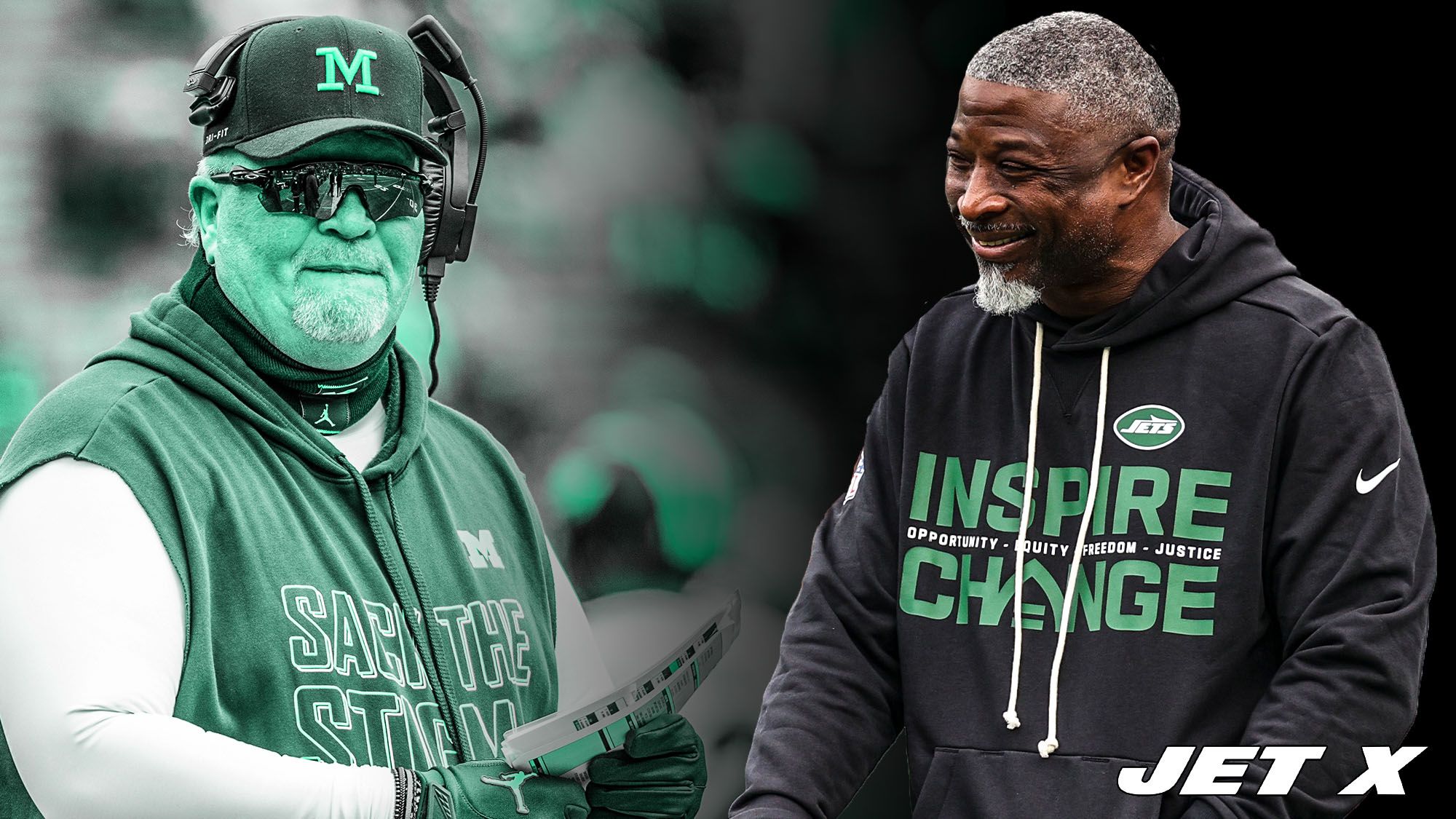
INDIANAPOLIS — At one point in January, it felt like a foregone conclusion that the New York Jets were about to hire Wink Martindale as their next defensive coordinator.
That changed on January 28 when the team instead hired Miami Dolphins secondary coach Brian Duker. The decision to hire Duker, a former assistant under Jets head coach Aaron Glenn, seemed to signal that Glenn would be calling the defensive plays in 2026.
At the 2026 NFL Scouting Combine, Glenn confirmed that notion. New York’s defense will be called by the head coach.
The decision to hire Duker, though, brought some unwanted controversy to the organization. Many believed Martindale was Glenn’s intended pick, but had been overruled by Jets owner Woody Johnson.
On Tuesday, Glenn addressed those very rumors, pouring ice water on the drama.
Was Martindale going to call plays?
Before the Jets even began their coordinator search, Glenn had alluded that his taking over play-calling would be on the table at the end-of-year press conference in early January.
Initial rumblings of a Martindale pairing, though, appeared to end any possibility of Glenn running the defense in 2026. Martindale is a highly experienced defensive coordinator who seemed likely to call plays at his next stop.
As it turns out, Glenn’s mind was already made up, and Martindale was willing to go along with it.
“My decision was made that I was going to be the play-caller, and when I brought Wink in, he was still a go,” Glenn told the media in Indianapolis. “As I thought about the whole situation, Brian Duker has been with me for three years, has been through the fire with me.
“There’s nothing more valuable than having that relationship with someone.”
Glenn’s reveal of Martindale’s willingness not to be the play-caller highlights that the organization may have been more aligned in their plan than initially perceived.
It is not uncommon for head coaches around the league to bring in coordinators whom they know and trust. Duker’s hire makes a lot of sense for the Jets because he understands how Glenn operates and is fully aware of the kind of identity New York wants to play with.
Martindale may have been a finalist, but he didn’t have the kind of prior relationship with Glenn that Duker had. As with many jobs in the NFL, it became about who Glenn knew rather than what they brought to the table.
Did Woody influence Glenn?
Many fans were critical of the Jets’ coach-hiring process, largely because of the perception that owner Woody Johnson was too hands-on. Some believe that Johnson forced Glenn to take over as the play-caller, leading to the last-minute pivot from Martindale to Duker.
According to the Jets’ head coach, though, that couldn’t be further from the truth. Glenn pushed for a change in the narratives surrounding his relationship with his boss.
“I think there’s a narrative about this team, me, our general manager, and Woody that really needs to change,” Glenn said. “Woody’s answer is always, ‘What can I do to help you? What can I do to help you be successful?’
“I feel fortunate to be in a position to have an owner that operates that way.”
There’s an argument to be made that the Jets ended up with the right person to call plays regardless of Johnson’s perceived meddling. Glenn’s success in Detroit was far more recent than the last time Martindale led an above-average NFL defense.
Glenn has always been very open about his strong relationship with Johnson. But when a team makes a stark pivot in the middle of a coaching search, questions are bound to come up about what led to the shift.
The head coach’s comments on Tuesday were his first public statements since the Jets’ hires became public. His responses suggested that he believes the public perception of Johnson’s involvement is off-base.
