
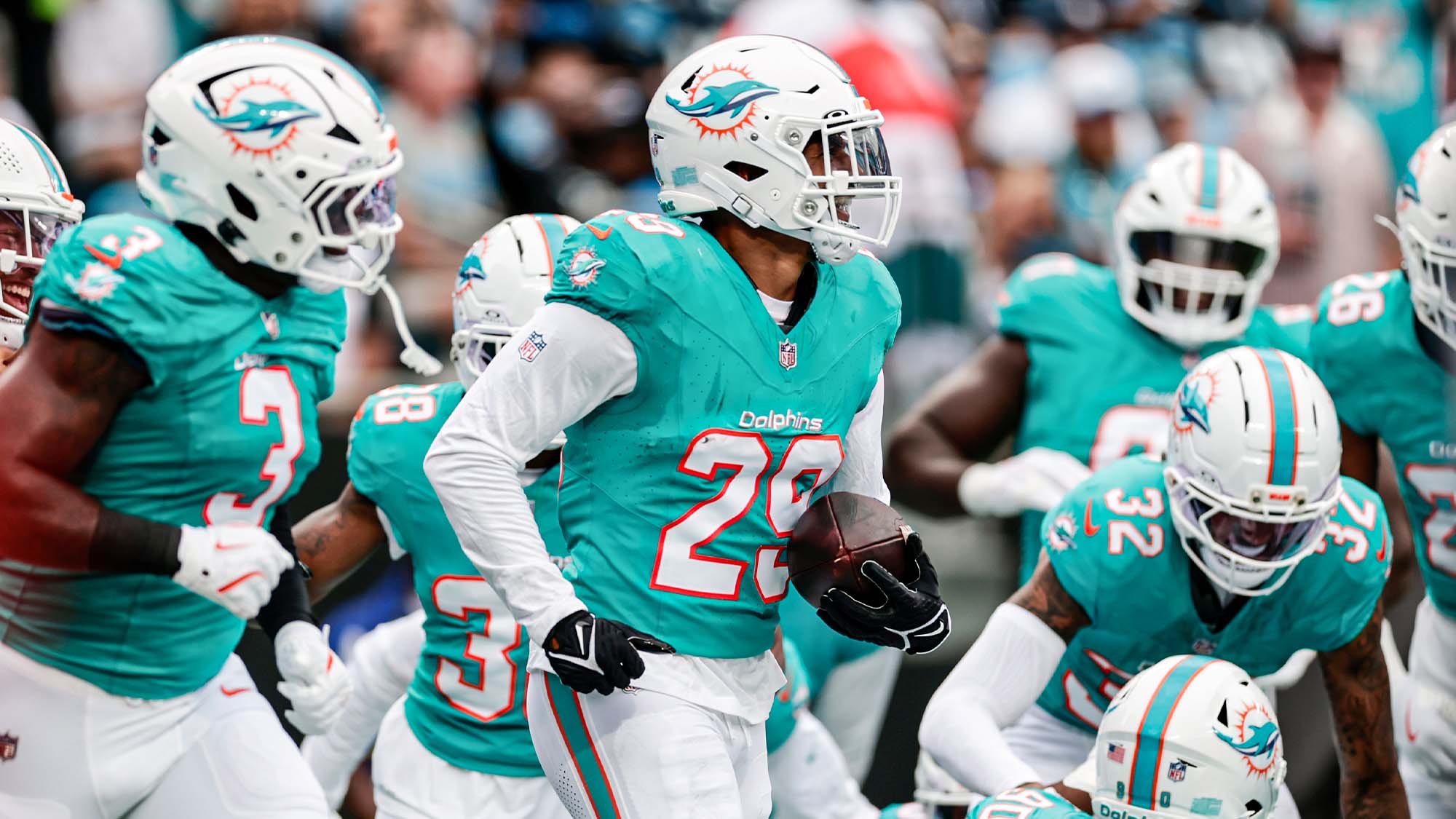
A contingent of New York Jets fans was worried that a more subdued front office would lead to a quiet offseason despite over $70 million in cap space.
It turns out that the Jets were quite aggressive, even if they did not go big-game hunting. New York brought in six new players, all on defense, during the first day of legal tampering.
New York’s defensive overhaul was intentionally built around one particular metric.
Jets’ free agency goal
Zero.
That’s how many interceptions the Jets recorded in 2025.
Every move they made on Monday was executed with that goose-egg in mind.
Minkah Fitzpatrick (21 career interceptions) and Dane Belton (6 career interceptions) were added to bolster what was the worst safety room in the NFL. Each is an upgrade over last year’s expected starters.
Veteran linebacker Demario Davis should be a significant upgrade over Quincy Williams’ struggles in 2025, and he’s the leader that the Jets desperately lacked in 2026. Joseph Ossai and Kingsley Enagbare are expected to help improve the depth of an edge unit that was extremely thin.
Even 33-year-old David Onyemata is a major boost in the trenches after a highly successful 2025 season that had him ranked as a top 10 interior defensive lineman.
Each player comes to New York on a fairly priced contract. The highest annual average given to a player in free agency by the team was Fitzpatrick at $13.3 million.
That means there hasn’t been a true overpay so far. It proves the team is being led by a front office that understands the market.
Another theme is that the Jets have brought in players who are good at stopping the run. Onyemata was one of the best run defenders in the game last season, as was Davis at linebacker and Fitzpatrick at safety.
It all comes back to the zero-interception number. Before the Jets can worry about that, stopping the run should be the first goal. That’s how they’ll put opponents into the third-and-long situations where interceptions tend to happen.
With their pickups on Monday, the Jets are much better equipped to do that.
Outlook entering Day 2
New York isn’t done. The organization has solved many key issues along its front seven and at safety, but it has major needs on the offensive side of the ball and at cornerback.
Oh, and they don’t have a starting quarterback lined up yet.
The good news is that the Jets have allowed themselves to be flexible moving forward in free agency, and when they make their pick with the second overall selection in the 2026 draft.
Whether they end up taking Ohio State All-American edge rusher Arvell Reese, Texas Tech’s David Bailey, or another star defensive player, New York’s already improved defense is going to get an even bigger boost in April’s draft.
The focus now turns to their head coach. Aaron Glenn made the decision to call plays in his second season on the job. Many analysts believe that if the team doesn’t improve drastically in the win column, it could be Glenn’s last season as a head coach.
Over the last 24 hours, the Jets accomplished the important goal of bringing in players who fit Glenn’s scheme, including multiple players who are familiar with him from New Orleans. The job, now, is to translate it into results on the field.
The Jets are a better football team on paper than they were 24 hours ago. The next step is for Glenn to coach the defense up.
