
As always, the first day of legal tampering is one of the busiest days on the NFL calendar.
However, this year’s Day 1 of free agency was more chaotic than normal for the New York Jets.
They added six players to their defense, including three-time All-Pro Minkah Fitzpatrick on the trade market.
The team also lost four players on the open market, including two of their top guards in John Simpson and Alijah Vera-Tucker.
Simpson’s departure leaves New York with an immediate hole at left guard, which they will need to address in free agency, the draft, or both.
Vera-Tucker’s exit is important as well, especially since he landed with the division-rival New England Patriots, but the impact on the Jets’ starting offensive line is not as significant since he missed all of last season due to a triceps injury.
Letting Vera-Tucker walk was the expected outcome. Beyond that, there were rumblings that he had no interest in returning to New York as well.
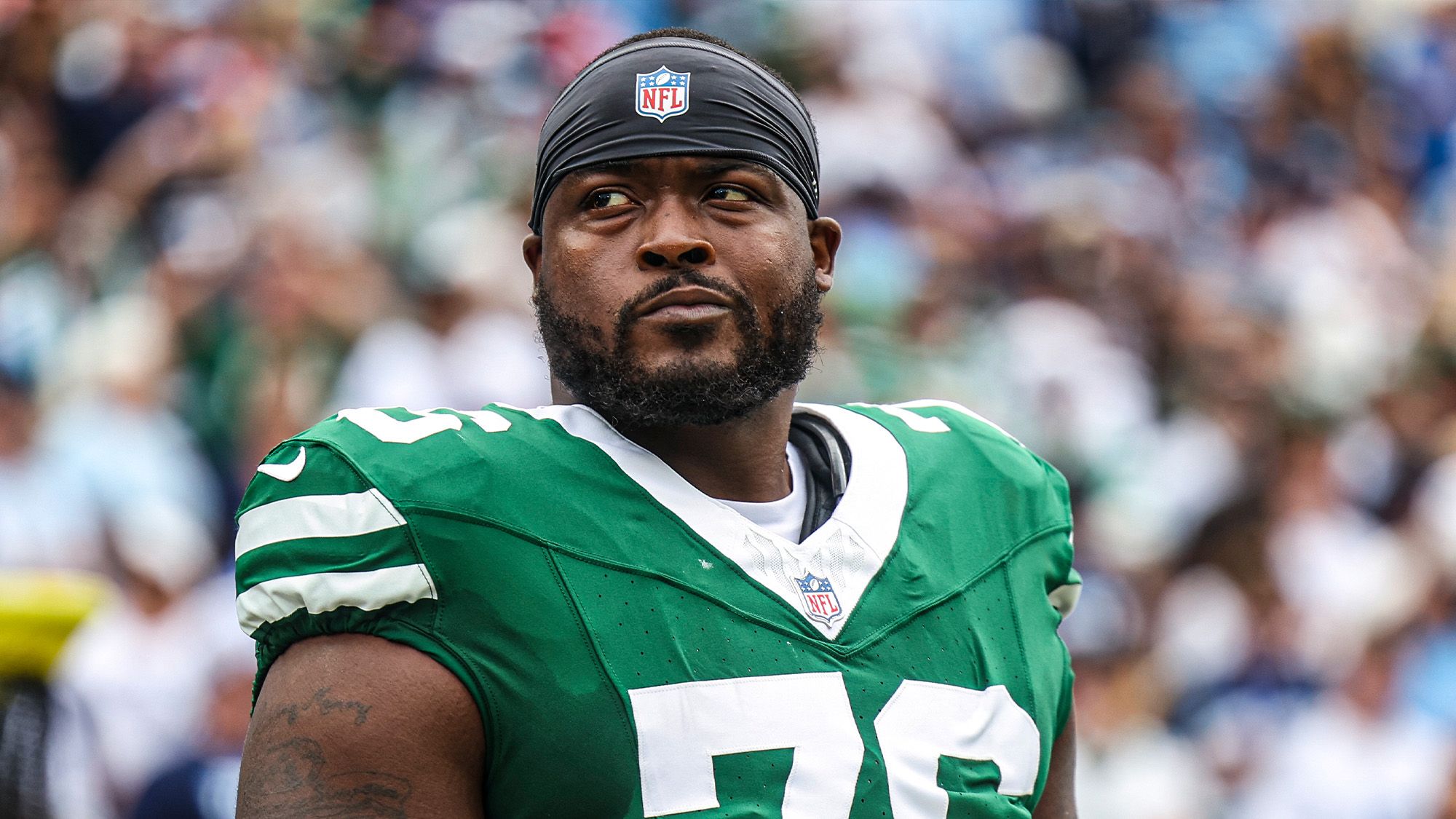
While retaining Simpson would have made sense, the Jets ultimately made the right decision to let him walk.
Why the Jets were wise to let John Simpson walk
Simpson was one of Joe Douglas’ best signings from his six-year run as the Jets’ general manager from a sheer value perspective.
The Jets landed him ahead of the 2024 season on a two-year deal worth up to $18 million.
Simpson thrived in his first season as a Jet, earning a stellar 77.3 overall grade from Pro Football Focus, which was the fourth highest among all left guards.
However, in 2025, he took a significant step back.
The former fourth-round pick’s overall grade from PFF fell to 56.9, which ranked 20th among left guards. He also allowed nine more pressures compared to 2024 (29), committed three more penalties (10), and surrendered two more sacks (5).
Over his two seasons in New York, Simpson started all 34 of the Jets’ games. He is very durable, as he hasn’t missed a game due to injury throughout his career.
Simpson is also an excellent leader and was often the tone setter up front for Gang Green. Despite that, letting him go was the right decision by Darren Mougey and the Jets.
While I had advocated for the Jets trying to retain Simpson at his projected market value, the veteran guard ultimately landed a far richer deal than many expected. Spotrac estimated his market value at roughly $6.5 million per year, but the Clemson product secured a three-year, $30 million contract with the Baltimore Ravens.
For a Jets team with a surplus of holes, that would have been a massive overpay.
At guard, the Jets now have several avenues they can explore. They could look to the veteran free-agent market to fill the vacancy, turn to the draft, or potentially use both.
Overall, the organization’s approach to free agency has been very cohesive. They have focused on bolstering their defense and finding solid value on the open market without overspending. Letting Simpson walk for the price he commanded is a move that fits into the Jets’ free agency plan.
