
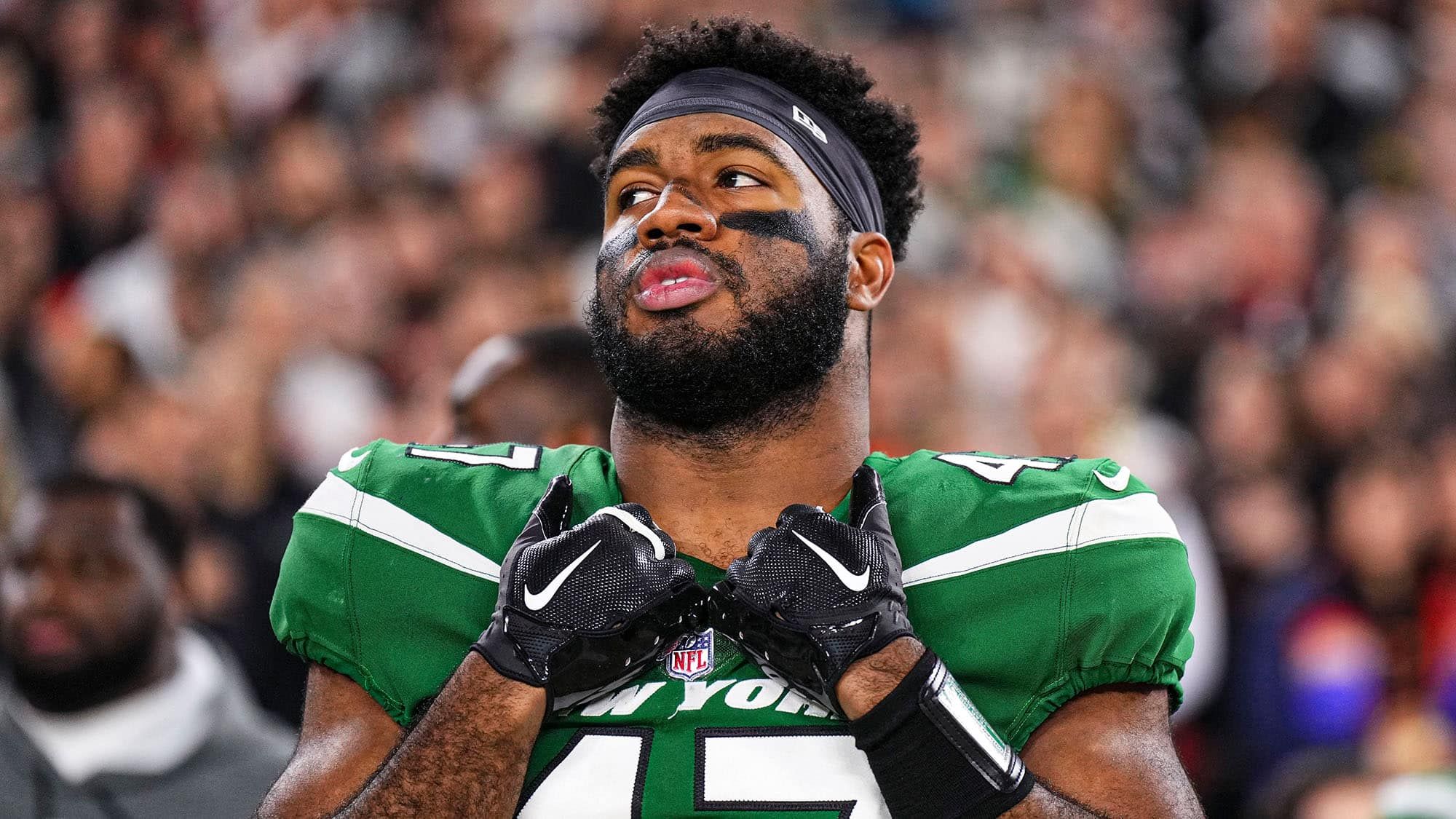
Carving out any kind of career in the NFL is incredibly difficult as an undrafted free agent.
Bryce Huff managed to beat the odds, building a six-year career in the league, starting with the New York Jets.
On Thursday, the 27-year-old announced on Instagram that he will be hanging up his cleats.
Huff signed with the Jets ahead of the 2020 season out of Memphis and made the team’s 53-man roster as an undrafted rookie.
He ultimately spent four seasons with the team, appearing in 54 games (seven starts) and posting 17.5 sacks, 65 total tackles (40 solo), 43 quarterback hits, three pass deflections, and a forced fumble.
The Memphis product really made his name known in 2023, when he became the first Jets edge rusher to log 10 sacks since Calvin Pace in 2013.
After the Jets didn’t re-sign him following his breakout season, Huff signed a three-year deal with the Philadelphia Eagles worth over $51 million.
However, things didn’t work out for the Mobile, Ala., native in Philly.
Huff missed five weeks due to a torn ligament and was activated from injured reserve late in December of the 2024 season. When healthy, Huff struggled to find a niche in Philadelphia’s system. Huff played in 12 games for Philly (six starts) while collecting 2.5 sacks, 13 total tackles, and four quarterback hits.
While Huff earned a championship ring with the Eagles, he played minimal snaps in the team’s first two playoff games and was a healthy scratch for the Super Bowl.
Ahead of the 2025 season, Eagles general manager Howie Roseman dealt Huff to the San Fransico 49ers in exchange for a conditional fifth-round pick.
Reuniting with his head coach of three seasons in New York, Robert Saleh, Huff totaled 46 pressures and five sacks during the 2025 season while the 49ers made the playoffs. Huff recorded two tackles for loss in San Francisco’s wild card victory over his former team, the Eagles.
Now, he is stepping away from football and turning his attention to a new venture.
Huff announced that he is launching a company called Naberstone, which will focus on building safety infrastructure to reduce the fire risks associated with lithium-ion batteries.
