

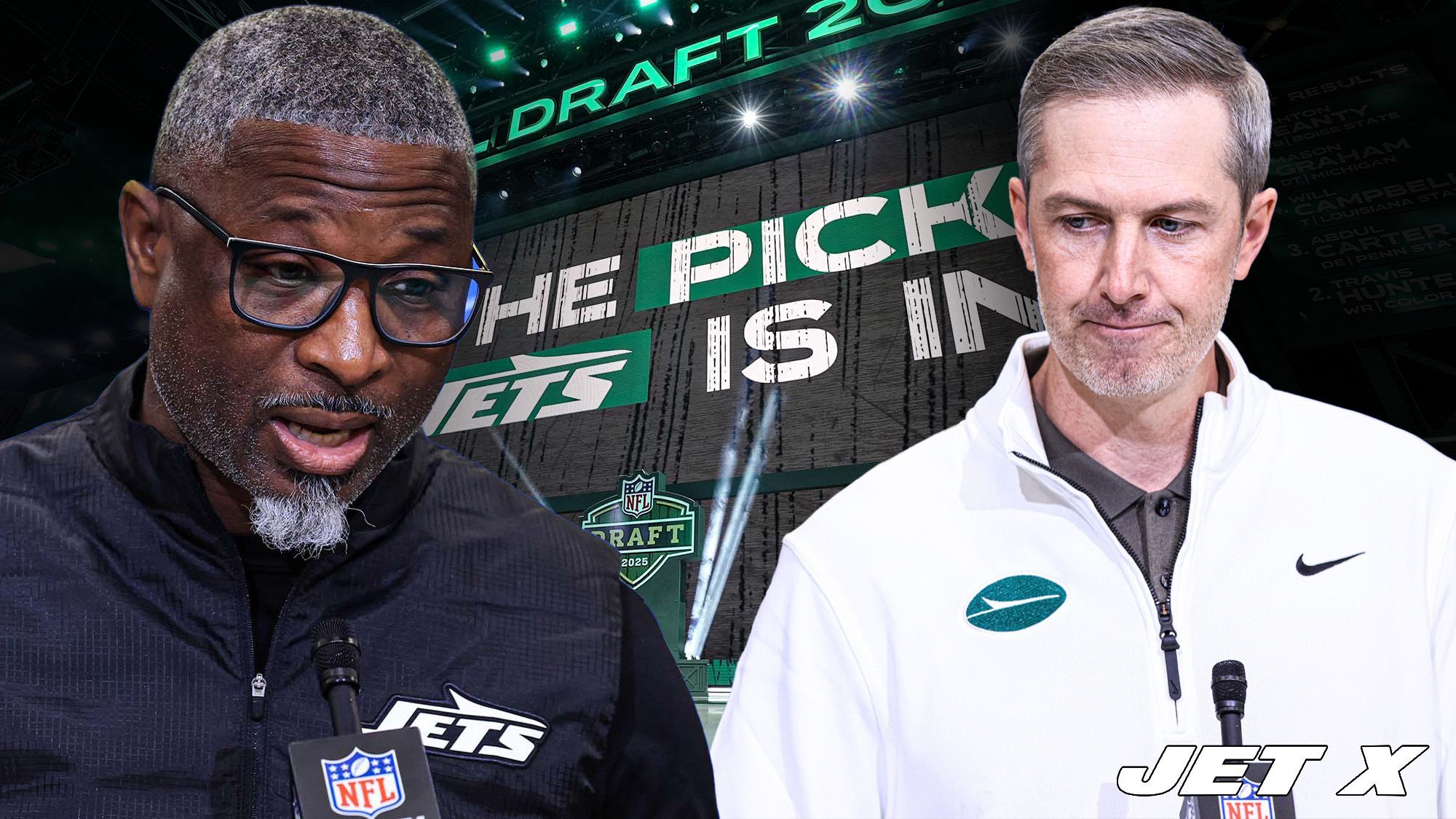
Imagine: Ohio State wide receiver Carnell Tate is waiting in the green room to hear his name called in the draft. The Cleveland Browns, with the sixth overall pick, have just passed on him.
All of a sudden, his phone rings. It’s not the Washington Commanders at seven.
It’s the New York Jets. Gang Green moved heaven and earth to bring the top receiver of the 2026 draft class to their roster.
What would it take for the Jets to accomplish that goal, though? Many draft analysts point to the 16th and 44th overall picks as the crux of the potential deal to send to Washington on draft night.
But will that be enough?
Luckily for the Jets, they own two second-round picks within the first 50 overall selections. If the team wants to, they can package their 16th pick and the 33rd overall selection to get aggressive.
And it might be high time for the organization to do so.
Jets’ second round conundrum
The Jets have an interesting conundrum on their hands.
They own the second and 16th overall picks in the first round of the 2026 draft. If the team stays where they are with both picks, they will be able to seemingly grab the best non-quarterback in the draft (which many expect to be an edge rusher) and one of the better pass catchers.
But the draft can always be a crapshoot. When the Jets make their pick at 16, many of the top wideouts, like Tate or USC’s Makai Lemon, may not be available.
A trade-up is the only way for the team to avoid worrying about that possibility. In order for that to happen, though, the team must part with one of their two second-round picks.
And there’s a stark difference in value between the two. According to the draft model first created by Jimmy Johnson, the 33rd overall pick is valued at around 580 points. The 44th pick stands at just 460. The 120-point difference may not seem like much, but it’s the equivalent of an additional late-third-round draft pick in negotiations.
And that’s the conundrum the Jets must decipher. What is more valuable to them? Quantity or quality?
Time to get aggressive
For what it’s worth, former NFL executive turned draft analyst Daniel Jeremiah spoke with Rich Eisen on SportsCenter this week to talk about the potential trade-up the Jets can make.
“This is about an opportunity here for the New York to move up, to be aggressive in this draft,” Jeremiah said. “They are loaded with picks, in this year and next year, and when you look at the cost for them to go from 16 to 7, you’re talking about their second second-round pick, a fourth-round pick, and their 16th overall pick, so it’s not that big of an ask.”
Moving three draft picks for any player can be risky, though. New York willingly parting with a fourth-round pick can be seen as a gamble, even if it’s for a player as seemingly good as Tate.
It’s why the 33rd pick remains such an interesting trade chip. New York could move down in the draft with that kind of asset, or they could package it as part of a potential trade-up deal with the Commanders.
It would also mitigate the difference of an additional fourth-round pick (and potentially more) being moved if the Jets traded the 44th pick instead.
If the Jets really are in love with the idea of taking a top receiver in the draft, then there is no need to debate which second-round pick they must send to get a deal done. Send the greater asset and get the player you covet.
It’s time for the Jets to get aggressive. If that means sending the 33rd overall pick as part of a deal, so be it.
