
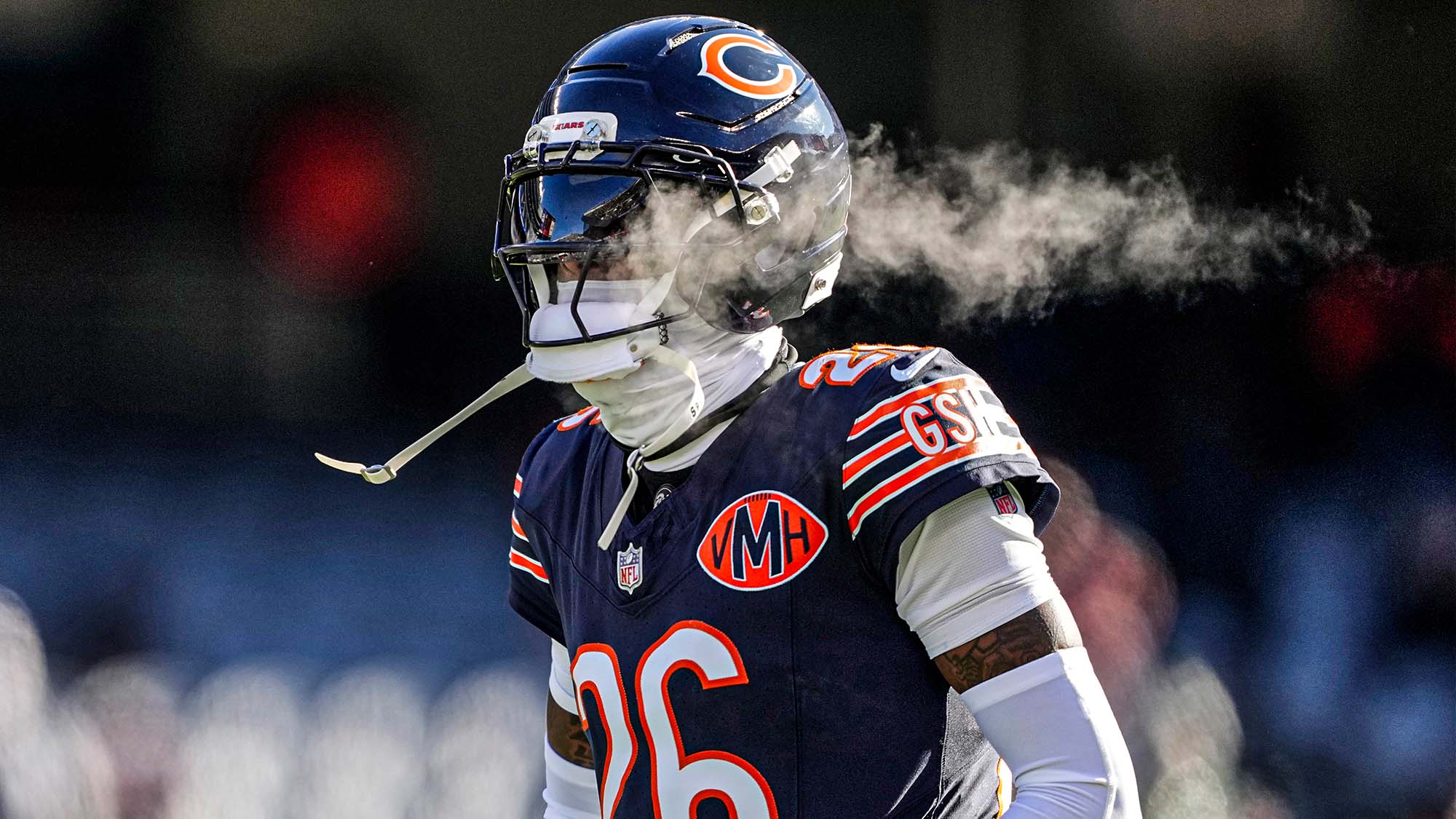
On paper, it feels like he should be viewed as nothing short of a transformative pickup for the New York Jets.
After becoming the first team in NFL history to intercept zero passes, the Jets went out and signed a cornerback who had five of them in 2025, part of a Pro Bowl campaign. Not only that, but he added two forced fumbles and three fumble recoveries in a takeaway-filled campaign, landing him in the Pro Bowl.
For a Jets team that had four takeaways in an entire season, it sure seems like a man who contributed to over twice as many takeaways by himself would be viewed as a game-changing addition. Yet, Nahshon Wright is something of an afterthought in conversations about the Jets’ outlook.
Despite the production and Pro Bowl pedigree, Wright only earned a one-year, $3.5 million deal in free agency. He is expected to have an outside chance of earning a starting spot in the Jets’ cornerback competition, rather than being viewed as a shoo-in starter.
How could a player be this productive and fill such a major need for his new team, and still be valued as a fringe starter/backup?
Well, Wright is a complex player to evaluate.
While Wright was a takeaway machine in 2025, it was the byproduct of a boom-or-bust style. Wright gave a lot of production back in coverage. He allowed 725 yards and seven touchdowns on throws into his coverage, both ranking as the fifth-most among cornerbacks.
It is also important to note that the 2025 season currently appears to be an outlier for the 27-year-old Wright. Over his first four NFL seasons, Wright started just three out of his 33 NFL games, recording one interception, no forced fumbles, no fumble recoveries, and five passes defended.
Wright’s 2025 season came out of nowhere. He had a four-season body of work in which he clearly established himself as a backup and special teamer, only to suddenly perform at a Pro Bowl level. It is understandable that few NFL teams were willing to invest in that type of sample size.
What makes it even tougher to believe that Wright’s 2025 season is sustainable is that he relied on takeaways to stand out. On a down-to-down basis, he actually struggled. Only four NFL cornerbacks gave up more yards. He was inconsistent with the main job of the cornerback position: preventing his man from getting open and making a reception.
But since Wright collected a large chunk of high-value plays, it overshadowed his struggles on the majority of his reps.
Overall, Wright’s impact was arguably league-average for a starting corner. You cannot overlook bottom-five marks in yards and touchdowns allowed, but if the player produces 10 combined interceptions, fumble recoveries, and forced fumbles, it adds back a huge amount of value, essentially allowing the positives and negatives to cancel each other out. Those are game-swinging plays, even if they make up a much smaller portion of a player’s reps than the less memorable moments that comprise most of the game.
The question is whether Wright can keep generating splash plays at a high enough rate to wipe out his coverage woes. Moving forward, Wright has to maintain the same elite-level takeaway production to be viewed as an average starter, assuming his coverage performance does not improve.
Sure, if he somehow improves in coverage at age 28, Wright could be a starter-level corner despite a drop in takeaways, but that scenario seems difficult to imagine given his career body of work. Even over his first three seasons, Wright was coughing up 8.3 yards per target, right around the 8.7 mark he posted in 2025. He has never shown signs of being an average cover corner in the NFL.
Realistically speaking, Wright can only be an average starting cornerback if he is consistently taking the ball away. And when you’ve only seen a player do that in one of his five career seasons, it is very difficult to trust that he will do it again.
The unique thing about Wright, though, is that there are legitimate reasons to believe his takeaway production may actually be sustainable.
Defensive backs can luck into high-takeaway seasons through fortunate bounces. Not every interception is actually a great play by the player, or even a play that he caused. Every interception is good for the team, but context is needed to understand whether the player actually did something impressive to create the interception, or if he was just the guy who wound up with the ball.
In Wright’s case, his five interceptions in 2025 leaned heavily toward the “impressive and legitimate” end of the spectrum.
Wright had one interception on an end-of-game Hail Mary, but each of his other four picks was an outstanding play, requiring him to read the route, break to the right spot, and then make an incredible play on the ball. He showed fantastic recognition, instincts, and ball skills across those four picks.
When a cornerback’s interceptions look like that, it is much easier to believe he is capable of generating interceptions sustainably. It’s not as if he had a bunch of tipped balls fall into his lap.
Nonetheless, it’s still challenging for a cornerback to control his interception total. They can’t just go out there and make interceptions happen, no matter how talented they are. A number of things have to fall a certain way for an interception opportunity to arise on a given play.
Cornerbacks have to wait until the quarterback gives them a real chance. Many uncontrollable factors control how many of these chances an individual corner gets over the course of the season, including game scripts, the quality of his team’s pass rush, the talent of the other corners on the field, and plain-old luck.
Things fell Wright’s way for him to get five interceptions (four legitimate ones) in 2025, but will they fall his way in 2026? It’s impossible to tell, which means that even if we can say that Wright’s ball skills and nose for the ball are legitimate strengths in his game, it does not mean we can comfortably assume he will replicate his four high-quality interceptions, which he must do to justify giving up over 700 yards and seven touchdowns.
Another overlooked factor in the Wright discussion is his run defense. A willing tackler who loves to get involved in the run game, Wright ranked second among cornerbacks with 14 run stops in 2025. This is a nice bonus.
However, he plays the run with the same mentality that he plays the pass. Wright’s five missed tackles against the run were tied for the 15th-most among cornerbacks, and his film showed a tendency to lose contain. These things balance out his high activity level and make him around a league-average run defender for a starting outside corner.
Overall, Wright projects as a volatile backup cornerback for the Jets. His career resume in production is too unreliable to justify a starting spot, and while he offers a legitimate knack for taking the ball away, he has yet to prove that his takeaway production is sustainable.
As a backup, though, Wright is a valuable piece, especially at his reasonable $3.5 million price tag. There are not many backup corners around the league who can come off the bench and give you a high chance of delivering a game-swinging play. Wright offers that, even if he is too inconsistent overall to start.
Perhaps if Wright can prove to the Jets’ coaching staff during training camp that his consistency in coverage has taken a step forward, he can leap over players like Brandon Stephens and Azareye’h Thomas in the cornerback competition. Stephens is inconsistent in his own right and does not have nearly the same upside in the takeaway department. Thomas projects as a better all-around player, but the 21-year-old remains a mere projection for now.
The door is open for Wright to ascend. But as a player who will turn 28 this year, it’s probable that Wright is who he is at this point in his career.
For that reason, he will likely open the season as a backup for the Jets—but a solid one.
