

“Process over results.”
It’s one of the truest statements in sports.
People tend to analyze teams and players based on outcomes, but the process itself is a better predictor of what’s to come in the future. That’s why film breakdowns and analytics must always go hand in hand; each provides context that the other lacks, helping us to gain a fuller understanding of the entire process behind the inner workings of either an individual player or an entire team.
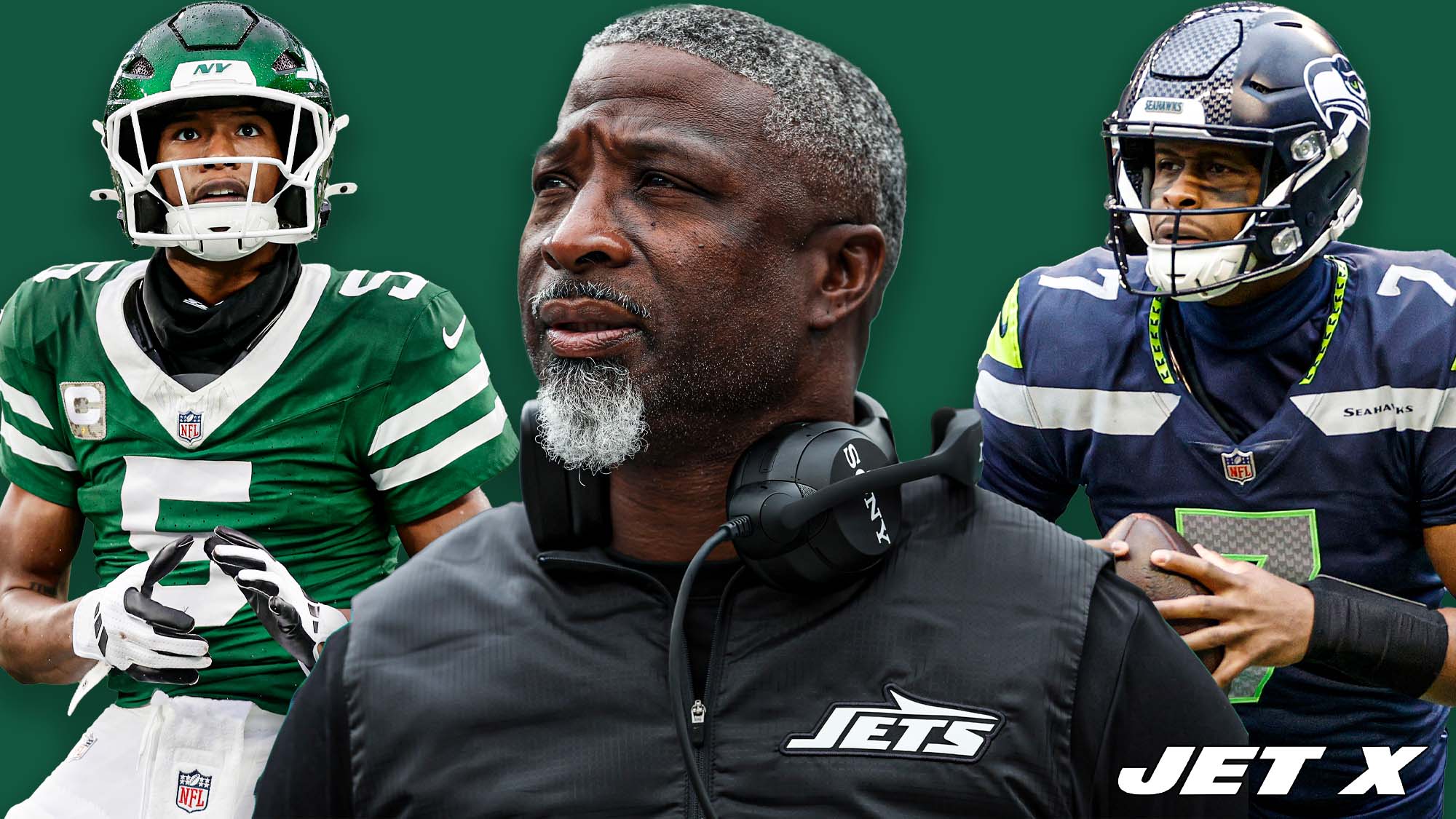
On that note, as we analyze the New York Jets moving into a pivotal 2026 season, it’s important to judge them on their process rather than their results.
When looking at the 2025 Jets team, just about every result was negative (unless we’re talking about the special teams). That’s because they simply lacked talent. Even a perfect process from a coaching and roster management standpoint would not have yielded a winning season with that roster.
But that doesn’t mean the process of the coaching and roster management is off the hook. Those things can still be evaluated separately from the team’s final win-loss record or point differential.
And that’s what we’re here to do today.
In which areas can the Aaron Glenn-led New York Jets become a more efficient football team in 2026 and beyond? We’re not talking about third-down efficiency or red-zone efficiency. We’re talking about strategic processes. In what areas can the Jets develop a more efficient plan that is more likely to optimize their chances of success?
Let’s identify those areas.
Ditch the run-first mentality
You will often see ridiculous stats peddled in the media that go something along the lines of, “[Team] is 10-0 when [RB] carries the ball at least 20 times.”
The stat gets thrown around with the intention of signaling that the team needs to run the ball more to win more games, but it ignores the reality that the team won those games because they were already leading and only then started to stockpile carries because they were milking the clock. It’s a classic case of correlation not equaling causation.
Aaron Glenn came to the Jets and immediately established a ground-and-pound identity within the organization. He signed Justin Fields to be the team’s starting quarterback, allowed him to be the starter with no competition, and built the offense around him. Then, save for one game against the Steelers, the Jets’ offense was an eyesore.
Fields averaged just 22.7 pass attempts per game in his starts. Suffice to say, that is not a winning formula in the modern NFL.
The Jets finished 26th in the NFL in pass attempts per game (27.1) despite spending the vast majority of the season trailing. That is a sign of a team that was much too stubborn about running the football.
Nobody is claiming that the Jets need to come out in 2026 and lead the league in pass attempts with Geno Smith under center, but the team clearly needs to strike a much better balance. The goal should be to have a pass-run split around the league average.
Take more deep shots
While the NFL is becoming more of a quick and intermediate-passing league, deep shots are still where games are won and lost. Those passes, while increasingly rare, remain the most efficient ones in the sport.
According to FTN Fantasy, the two most efficient route types of the 2025 season in terms of league-average EPA (Expected Points Added) per play were the post route (0.668) and the go route (0.528).
The Jets finished the season with a combined total of just 50 pass attempts on post routes and go routes, the fewest in the NFL. That’s just 2.9 vertical shots per game.
Think about that. The Jets took less than one deep shot per quarter… despite spending most of the season in desperate need of deep shots to try to climb out of gigantic holes on the scoreboard.
The league median total was 73, an average of 4.3 per game, which equates to about one shot per quarter. New York must try to at least match this number, but with the way their roster is constructed, they should probably shoot for the top of the leaderboard. They are built to be a vertical passing team.
Geno Smith has shown high peaks as a deep passer, while receivers like Garrett Wilson, Adonai Mitchell, and Omar Cooper Jr. offer plenty of vertical speed and separation. Even tight end Kenyon Sadiq projects as an excellent field-stretcher.
The Los Angeles Rams led the NFL with 104 pass attempts on go routes and post routes in 2025. Anytime Sean McVay is atop the leaderboard in something, it’s probably worth copying.
You’ll find plenty of other respected offensive teams and coaches in the next few spots: the Dallas Cowboys (93), Cincinnati Bengals (88), Denver Broncos (87), Indianapolis Colts (86), and Kansas City Chiefs (84). Solid-to-elite offensive coaches like Brian Schottenheimer, Zac Taylor, Sean Payton, Shane Steichen, and Andy Reid comprise that list.
It’s time for the Jets to stop playing dink-and-dunk football and start taking some so-called “risks”, even though these supposedly “risky” deep shots are actually proven to be the most effective play types in the game, as evidenced by the fact that the game’s most revered offensive mind is the coach who relied on them the most last season.
The real risk is not taking the risk at all.
Don’t over-rely on one-dimensional defensive linemen
Sometimes, defensive linemen can become overrated when they shine in one facet but struggle mightily in the other. This is a dangerous trap, because the reality with defensive players is that they can never hide from a specific phase.
While a lineman’s usage can be optimized to a certain extent, such as playing a situational pass rusher on third downs or a situational run stopper on early downs, every defensive player will ultimately be caught on the field for both pass and run plays. So, if they are a total liability in one of those phases, opponents will expose it, wiping out their value in the other phase.
This is why multi-dimensional defenders are important. To the Jets’ credit, they added a lot of defenders who fit this bill in the 2026 offseason, including guys like Joseph Ossai, Kingsley Enagbare, T’Vondre Sweat, and David Onyemata.
This is a step in the right direction, because the 2025 Jets defense featured too many one-dimensional defenders.
Take Harrison Phillips, for example. Phillips remains a strong run defender in the back end of his career, but it cannot be overlooked that his pass rushing was almost completely non-existent. Across 17 starts, he logged 343 pass-rush snaps and only managed to pick up one quarterback hit. Even if you extend to total pressures, he had just 11, which is slightly more than one every two games.
A defense cannot sustain excellence if there is a starting defensive tackle getting over 20 pass-rush snaps per game and hitting the quarterback once in a full season, no matter how good he is on his snaps against the run.
Ideally, Phillips should be relegated to a very specialized role this season, reducing the negative impact of his lowly pass rushing. With additions like Onyemata, Sweat, and rookie Darrell Jackson Jr., the Jets should be able to do that.
Sweat is a particularly exciting addition as it pertains to this specific goal of fielding more two-way defensive linemen. The 366-pounder is best known for his elite abilities against the run, but he is a very solid pass rusher relative to his size and run defense. Compare him to Phillips last season; with 143 fewer pass-rush snaps (200 to 343), Sweat had seven more pressures (18 to 11) and 1.5 more sacks (2.0 to 0.5).
Those are the types of players that anchor a great defensive line, because they prevent opponents from having easy exits. When opponents see Phillips on the field, they can easily just audible to a pass, because they know that running toward him would be futile, but he’ll turn into a statue if they drop back. But with Sweat on the field, he is still a force to be reckoned with if he gets caught for a pass play, even if he is better against the run.
It will be fascinating to see where the Jets fit Will McDonald into this. McDonald is a strong pass rusher (his 2025 numbers were worse than his actual performance through the eye test), but he remains one of the lowest-ranked run defenders in the league; his 41.6 run defense grade from Pro Football Focus was the second-worst among edge defenders with at least 300 snaps.
Last season, the Jets could easily justify playing McDonald in a full-time role because the rest of their edge defenders, like Micheal Clemons or Braiden McGregor, were similarly exploitable against the run while providing nowhere close to as much pass-rush juice. But now, the Jets have reliable run-stopping alternatives in players like Ossai and Enagbare.
Will that prompt New York to optimize McDonald by playing him in a situational pass rushing role? Or will they gain enough confidence in McDonald’s run defense to continue playing him full-time?
That situation will be one to monitor. Overall, though, it’s encouraging that the Jets have drastically improved their quantity of reliable two-way players on the defensive line. It will allow them to operate their rotation in a much more efficient fashion, limiting the number of loopholes for their opponents to exploit.
