

You hear it all the time:
“The NFL is a copycat league.”
And it’s true.
Football is a unique sport in that it allows for such a vast range of strategies. Even with 60 Super Bowls in the books, there are still numerous approaches, philosophies, and identities that have yet to be tested on an NFL field. With 22 guys moving simultaneously at any given moment of a game, there is an infinite number of ways to deploy the chess pieces.
Typically, the best teams in the NFL at a given point are those that best recognize the zeitgeist of the modern league and build their strategy around it. The worst teams are often the ones who try to win games using strategies that may have worked in the olden days, but have been passed by.
The Jets are often a member of the latter group. They subscribe to old-school adages and struggle to stick with the modern curve, leading to predictably poor results.
If Aaron Glenn and the Jets want to catch up in the standings this season, their strategy will have to catch up first. Here are two league-wide NFL trends that New York should seek to jump on in 2026.
1. Fourth down aggressiveness early in games
The most commonly known trend in the modern NFL is probably the increased frequency of fourth down attempts. The growing role of data in decision-making has made teams increasingly aware that going for it on fourth down is often a much more advantageous decision than coaches realized in ancient times.
Many of the league’s most successful teams in recent years have become famous (or perhaps infamous, depending on the success of those plays in critical situations) for their reliance on fourth down aggressiveness. The Philadelphia Eagles and Detroit Lions are probably the two most notorious examples.
Philly’s aggressiveness helped anchor a 2024 Super Bowl victory. Detroit’s gutsiness has helped turn them into a consistent NFC powerhouse, although skeptics of analytics and fourth down aggressiveness will point to the Lions’ failed attempts in the 2023 NFC championship game that contributed to them squandering a trip to the Super Bowl.
Fourth down attempts are a high-risk, high-reward play, so there will always be moments of triumph and moments of misery. Compared to punting or kicking, the highs are higher and the lows are lower, making the cost more glaringly obvious than the cumulative points lost by consistently opting for the “safe” move. Overall, though, the reward of fourth down aggressiveness tends to outweigh the risk, and that’s why it typically pays off to rack up fourth down attempts at a high volume over the course of a season.
The Jets need to catch up.
Aaron Glenn made a plethora of game-management blunders in his first season as the Jets’ head coach, particularly during their 0-7 start, when many of their games were still winnable in the second half.
However, the Jets finished the season with a league-high 41 fourth-down attempts. That would seem to suggest that Glenn, who learned about fourth down aggressiveness firsthand under Dan Campbell, was actually quite aggressive, right?
Not quite.
The Jets’ 41 fourth down attempts were mostly a product of the fact that they were trailing by massive margins for most of the season, which made Glenn’s decision an obvious one in many cases. Not to mention, when your team gets to 0-4, 0-5, 0-6, and 0-7, it starts becoming easier to make the “screw it, we’re 0-7, why not?” type of decision.
When fourth down decisions weren’t obvious, Glenn wasn’t very aggressive. In 2025, the Jets made just 9 fourth down attempts in the first half, which tied for 16th in the league and was essentially equal to the league average (9.3).
So, Glenn wasn’t bad in this area, but he wasn’t giving the Jets an edge, either.
When you look at the top of the list of first-half fourth down attempts, you see plenty of high-scoring teams:
- Los Angeles Rams (17) — 30.5 PPG (1st)
- Chicago Bears (16) — 25.9 PPG (9th)
- Dallas Cowboys (15) — 27.7 PPG (7th)
- Kansas City Chiefs (15) — 21.3 PPG (21st)
- Indianapolis Colts (13) — 27.4 PPG (8th)
- Detroit Lions (13) — 28.3 PPG (5th)
- Buffalo Bills (12) — 28.3 PPG (4th)
- Carolina Panthers (12) — 18.3 PPG (27th)
Fourth down aggressiveness in the first half of a game can give teams an early edge that shifts the entire trajectory of the game. Many of the league’s best coaches, including Sean McVay, Ben Johnson, Andy Reid, and Dan Campbell, have caught onto that. The Jets should be next if Glenn wants to become the type of coach who creates an advantage for his team.
2. Heavy personnel is making a comeback
When people talk about the modern NFL, you will usually hear them talk about how it has become faster, more athletic, and more passing-based. But the reality is that smashmouth football is making a comeback of sorts.
Most of the league’s best offensive teams in recent seasons have become increasingly reliant on one or multiple “heavy” personnel packages, which means an alignment that includes fewer than three wide receivers. Whether it’s 12 personnel (1 RB/2 TE/2 WR), 13 personnel (1 RB/3 TE/1 WR), or 21 personnel (2 RB/1 TE/2 WR), the big boys are coming back—at least for the teams that win games.
When you look at the top teams in the usage of 11 personnel packages (1 RB/1 TE/3 WR) during the 2025 season, you see teams that struggled to win games and score points:
- Tennessee Titans (69.8% usage rate of 11 personnel) — 3-14, 16.7 PPG (30th)
- Tampa Bay Buccaneers (68.7%) — 8-9, 22.4 PPG (17th)
- New York Jets (67.1%) — 3-14, 17.6 PPG (29th)
- New Orleans Saints (66.7%) — 6-11, 18.0 PPG (28th)
Meanwhile, many of the league’s best offensive teams were near the top of the league in the usage rate of at least one “heavy” personnel package.
The Super Bowl champion Seahawks were eighth in 12 personnel usage (29.9%) and fifth in 21 personnel usage (11.4%). The AFC champion Patriots were fourth in 21 personnel usage (15.3%). The No. 1 scoring team, the Los Angeles Rams, led the NFL with a 30.5% usage rate of 13 personnel, more than double any other team.
NFL trends are cyclical. One strategy rises up, everyone copies it, and suddenly, the new best strategy is the counter.
That’s what we’re seeing here.
For years, offenses grew smaller and shiftier, and defenses responded by getting smaller and shiftier to match. Linebackers, in particular, have gotten much smaller than they were in the past. Now, offenses are finding out that they can punish these smaller defenses by pummeling them with size.
The Jets should catch on, especially given that they were among the teams that used 11 personnel the most often in 2025.
The good news is that it seems like the Jets have already made a serious effort to hop onto this trend.
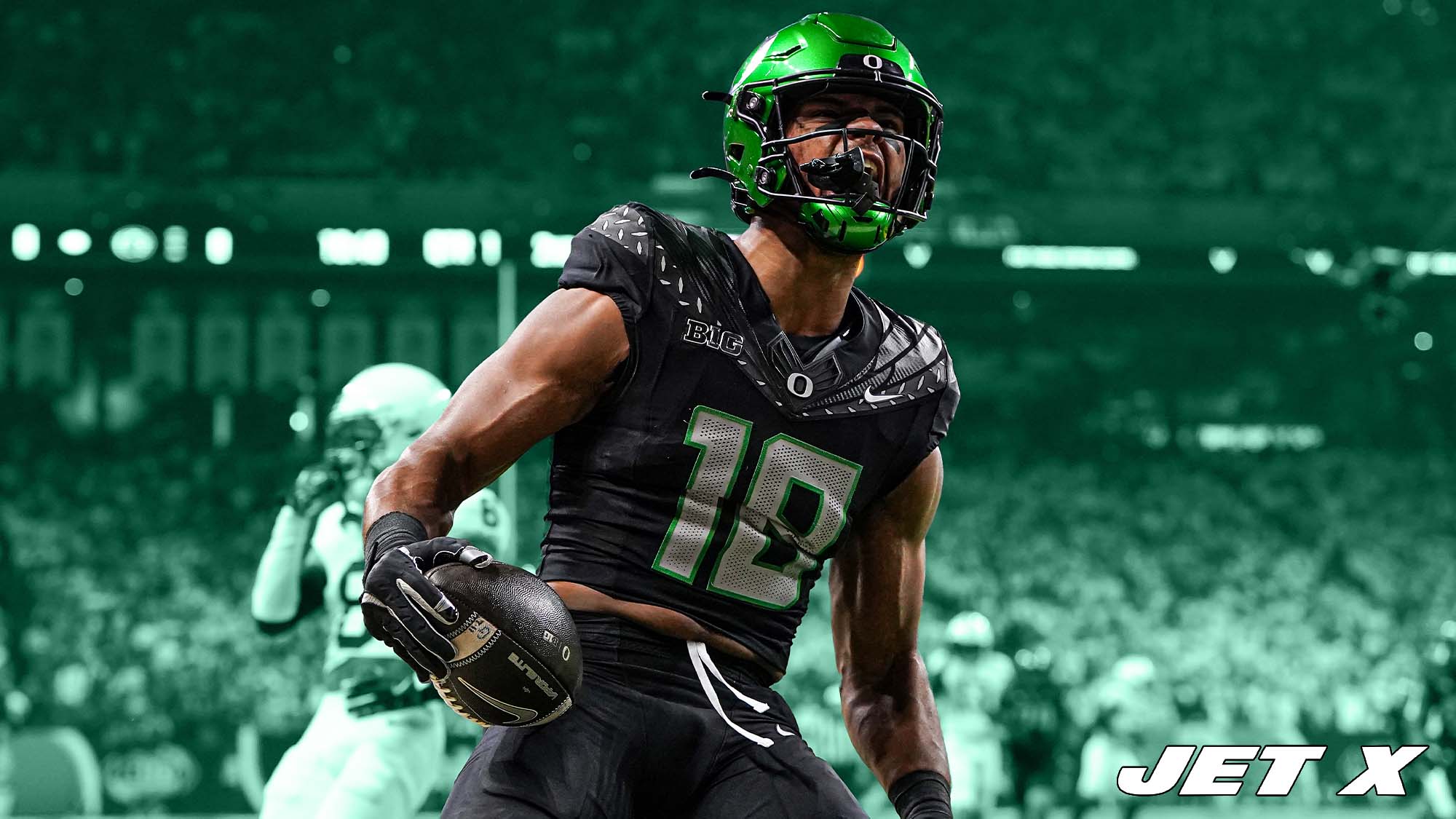
After drafting tight end Mason Taylor in the second round of the 2025 draft, the Jets doubled down by selecting tight end Kenyon Sadiq in the first round of the 2026 draft. They also extended Jeremy Ruckert near the end of the 2025 season. That gives them one of the deepest and highest-upside tight end rooms in the NFL, making them plenty equipped to rely on 12 and 13 personnel packages.
To boot, the Jets re-signed fullback Andrew Beck, who was a quality blocker in 2025, offering them the flexibility to occasionally run 21 personnel.
At least in this one department, the Jets seem ready to catch the rising NFL wave.
