
The New York Jets are nowhere close to seeing themselves in the conference championship game. Coming off a 3-14 season, the organization has plenty of work to do.
That doesn’t mean lessons can’t be learned from Sunday’s two battles.
Whether it was the Patriots putting a beatdown on the Broncos and their backup quarterback, or the Jets’ former franchise quarterback becoming the first signal-caller from his class to reach a Super Bowl, the Jets have much to learn if they want to be even close to either team.
Here are five key lessons.
1. “Culture wins” are pointless in lost seasons
Do you think the New England Patriots are happy about their four wins from the 2024 season? Were they good for the “culture” of a coaching staff that got gutted during the offseason anyway?
The Jets’ 2023 “culture win” in New England was the worst thing for New York, and the result that changed New England’s future forever. Not only did it drop the Jets down the draft board, but it also gave the Patriots the rights to Drake Maye.
There is no such thing as “culture wins” in the NFL during lost seasons.
If the Jets change their culture, it won’t be because of locker room morale. It will be because they can actually win football games. And to win football games, you need a reliable player under center.
The Patriots are the perfect example of that.
2. Interior defensive linemen are everything
While Maye receives most of the credit, the real heroes in New England’s Super Bowl run are arguably the defensive tackles.
The combination of Milton Williams, Christian Barmore, and Khyiris Tonga has been the best defensive tackle trio across the NFL in the playoffs. They have shut down the rushing attacks of Denver, Houston, and Los Angeles; the Patriots are allowing 71 rushing yards per game in the playoffs.
In New England’s 10-7 win in the conference title game, the defensive tackles were the biggest reason they pulled it out. With snow falling in the second half, running the football was Denver’s only shot of getting the points they needed to win the game, and the Pats’ interior would not allow it.
It’s an important reminder for the Jets, who will be retooling their defensive line this offseason. While they are projected to select an edge rusher with the second overall pick, they must also focus on beefing up their interior.
3. QBs do not always need to light it up to win games
As nice as it can be to have the flashy numbers of your Josh Allens and your Lamar Jacksons, it is not always necessary to win the big games.
Sometimes, you need a quarterback who does just enough to win by playing mistake-free football, simply outlasting the competition.
The Patriots were extremely fortunate to play Jarrett Stidham in the conference title game. They were also fortunate to avoid Nico Collins in the divisional round and face the Chargers’ banged-up offensive line in the wild card.
But Drake Maye understood his opponent this week. In the conference title game, Maye threw for under 100 yards, but he didn’t turn the ball over. That was the difference in the Patriots’ win, as Stidham’s lone turnover gifted New England the single touchdown it needed to seize the advantage.
As appealing as it is to land the quarterback who posts the gaudiest stats, the main thing New York needs under center is a signal caller who does what needs to be done to win the game. Turnovers lose games. The Jets need to find a quarterback who can win ugly just as often as he wins with MVP-caliber production.
4. Offensive play-calling is about more than scheme
The Jets are reportedly going to be changing play-callers on offense. In the NFC championship game, Rams head coach Sean McVay showed Aaron Glenn an example of what he should be looking for in the role.
In the second quarter, McVay called a clear-out for running back Kyren Williams on third down. The Seahawks played in a match zone that left Williams wide open for the score.
In the modern game, offensive play-callers need to have that type of feel for the opponent’s tendencies. They need to remain one step ahead of elite defenses and be prepared to pull out play-calls that are perfect for beating the coverage that will be thrown at them.
The Seahawks had the best defense in the league based on points per game. McVay made them look bad across three matchups this season, leading the Rams to 28.3 points per game against Seattle’s defense.
New York won’t find someone as good as McVay overnight, but his sustained success provides a blueprint for the kind of skills that the Jets must prioritize in their offensive play-caller if they want to catch up with the modern game.
5. Bridge QBs can go far if you let them
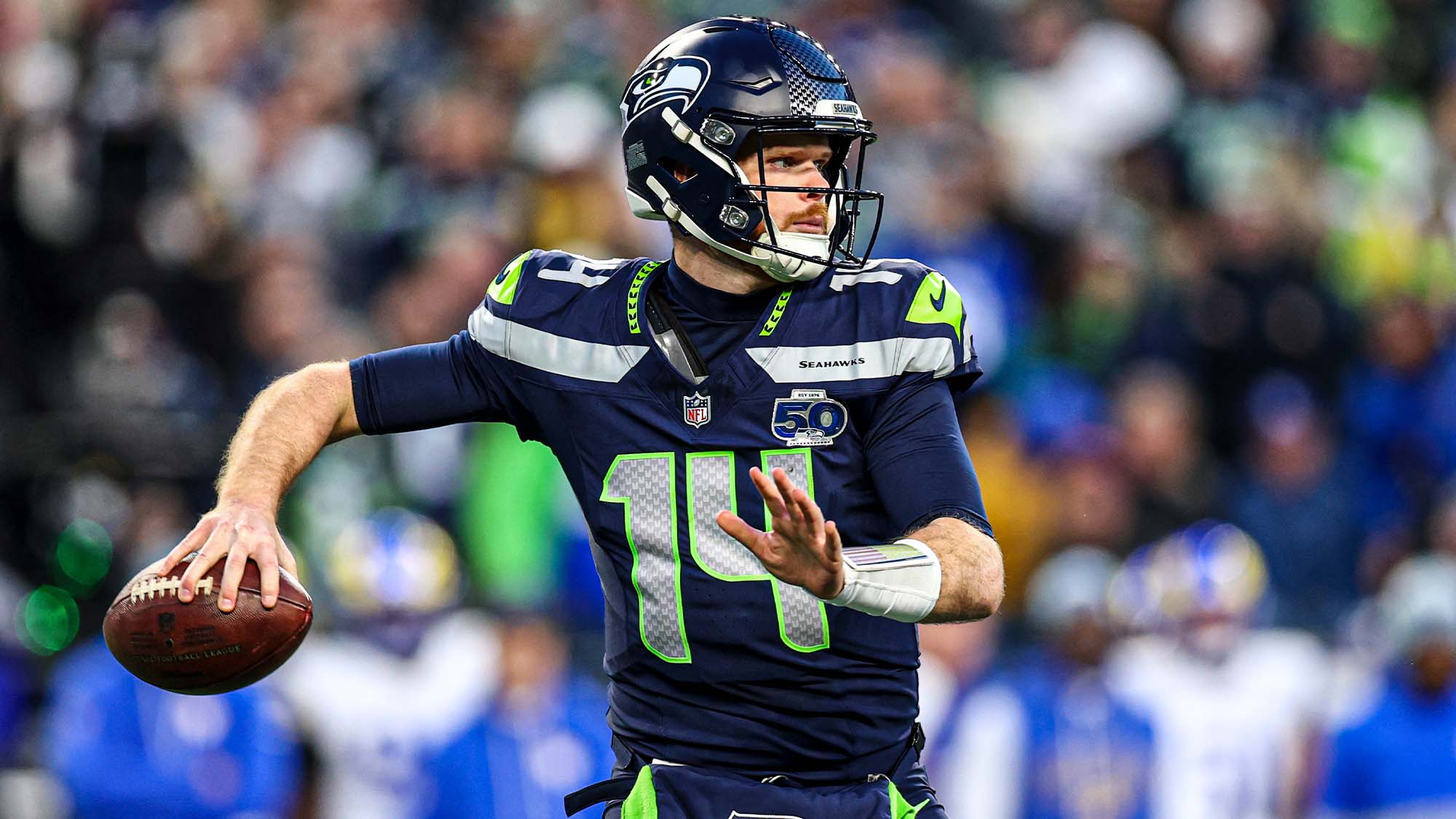
Sam Darnold is a wonderful story. As a former third-overall pick and reclamation project, he has proven he belongs as a starting quarterback in this league. Now in Seattle, he’s a win away from being a Super Bowl champion.
It’s a mammoth jump from his early-career struggles with the Jets and Panthers.
Darnold’s success offers a model that the Jets can follow moving forward. He may not be an elite quarterback, but within Seattle’s system, he was one of the most efficient quarterbacks in football this season, showing that it is still possible to reach the big game without an MVP candidate under center.
Seattle did a great job of building talent around Darnold. They fielded an improved offensive line, one of the league’s best receiving groups, and a dynamic defense. In addition, offensive coordinator Klint Kubiak understood Darnold’s limitations and built a scheme around him.
The Jets need to understand that this blueprint can work. Too many times, the organization has counted on a highly drafted signal-caller to walk in the door and instantly turn the franchise around on his own. That strategy rarely works in today’s league.
If Darnold teaches the Jets anything, it’s that any organization can compete for championships without an MVP-caliber quarterback. The team just needs to embrace that player and build around his strengths and weaknesses.
