

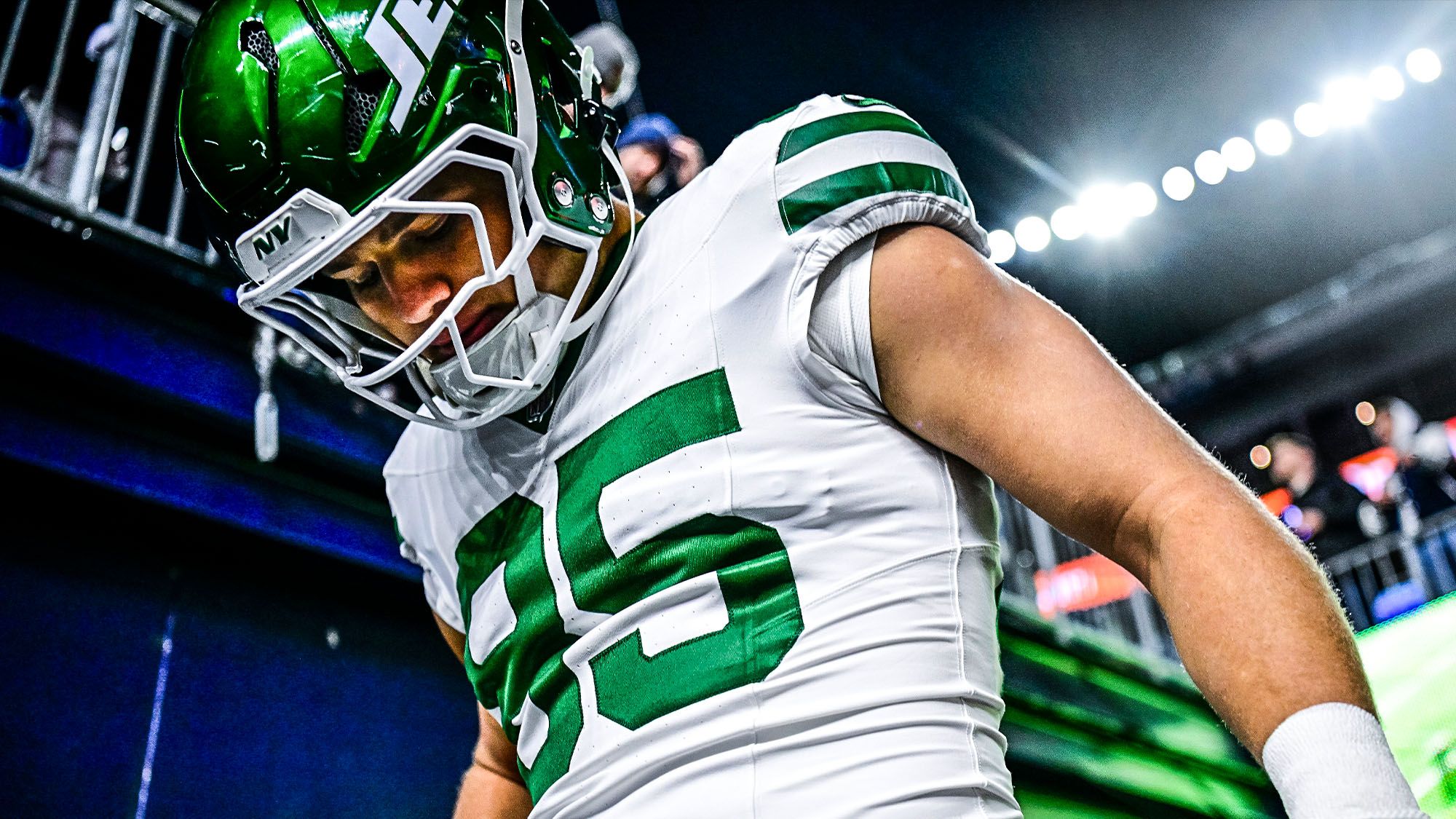
When the New York Jets drafted tight end Mason Taylor in the second round of the 2025 NFL draft, the decision was widely celebrated.
Taylor, the son of Hall of Fame EDGE Jason Taylor, was generally regarded as one of the best tight ends in LSU history, featuring an intriguing skill set of pass-catching abilities and blocking tenacity.
Taylor churned out a sneaky impressive rookie season with the organization, but like many things this past season, it didn’t change the end result of what was a three-win squad.
With a fresh batch of quality tight end prospects in the 2026 draft, some fans are questioning whether the organization should look to the position group again early in April.
Jets’ tight end room
On paper, Mason Taylor’s first season with the New York Jets was perfectly fine, considering how many issues the organization had at quarterback. Despite playing with three different signal-callers, the 21-year-old recorded a team-high 44 receptions for 369 yards (second on the team) and a touchdown.
Those numbers highlight how poor the 2025 Jets’ quarterback room played.
Taylor showed plenty on tape as a quality pass catcher who understood how to get open at a high clip. By the midway point of the season, he had become one of the only trustworthy receivers on the team following Garrett Wilson’s season-ending injury.
Outside of Taylor, the Jets received very little production from their tight end room. Jeremy Ruckert enjoyed a career season that included 23 receptions, 179 yards, and the first touchdown of his career.
New York’s tight end production as a whole was anything but solid.
The real question surrounding Taylor, though, centers on how the Jets could improve the position. Tight ends are becoming more athletic, and there are still fans angry that the Jets chose to bypass top prospects like Brock Bowers or Tyler Warren — however unfair that may be.
Nonetheless, that doesn’t mean definite change is coming for the second-year starter — only that he could face a precarious situation.
Mason Taylor profile
It would be viewed as organizational malpractice for the Jets to look to add a second tight end in the first two rounds of back-to-back drafts, given the team’s lack of answers at quarterback. New York had five such games last season in which they failed to throw for over 100 yards.
That’s not a Taylor problem; that’s a quarterback problem.
At the same time, not all tight ends are built the same way. A player like Kenyon Sadiq, who brings more receiver-esque traits to the table, or Michael Trigg, who could complement Taylor with insert blocking roles, could make sense.
It’s a safe bet to assume the Jets still believe in Taylor after just one season, despite the limited quality of his rookie campaign production. Will he need to get stronger and better at blocking?
Of course. No young tight end walks in as an all-around player. That’s where player development comes in.
Still, there’s little doubt the Jets don’t believe Taylor is walking into a big 2026 season. A sophomore campaign that is filled with quality catches and gritty blocking will go a long way into the team pushing off any conversation of a change in the future — even with the athleticism of tight ends exploding with each passing NFL draft.
Mason Taylor isn’t going anywhere other than the top of the Jets depth chart next season.
