

The New York Jets have been a bad football team for quite a while now.
They haven’t made the playoffs since 2010, and they haven’t even had a .500-plus record since 2015.
With such a long-standing streak of failure, it’s worthwhile to look for trends that have spanned across the duration of the struggles. These trends represent the main areas where New York must seek improvement if they wish to end their playoff drought (or at least their .500-plus season drought).
There is one area in particular where the Jets are on a streak of misery that directly coincides with their 10-year streak of losing seasons: red zone offense.
The Jets need to learn how to finish drives
Here is a look at where the Jets have ranked in red zone touchdown percentage since 2015:
- 2025: 44.7% (31st)
- 2024: 54.5% (21st)
- 2023: 32.4% (32nd)
- 2022: 43.5% (31st)
- 2021: 54.9% (21st)
- 2020: 42.1% (32nd)
- 2019: 54.5% (19th)
- 2018: 44.4% (30th)
- 2017: 54.5% (15th)
- 2016: 35.2% (32nd)
- 2015: 66.0% (3rd)
The last time the Jets were any good in the red zone was 2015, which, unsurprisingly, is the last time their entire football team was any good.
Finishing off drives is a critical part of winning games in the NFL. Think about it: You can drive 99% of the field, but if you can’t get that final yard, you can end up with zero points instead of seven. Perhaps you even drive 85% of the field, but end up with half as many points (three versus seven) just because you couldn’t drive the final 15%.
Those final 20 yards are what decide games.
Of course, the Jets must improve at moving the ball between the twenties as well. Due to their struggles at quarterback, offensive line, and play-caller, the Jets haven’t exactly gotten to the red zone very often.
The thing is, though, if you finish in the red zone at a high clip, you don’t have to get there too often to win games.
Take last year’s Philadelphia Eagles, for example. This will likely shock you, but they actually ranked 28th in the league in red zone trips with just 44, only one spot ahead of the Jets (38).
But the Eagles led the NFL with a 70.5% touchdown conversion rate in the red zone, scoring touchdowns on 31 of their 44 trips. As a result, they scored nearly twice as many red zone touchdowns as the Jets (17, 44.7% conversion rate), despite only getting six more trips.
Granted, the Eagles’ offense had a down year, ranking 19th in points per game (22.3), so they weren’t exactly a shining example of offensive excellence. But they still went 11-6, thanks largely to an 8-3 record in one-score games (counting out a season finale in which they rested their starters).
Finishing in the red zone is a paramount factor in deciding close games. Turning a red zone trip from a field goal to a touchdown can be the difference between losing by one or winning by three.
The good news is that the Jets seem to have plenty of tools that can help them turn around their red zone struggles.
Second-year tight end Mason Taylor was a contested-catch monster in his rookie season. He only had one touchdown, though, which means the Jets left plenty of meat on the bone regarding his red zone usage.
Running back Braelon Allen bulked up to 250 pounds, making him a potentially elite force in short-yardage situations.
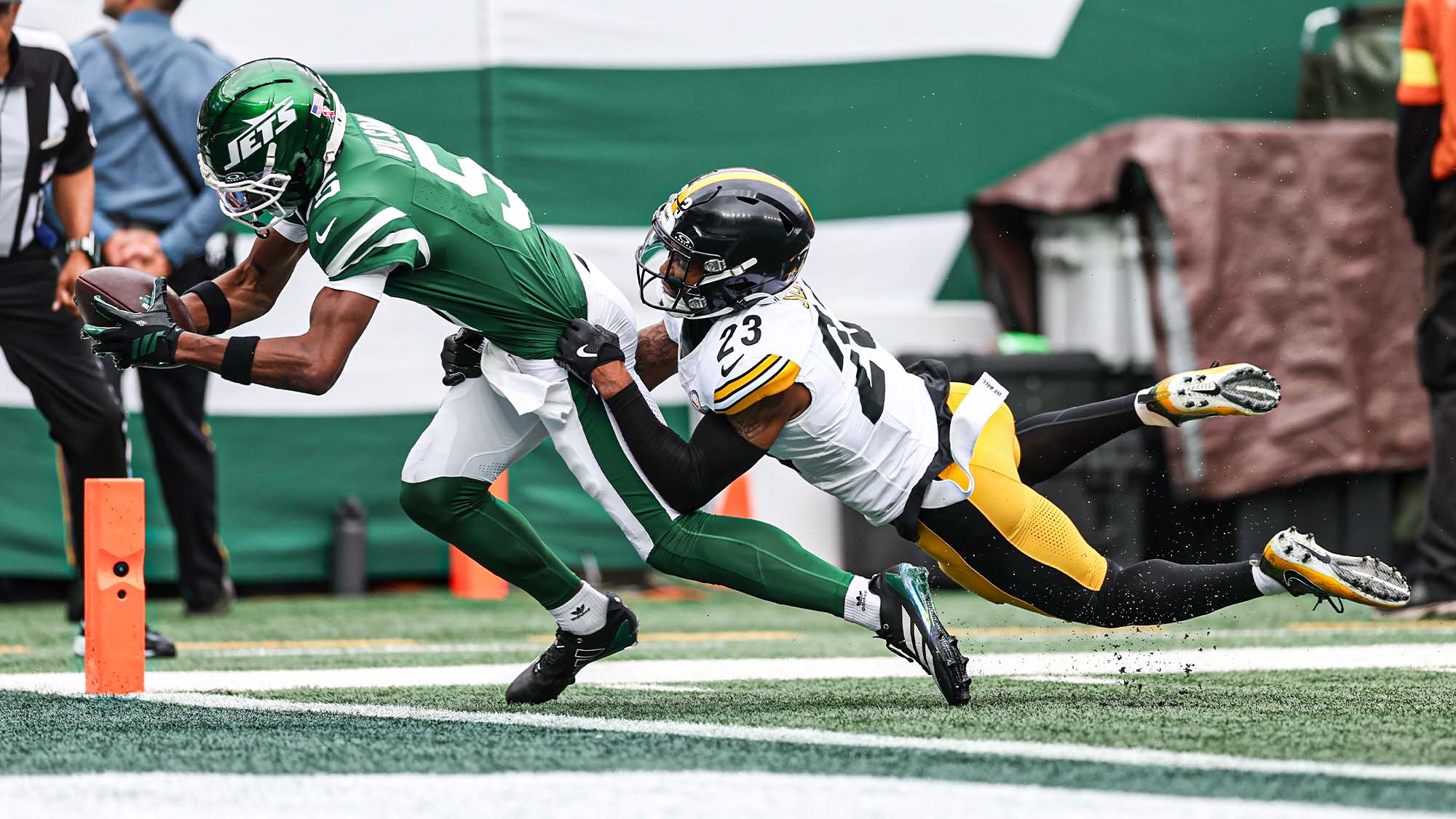
It’s also a travesty that Garrett Wilson, who has some of the most exciting end-zone catches in the NFL throughout his career, has caught only 11 red zone touchdowns in four seasons. There are a lot of red zone touchdowns waiting to be unlocked here.
The Jets’ young, talented offensive line appears to have a top-six ceiling in 2026. This is critical; as much attention as we place on the quarterback and the weapons in the red zone, the offensive line is ultimately responsible for ensuring that the skill-position players have the time and space they need to operate. The red zone run game, in particular, is highly dependent on the blocking.
It is not coincidental that the Jets’ last season with a red zone touchdown rate above 60% was also their last season with a winning record. If they can reach that mark in 2026, perhaps it will reflect in the standings.
