
You know the name Jaxon Smith-Njigba, don’t you?
The kid’s a pretty damn good football player, isn’t he? If his 2,274 receiving yards over the last 21 regular season games doesn’t get that point across, I’ll throw a nerdy metric at you: So far in 2026, the Seattle Seahawks star has a “catch rate over expected” (CROE) of 18.3%, the second-best among wide receivers with at least 25 targets.
CROE estimates the “expected catch rate” of every pass using GPS chips inside both the football and every player on the field. It essentially exists to account for the difficulty of each receiver’s target diet, giving us a measure of how often a player catches passes compared to how the league-average would perform in the same exact situations.
Basically, catching a wide-open dump-off will do little to improve a player’s CROE, while dropping it would crush them. If they catch a one-handed contested pass on a 50-yard bomb, it will substantially raise their CROE. If they are targeted on an uncatchable throwaway, they won’t be dinged.
So, 18.3% is a pretty absurd number. Think about how good the average NFL wide receiver is at catching footballs, and then let it sink in that Smith-Njigba makes 18 more catches out of every 100 passes than that guy.
Sheesh.
It’s no wonder, then, that the Seahawks spam passes in his direction. Through Week 4 of 2026, Smith-Njigba leads the NFL with a 39.1% target share and is sixth in total targets (42). In fact, Smith-Njigba’s target share is even higher than his league-leading 37.0% mark from Seattle’s 2025 championship season.
That makes sense, doesn’t it? After finding out that Smith-Njigba is not human, the Seahawks figured, “Maybe we should throw this guy more passes!”.
Any wise coach would do that if they had an alien who can catch the ball 18.3% more often than your average Joe.
Hold the phone, though: Do you remember where Smith-Njigba’s 18.3% CROE ranked?
That’s right: Just second among wide receivers with at least 25 targets.
Who’s first, you ask?
That would be Smith-Njigba’s former Ohio State Buckeyes teammate, Garrett Wilson, who has accrued an astronomical CROE of 22.9% through four games.
Surely, the New York Jets must be doing everything in their power to pepper Wilson with even more throws than Smith-Njigba.
Wait… he only ranks… 16th in targets?
That’s right: Wilson, who displayed incredible talent over his first four seasons and is now playing at his highest level, has been out-targeted by 15 other players through Week 4. He has seen only 31 targets; players like Titans rookie WR Carnell Tate (32) and Giants TE Isaiah Likely (35) have seen more balls thrown their way.
In terms of target share, Wilson ranks a more reasonable sixth among WRs at 28.4%. However, his target total is the most important number, as it accounts for how the Jets balance the pass and the run.
Despite clearly being better at throwing the ball this year, the Jets have a pass rate over expected of -2.0%, per NFElo. This essentially means that New York passes the ball slightly less frequently than expected after accounting for variables like the down-and-distance, score, and field position.
It makes little sense to lean heavier on the run than the average NFL team when your pass game is netting 6.3 yards per attempt (17th) and your run game is netting 3.4 yards per attempt (30th), especially when your best offensive player is a wide receiver who happens to be playing as well as anybody in the league.
This slight lean toward the run game explains why Wilson is 16th in targets despite being sixth in target share. The Jets do lean on him when they pass (although, arguably, still not enough), but they just don’t use the passing game enough.
What makes Wilson’s usage even more puzzling is that his target numbers are actually being buoyed by one game: a 13-target outing against the Green Bay Packers in Week 2. Outside of that game, Wilson has seen 18 targets in three games, just 6.0 per contest.
In the Jets’ recent loss to the Chicago Bears, Wilson was targeted four times, the third-lowest mark of his career.
Granted, Jets quarterback Geno Smith threw only 15 passes in a game where the Jets had 17 minutes of possession time. But that’s only one more pass than backup running back Braelon Allen had rushing attempts (14), despite New York trailing for the majority of the game.
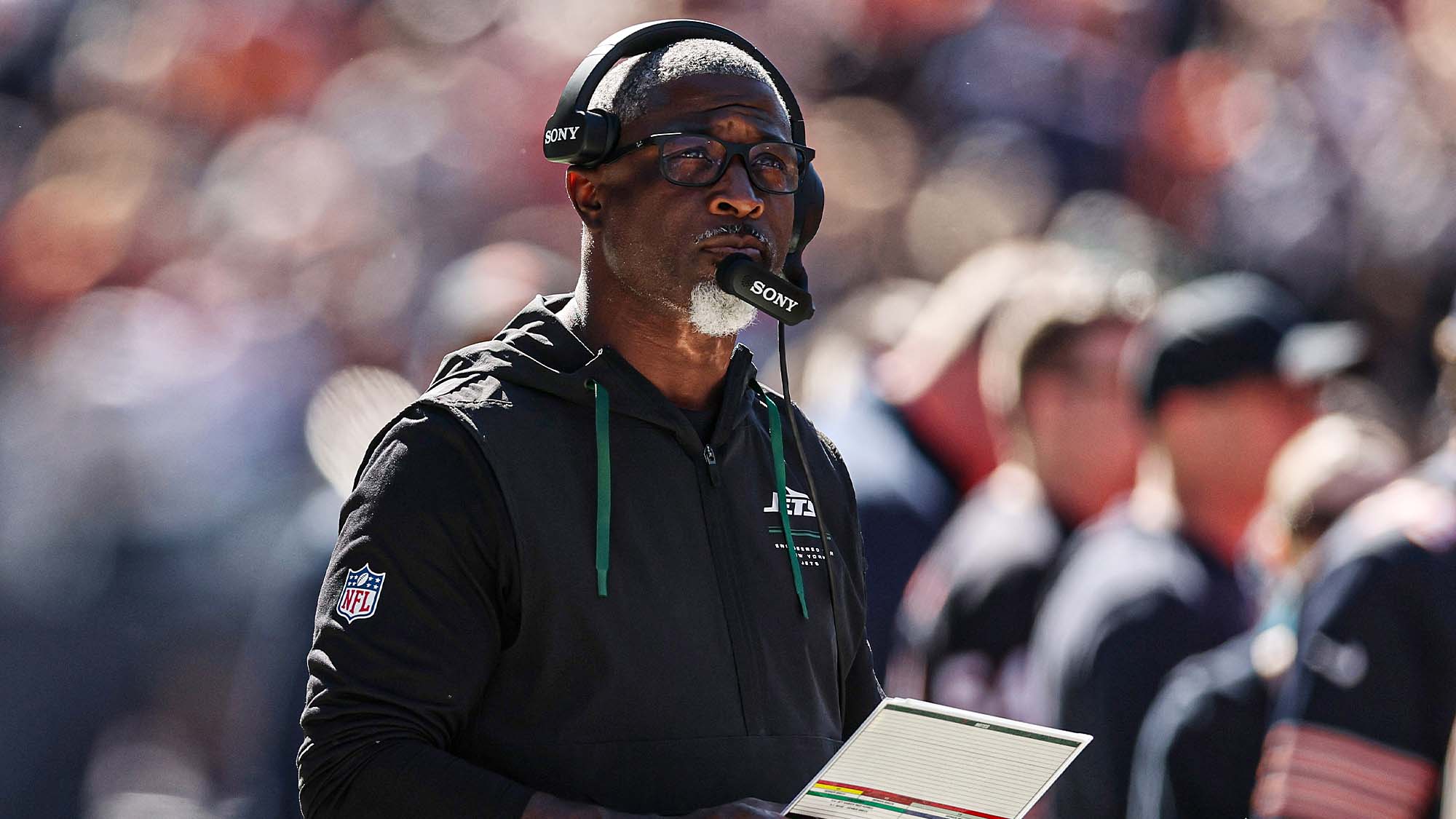
All of these asinine metrics point to one recurring issue with the Aaron Glenn-led New York Jets: They don’t optimize their best players.
Football coaches have a way of convincing the public that the sport is an inconceivably complex equation that mere mortal fans could never comprehend. There is always some 4D excuse for why a team failed to do something simple and lost a game because of it.
The reality, though, is that the sport really does not have to be that complicated.
When you have great players, you let great players be great players. That’s a pretty darn reliable formula for winning.
The Seattle Seahawks have Jaxon Smith-Njigba. So, they throw the ball to Jaxon Smith-Njigba as often as they can, because throwing the ball to Jaxon Smith-Njigba will probably yield a great result. That’s would great coaches do: They let their best players dictate games instead of stuffing their best players into the constraints of a scheme.
The New York Jets have Garrett Wilson. So, they… give him four targets and hand the ball 14 times to Braelon Allen, a player who has yet to record a play for more than 20 yards on 170 career touches.
If you asked the Jets to explain this (or any other NFL team that loses games for similar reasons), they would have every excuse in the book. You would get answers along the lines of:
“The game script didn’t play out that way.”
“They did a great job of taking him away.”
“We tried, but it didn’t work out.”
Well, try harder.
There’s no shame when a team goes down swinging with its best players. But if a team keeps losing games without giving its best players the maximal opportunity to control the outcome, the coaching staff is actively reducing the team’s chances of victory.
