

The 2026 NFL draft is less than two weeks away, marking one of the most pivotal events on the league’s offseason calendar.
For the New York Jets, flexibility is in abundance, with four selections inside the top 44 and two within the top 16.
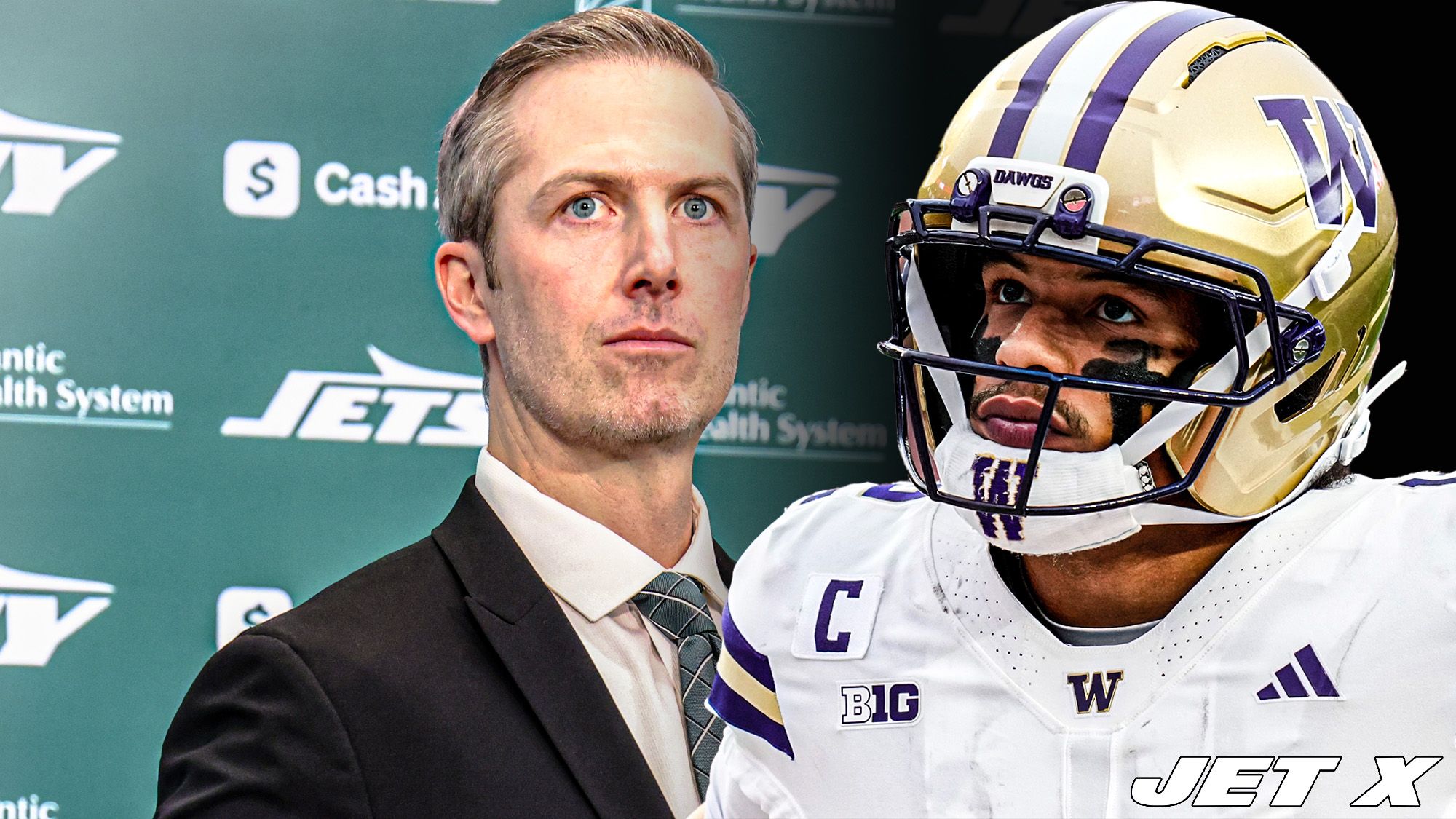
As their pre-draft process intensifies, the Jets hosted Washington wide receiver Denzel Boston on Saturday, according to NFL insider Jordan Schultz.
With the Jets widely expected to take a pass catcher with their second first-round pick at No. 16, could Boston be a legitimate option for Gang Green in that slot?
Denzel Boston draft profile
Boston fits the mold of a true boundary “X” receiver, thanks to his size and physicality. At 6-foot-4 and 209 pounds, he consistently wins at the catch point with strong hands. He also does a great job of boxing out defensive backs to secure contested grabs.
During the 2025 NCAA season, he logged an outstanding 76.9% contested-catch rate and 11 touchdowns, showcasing his upside as a red-zone threat at the next level. He finished with 881 yards on 62 receptions.
While Boston moves more smoothly than expected for a bigger receiver, there are certainly athletic limitations. He lacks high-end acceleration and long speed, which shows up in his ability to separate, particularly when facing press coverage.
Overall, he is projected to be a starting-caliber outside receiver whose bread and butter is the contested-catch game.
Is Boston in play for the Jets at No. 16?
As everyone knows by now, pass catcher is one of the Jets’ most glaring needs, particularly a reliable No. 2 complement to Garrett Wilson.
It has been expected that the Jets will look to fill that void at No. 16. The question, though, is whether Boston is worth the pick at 16.
His value differs depending on who you ask. Some evaluators view him as a first-round level wide receiver, pointing to his ball skills and red-zone production, while others see a Day 2 player, citing limitations in separation and deep speed.
Ranked No. 31 overall on Mock Draft Database’s consensus big board, the consensus suggests the Jets would be better off hoping he is still available at No. 33 instead of reaching at pick 16.
However, a lot of it will hinge on how the draft board.
If names like Makai Lemon, Jordyn Tyson, and Carnell Tate are all gone, Boston is a far more realistic option in that slot. His contested-catch ability and red-zone ability would give the Jets something they have lacked for years behind Wilson, a true X receiver who can win in traffic and produce near the goal-line.
Also, when thinking about the Jets’ potential draft strategy, it is critical to note that Frank Reich’s teams have historically leaned toward bigger-bodied receivers.
From 2018-23, all eight receivers drafted under Reich’s watch weighed at least 200 pounds, and seven measured at least 6-foot-2. Boston checks both boxes.
While that doesn’t automatically make him the pick, it is something to keep in mind.
If the board breaks a certain way, Boston could certainly be the Jets’ pick at No. 16.
