

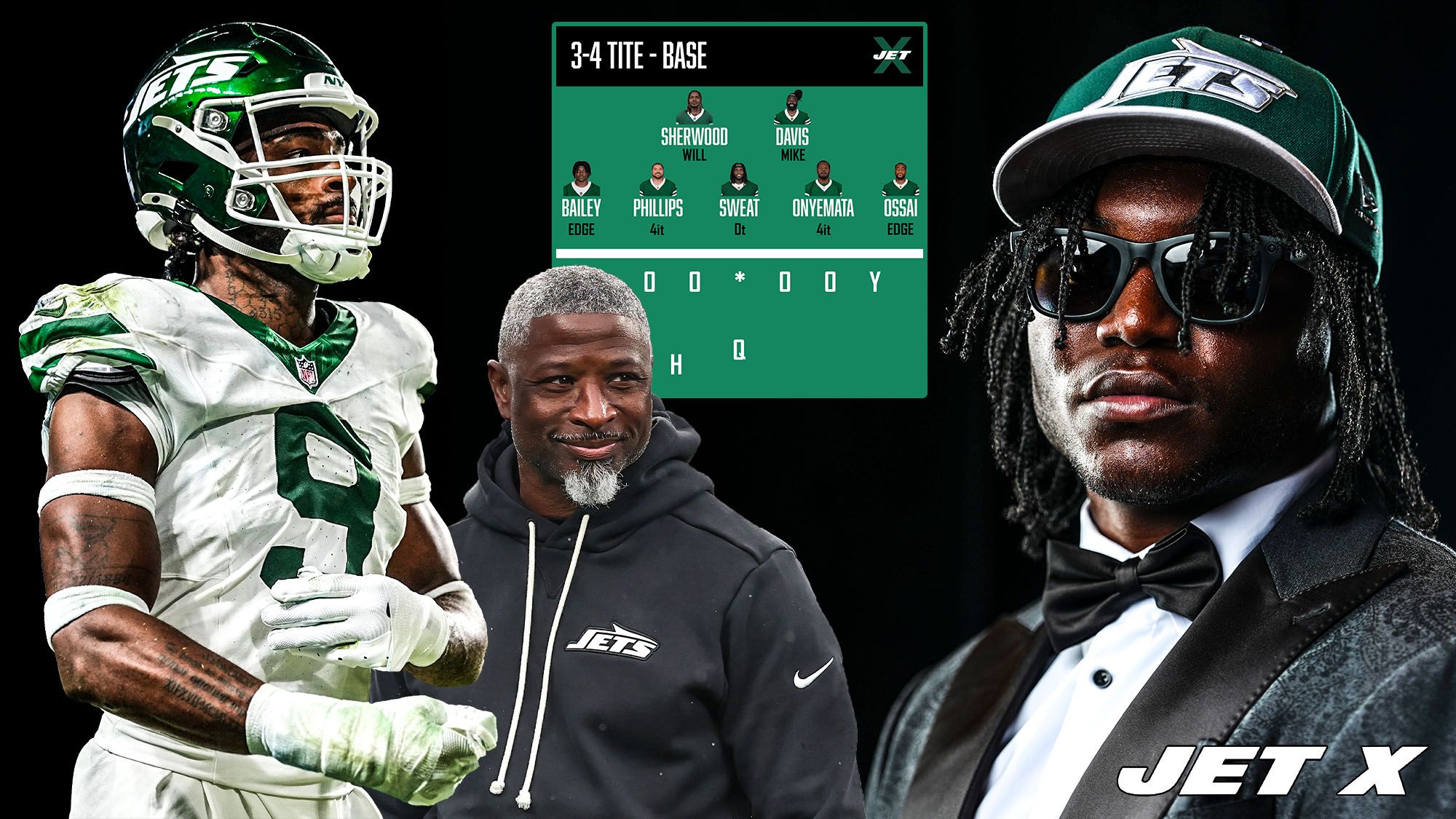
On the surface, it’s pretty easy to imagine the New York Jets’ 2026 front. The two free-agent newcomers hold down the base spots, whereas Will McDonald and No. 2 overall pick David Bailey combine their powers on passing downs.
There’s just one nagging issue at play…
Passing downs aren’t exactly plentiful in the National Football League.
Meaningful? You better believe it. Plentiful? Eh, not really — at least not in the way some fans think.
What is a true passing down?
An NFL offense averages anywhere from 60-to-65 plays from scrimmage per game. The average number of third downs per contest is around 11-13, whereas third-and-long situations occur only a handful of times (3-5).
Don’t confuse passing plays with passing downs.
While on one hand, teams pass over 60% of the time these days — which is a far cry from the more even split a half-century ago — only a fraction of those pass plays can be deemed as true passing downs for a defense.
Simply put, a passing down is a situation in which the defense can view it purely as a passing play. These are the instances that feature wider defensive fronts, mugged-up fronts (standing linebackers showing face in the A or B gaps, most commonly), or overloaded fronts aimed at forcing the offensive line to commit to a full pass-pro slide.
These downs allow defensive architects to go hog-wild, the scenarios that still have Rex Ryan dreaming of wonky, gamed-up schemes that smack the NFL silly without a moment’s notice (i.e., the Jets’ first three games of the 2009 season).
Such elaborate thinking is allowed for one specific reason: The defense doesn’t have to worry about the run. Or, at the very least, the situation affords the defense the right to dare the offense to rush the ball.
The Jets’ specialist problem
As pass-happy as the NFL currently is, this current version of the sport features a different type of pass game. Much of it is designed. It’s a three-step designed game that, in essence, replaces a chunk of the offense’s rushing strategy.
So, unlike the Dan Marino and Peyton Manning-dominated era that featured household pass-rushing names pinning ears back in nasty fashion, today’s defender proceeds with more caution. From a scampering quarterback with legs to run-pass options that work on-the-fly, those true passing downs for which Rex foams at the mouth are becoming fewer.
Considering where New York selected Bailey, there’s just no realistic way he can play only on passing downs. No matter where anybody lands on Bailey’s all-around evaluation, the No. 2 overall pick must play early and often, which means he’ll undoubtedly see the field in all situations.
How, though, does Glenn make this happen? What’s the best approach to take when trying to ease a finesse, run-questionable edge defender into the NFL mix?
First, however, the good news for the Jets is pretty easy to spot: Constructing Aaron Glenn’s passing-down defense is both simple and stuffed with potential.
Subpackage is easy
The Jets’ subpackage front is the easiest thing in the world to identify. In essence, Glenn is primed to pair Bailey with McDonald and call it a day.
4-Down Wide — Nickel
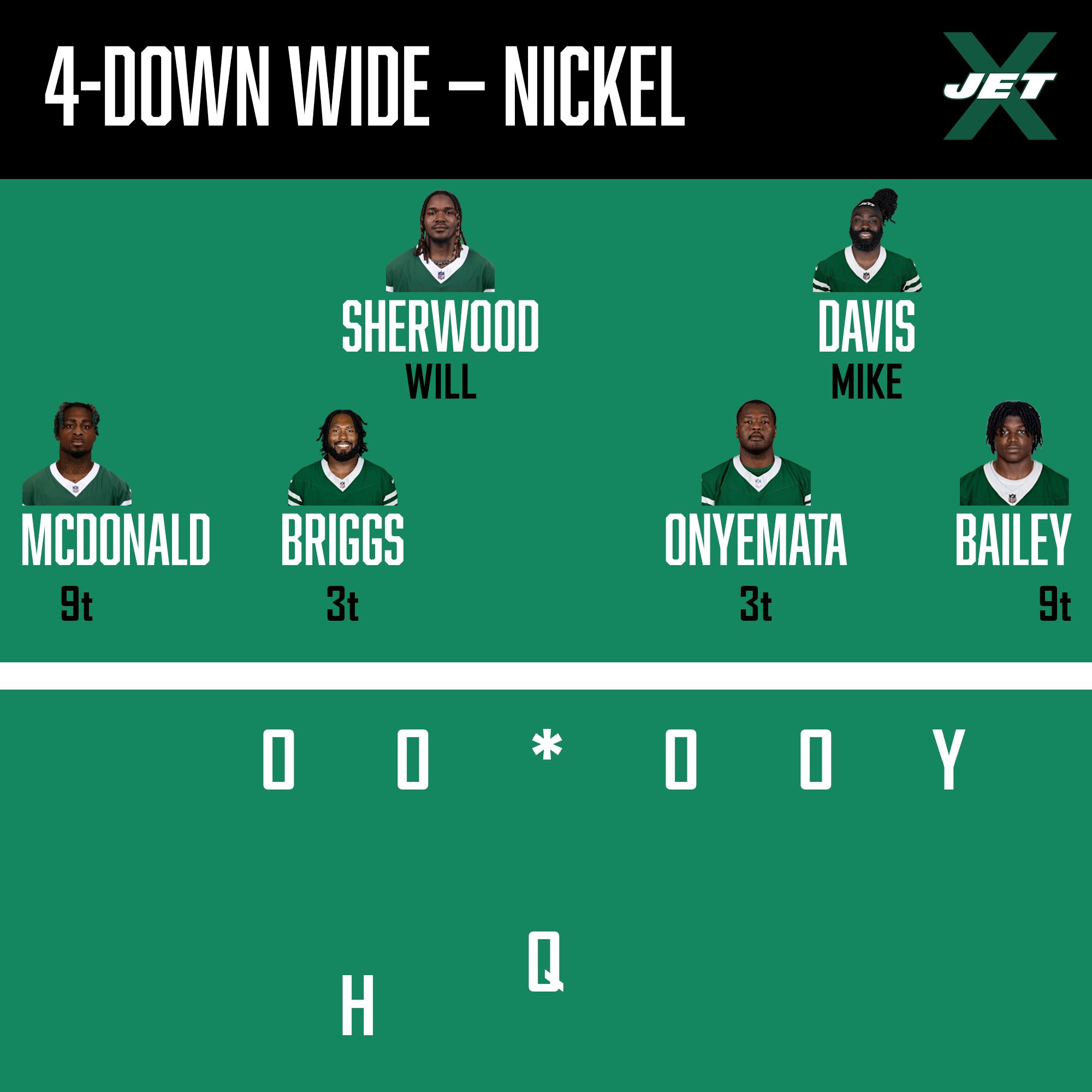
This one is as straightforward as it gets. Think about everything Robert Saleh loves in his gap-attacking ways, while daring the offense to run it up the gut.
4-Down Double-A-Gap — Nickel
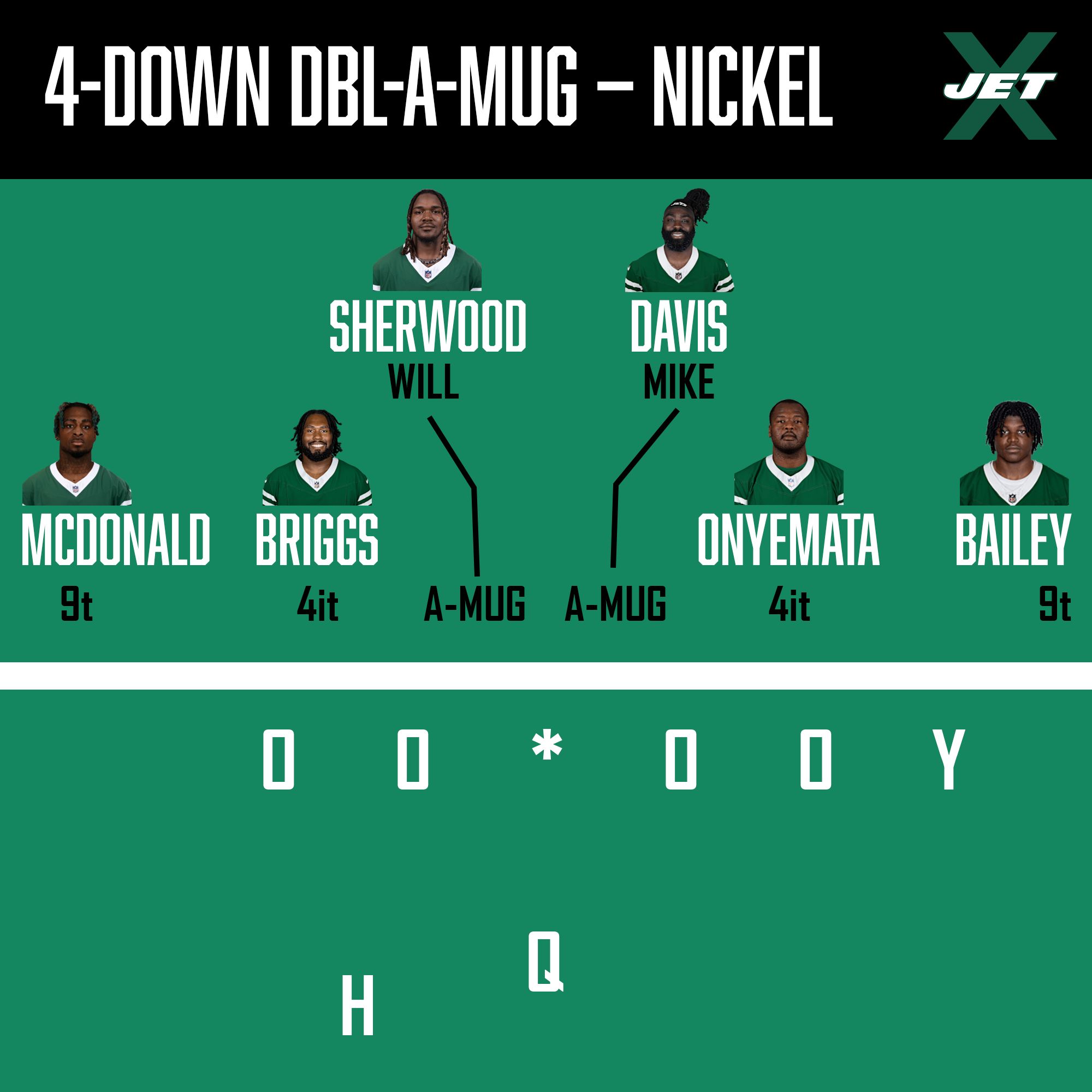
Similar to the 4-down wide look, the double-A-gap look is nearly identical, albeit with both linbackers standing in the A gaps.
2-4 Load Single-Mug — Nickel
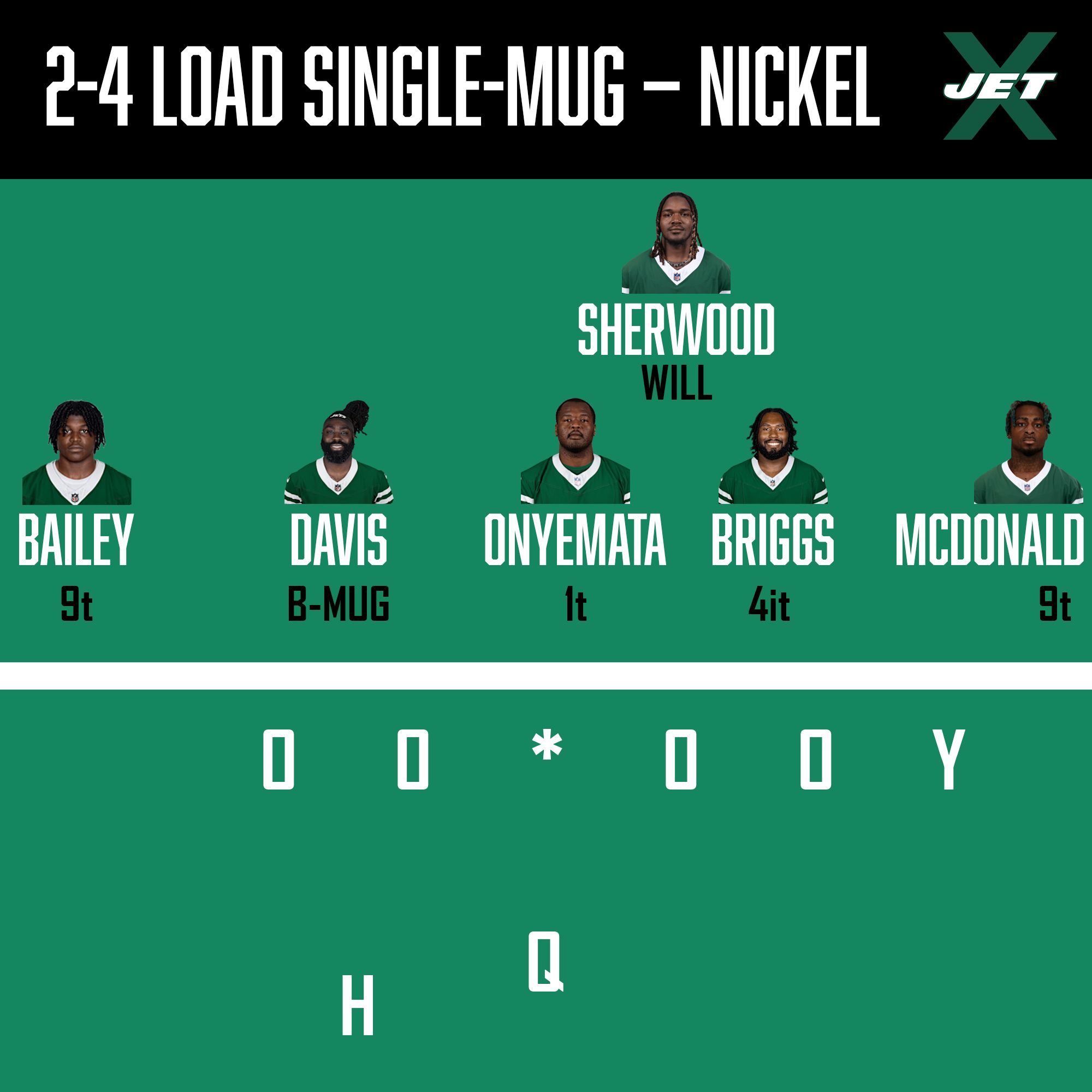
The last example flips Bailey and McDonald — though it can go either way — with the strong side featuring a load front. It’s as third-and-long as it gets, affording the defense the opportunity to game it up front, while simultaneously placing the weak-side edge rusher in a 1v1, plenty-of-space-to-work situation.
The true challenge
On the surface, it sounds pretty simple: The Jets defense can feature Joseph Ossai and Kingsley Enagbare as the edge defenders in base, whereas David Bailey and Will McDonald hold down the subpackage (passing-down) packages. Hey, that’s how Jet X’s New York Jets depth chart currently looks.
It just cannot work that way in reality. Bailey and McDonald would play fewer than 10% of the snaps.
Split the difference
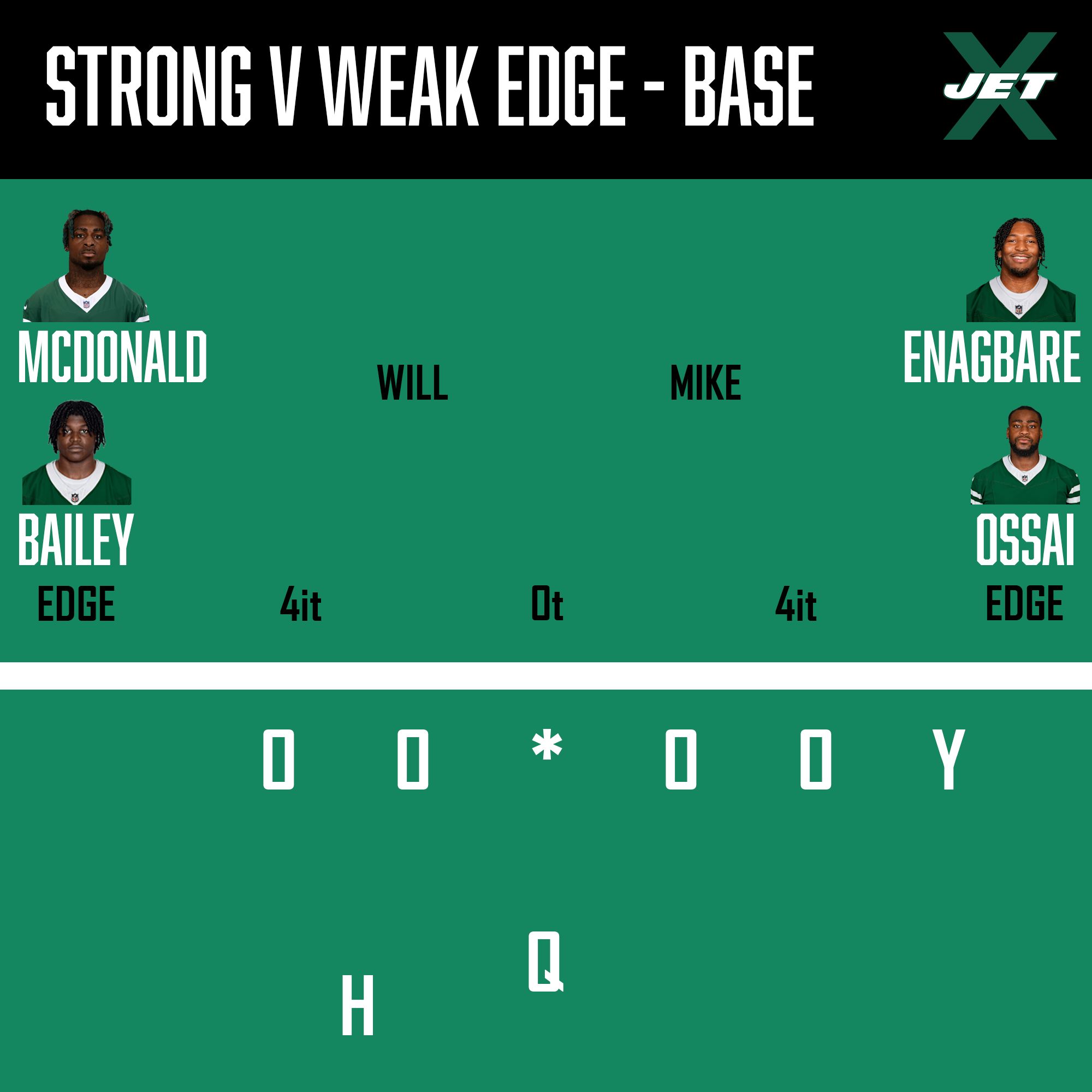
The key issue is how to work Bailey and McDonald into balanced-down packages. So, instead of thinking about utilizing Ossai and Enagbare in base packages, while Bailey and McDonald take the subpackage, Glenn could instead split the difference.
Instead of this:
- Base: Ossai, Enagbare
- Sub: Bailey, McDonald
The Jets can instead split the difference by using Ossai and Enagbare on the strong side, and throwing Bailey and McDonald on the weak side, whereas true passing downs still feature both Bailey and McDonald:
- Strong (base): Ossai, Enagbare
- Weak (base): Bailey, McDonald
- Sub: Bailey, McDonald
4-3 Under (with Leo principles) — Base
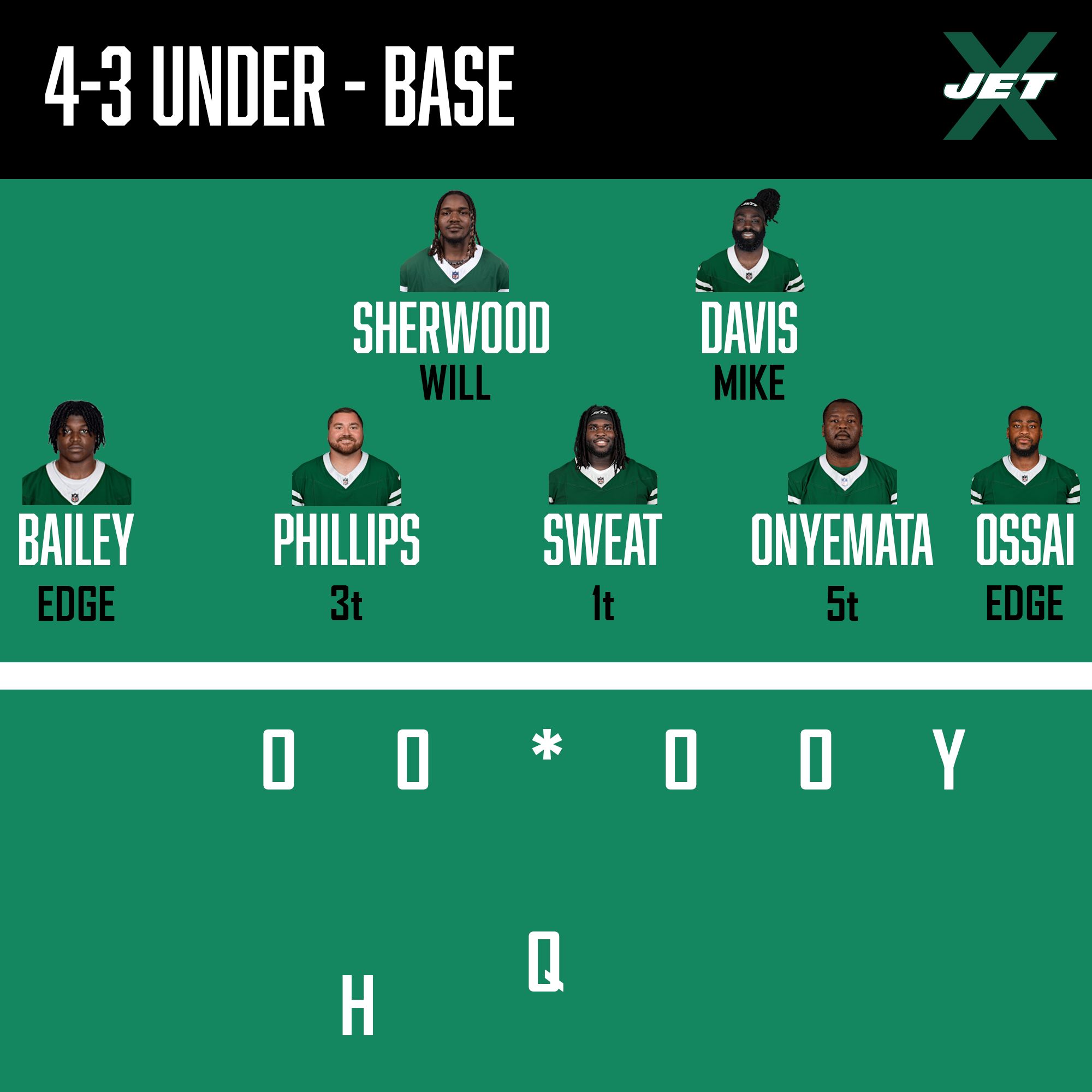
While the 4-3 Under, specifically the 4-3 Leo, made its bones under Gus Bradley and the Legion of Boom Seattle Seahawks defense, this front hasn’t been used the same way in all situations. In fact, 4-3 under and 3-4 under are nearly identical in philosophy.
The entire goal of the Leo (weak-side edge) is to isolate him against the tackle. It’s a front that features the weak-side edge and promotes pass-rushing on most downs (only for that singular position).
If the offense comes out in a balanced 12 personnel look, and/or uses an off-Y set with the threat of split-zone action (sifter, flasher, etc.), that weak-side edge is suddenly thrown into a run-defense jackpot. But hey, that’s a completely different strategic story for another day.
3-4 Tite — Base
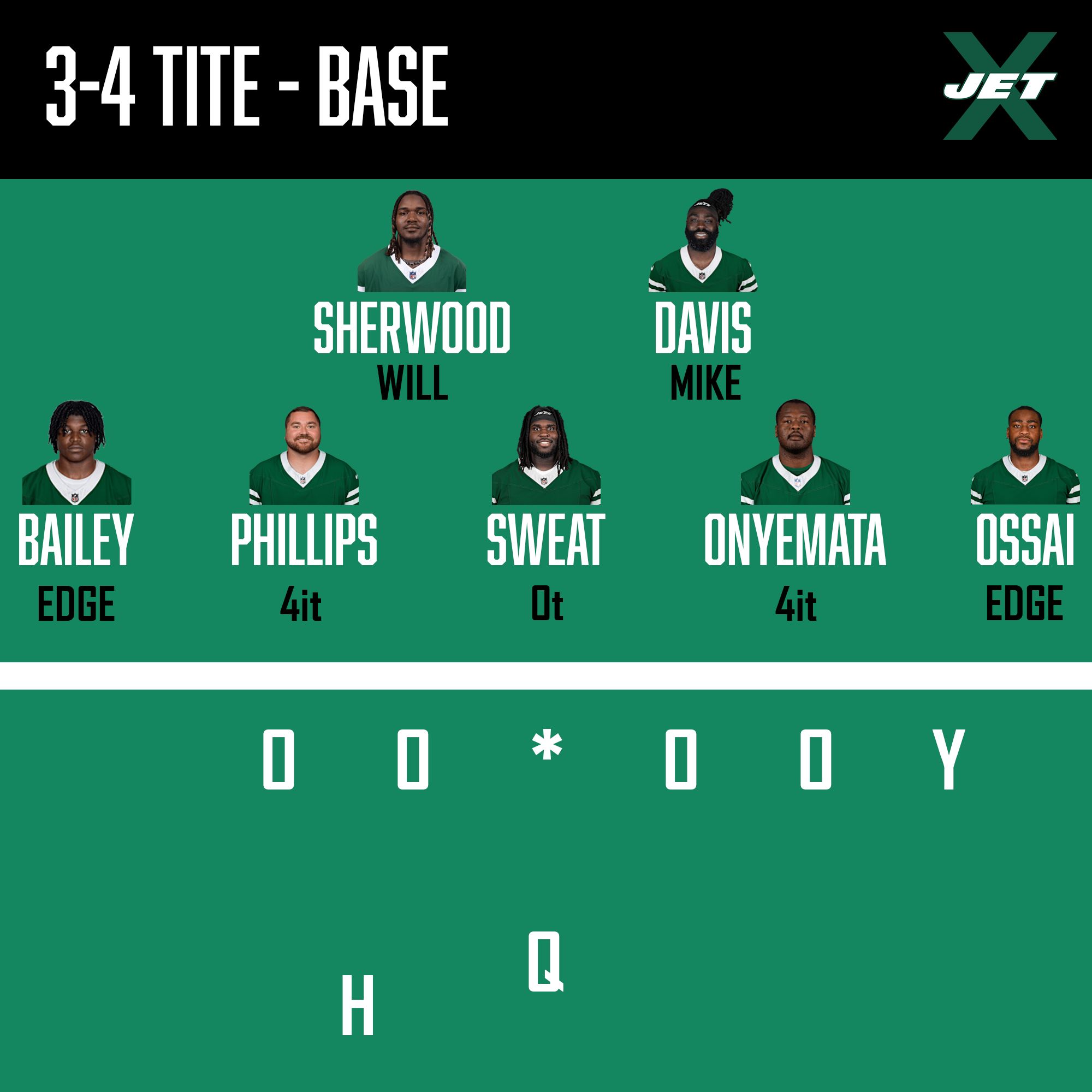
Glenn loves the tite front, and it’s impossible to blame him for it. It’s used in college-specific 3-3-5 defenses that want to push the offensive rush attack wider, preventing them from taking easy yards between the tackles when settled in spread looks.
The Jets’ potential use of tite fronts with Bailey or McDonald on the weak-side edge should help them against the run. (Working in some 5-techs on their side could help even further.)
Make no mistake about the fact that there’s no foolproof way to successfully hide a bad run defender. A football defense is only ever as strong as its weakest link, and for rookie David Bailey (coupled with veteran Will McDonald), much has to be earned on the field.
That isn’t to say a defensive coach is helpless in all situations, however. There are ways to configure every football defense, and that’s New York Jets head coach Aaron Glenn’s job this summer.
