

The New York Jets’ tale of misfortune is not merely one of total dreariness with no glimmers of promise. Rather, it is largely defined by missed opportunities.
It’s not as if the Jets haven’t had talent or flirted with glory. They have had their share of wonderful players and near-miss moments. What makes the life of a Jets fan truly miserable is how masterfully the franchise manages to convince its fanbase that success is on the horizon, only to strip it away the moment hope reaches its apex.
Over the years, the Jets have had quite a few talented players whom fans believed could become valuable pieces, only to see their Jets careers end without them reaching their potential. Many of these players went on to have immense success elsewhere.
On Tuesday, I polled Jets fans on X/Twitter, asking them to name the most misused player in their time following the team. In other words, which player’s potential was the most wasted by the team based on how they were used and deployed?
Here are some of the most popular answers.
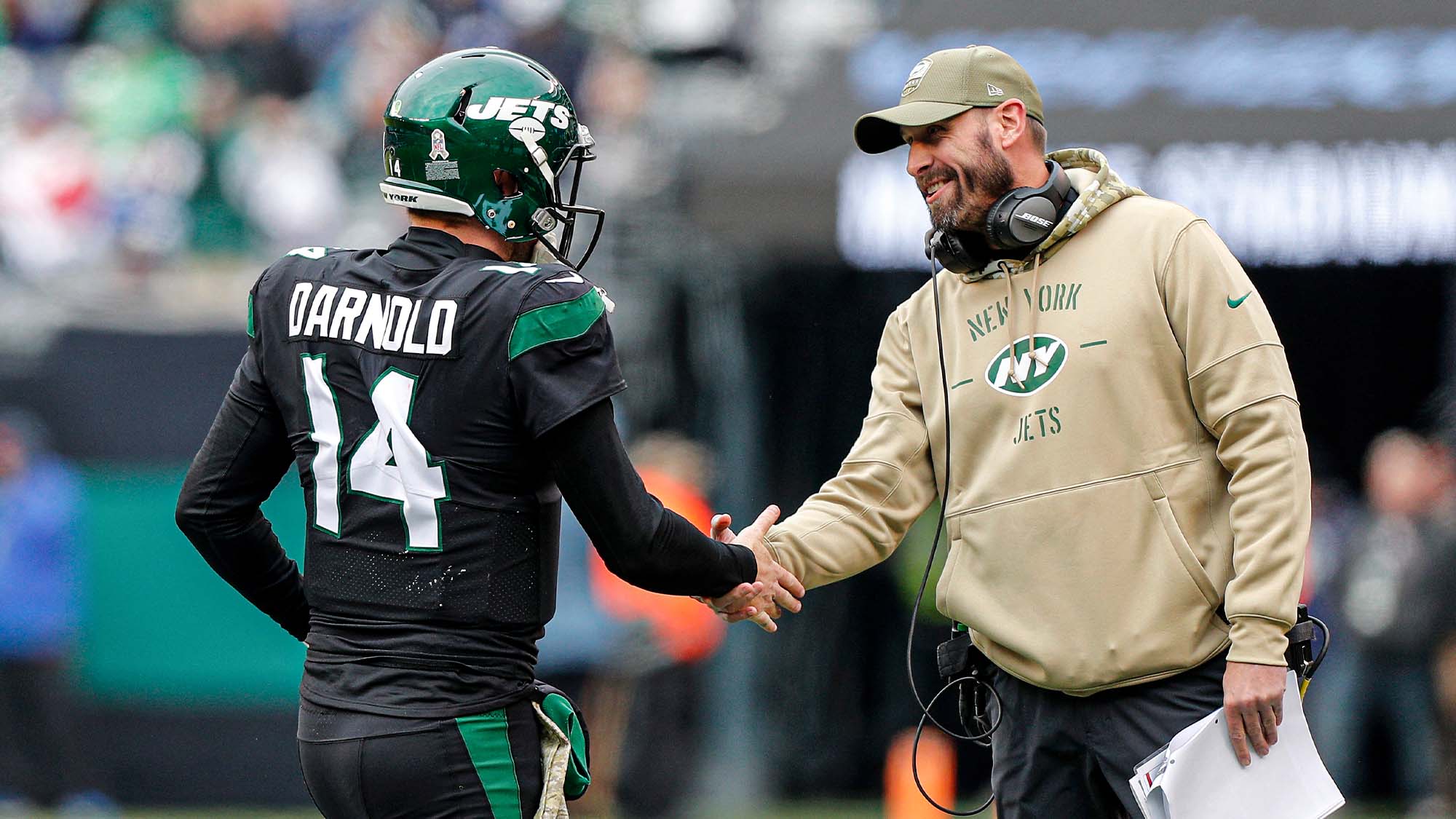
QB Sam Darnold
This was an easy one.
You can use many different verbs to describe the Jets’ inability to properly develop Sam Darnold, whether it’s “squandered,” “botched,” or our word of the day, “misused.”
It started with the coaching staff. The Jets straddled Darnold with a lame-duck defensive head coach in Todd Bowles and an unproven offensive coordinator in Jeremy Bates. After one year, they forced him to learn a new scheme, and it was the scheme of one Mr. Adam Gase, who had a very uninspiring three-year run in Miami.
Then, you have the roster. New York never gave Darnold a quality group of receivers or a competent offensive line. It became impossible to evaluate Darnold’s development.
It might be more accurate to describe Darnold as “mishandled” than “misused”, but we can still apply the latter term. Neither Bates nor Gase had the right scheme to maximize Darnold’s talents. Gase, in particular, wanted Darnold to be his version of Peyton Manning, but that never came close to working.
Later in Darnold’s career, Kevin O’Connell and Klint Kubiak showed the world what Darnold could do when placed in a scheme that let his arm talent shine. The Vikings and Seahawks asked Darnold to make quick, simple reads, allowing his physical gifts to rise to the forefront, while the bone-headed decision-making that haunted him in New York was mostly hidden thanks to the simplicity of the schemes.
We’ll never know whether Darnold would have worked out in New York with a better roster and/or coaching staff. Perhaps he was always destined to undergo six years of growing pains until he found his footing. Some players develop that way.
What we do know is that the Jets did about as good a job as they could of making Darnold’s life difficult.
RB Le’Veon Bell
While the Jets mostly neglected Darnold’s supporting cast during his three-year run as the starting quarterback, they did make one premium investment: signing Le’Veon Bell to a four-year, $52.5 million deal.
The contract was a massive failure. Bell was released just two games into his second season with the Jets. In 17 games, he ran for just 863 yards and three touchdowns, adding 500 receiving yards and one touchdown. He averaged 3.3 yards per carry.
Despite the poor results, some Jets fans believe Bell was misused during his brief time in New York.
Bell would agree. Since leaving New York, Bell has consistently chastised Adam Gase for his play-calling as the Jets’ head coach.
Given that Bell came to the Jets with over 1,500 career touches, it’s probable that he still wouldn’t have returned to his superstar peak even if the Jets had a perfect plan for him, but it’s clear that the Jets actually had no plan at all for the running back whom they paid $35 million guaranteed.
RB Breece Hall
Breece Hall was the player who inspired me to ask this question. Earlier today, we broke down how Hall was badly underutilized in the passing game during the 2025 season, seeing just 48 targets in 16 games.
Jets fans agree that Hall, as productive as he has been in his four-year career, is a victim of misuse. The primary complaint is the team’s inability to fully unlock his potential in the passing game.
Since Hall entered the NFL, the only running backs averaging more yards per reception on more total receptions are Christian McCaffrey and Bijan Robinson. His pass-catching talent is in an elite class, and it’s time for the Jets to utilize him accordingly.
WR Al Toon
Turning back the clock, iconic Jets wideout Al Toon was chosen to represent the 20th-century fans.
The 10th overall pick of the 1985 draft, Toon showed off his ceiling over his first four seasons, earning three Pro Bowl trips and two All-Pro nods. In 1988, his fourth season, Toon led the NFL with 93 receptions.
However, Toon’s prime was cut short, as concussions began to take him off the field and limit his effectiveness when he was on it. Toon had to retire in 1992 at just 29 years old after suffering nine career concussions.
It’s possible that the Jets could have protected Toon better and extended his prime by reducing his usage on passes over the middle, which is where he suffered many of his head injuries. Toon’s toughness, though, was among his best traits, as he was never afraid to make those catches.
Still, whenever a player consistently suffers from the same injuries throughout his career, it is always fair to wonder if his team(s) could have done something differently to protect him. Toon is one of the greatest receivers in Jets history—he still ranks fourth on the all-time receiving list (6,605)—and it’s a shame that he only got to play 107 games with the team.
CB Sauce Gardner
This was an interesting vote.
The criticisms are fair. Gardner’s lanky frame certainly contributed to him missing some tackles and being dragged on others. He also developed issues with penalties as his Jets tenure progressed.
The third point, though, is the most critical regarding his usage. Statistically, Gardner was arguably the most dominant cornerback in the NFL across his Jets tenure when it came to preventing yards and touchdowns, but he rarely erased the No. 1 receiver on the opposing team. The Jets usually had him stick to the left side of the field in zone coverage, which allowed opponents to move their star receiver away from Gardner whenever they wanted.
To be fair, few teams in today’s NFL use their top cornerback this way. The days of the shutdown, island corner are behind us, thanks largely to rule changes that benefit the offense. It’s difficult for defenses to survive anymore with strict man-to-man schemes that do not involve any matching principles; the rules don’t let corners be physical, and offenses have gotten too good at taking advantage of those rules to scheme people open.
Still, it is fair to say that the Jets could have found more ways to turn Gardner into a game-flipping player, rather than someone who just quietly does his job exceptionally well on a down-to-down basis. But even without them showcasing his skills to the absolute maximum, they still fetched two first-rounders and Adonai Mitchell for his services, so the Jets are doing just fine.
RB Bilal Powell
Bilal Powell, the eighth-leading rusher in Jets history, received some votes.
Powell spent all nine of his NFL seasons with the Jets, serving as a reliable complementary back. He averaged 4.3 yards per carry and 7.6 yards per reception, consistently making an impact in both phases when called upon.
It is fair to wonder, though, if the Jets missed an opportunity to see what Powell could do as a lead back. When given chances to carry the load, Powell rose to the challenge.
Across 10 career games with at least 18 rush attempts, Powell averaged 109.9 rushing yards per game on 4.9 yards per carry, while scoring six touchdowns. Per 16 games, that averages out to a pace of 1,758 yards and 10 touchdowns—and he did it efficiently, so it’s not as if he was stockpiling numbers off sheer volume.
To boot, the Jets went 9-1 in those 10 games.
There were also stretches where Powell looked electric as a receiver, particularly late in the Jets’ successful 2015 season. During a five-game winning streak late in 2015, Powell caught 27 passes for 232 yards and two touchdowns.
It’s possible that Powell never would have had the durability to handle a featured role; even as a complementary back, he struggled with injuries throughout his career. Still, it’s fair to wonder what could have been if the Jets had given Powell the key to the offense at some point.
RB Danny Woodhead
Powell isn’t the only complementary running back who Jets fans think could have been unleashed further.
Former Jets UDFA standout-turned-Jet villain Danny Woodhead was a popular choice.
After signing with the Jets in 2008 as an undrafted free agent out of Chadron State in Nebraska, Woodhead spent three seasons with the Jets, playing in 11 games from 2008-10. Most of those (10) came in 2009, when he carried the ball 15 times for 64 yards and no touchdowns across 10 games. Woodhead mostly played on special teams.
The Jets released Woodhead after the first game of the 2010 season, and he was picked up by the rival Patriots four days later, one day before the AFC East rivals squared off at New Meadowlands Stadium.
Woodhead did not play, and his intel was not enough to prevent a 28-14 Jets win, but he quickly emerged as a revelation for New England. A dynamic two-way threat, Woodhead finished the year with 926 yards from scrimmage (547 rushing, 379 receiving) and six total touchdowns in 14 games.
Woodhead went on to play three seasons in New England, racking up 2,181 yards from scrimmage and 14 total touchdowns. He then found success with the San Diego Chargers, including two 1,000-yard seasons from scrimmage (2013 and 2015). Woodhead had more receiving yards (1,429) than rushing yards (919) in his Chargers career.
The Jets messed up by letting Woodhead walk out the door.
LB James Farrior
Defensive players did not get much attention on this list, but James Farrior is an excellent pick.
The eighth overall pick in 1997, Farrior spent most of his first four seasons in a reserve outside linebacker role for the Jets, a change from his inside linebacker role in college. It was not a very successful transition, as Farrior started 27 of his 60 games and recorded just 4.5 sacks.
In 2001, Farrior moved back to inside linebacker, starting all 16 games, and he had a breakout season, recording 145 total tackles, three forced fumbles, nine passes defended, and two interceptions.
However, the Jets were reluctant to invest in Farrior after one strong year, and he signed with the Pittsburgh Steelers in free agency. In Pittsburgh, Farrior proved that his elite play as an inside linebacker was for real.
Farrior spent 10 seasons in Pittsburgh, starting all 154 of his games and racking up over 1,000 tackles. Farrior made two All-Pro appearances, including a second-place finish in Defensive Player of the Year voting in 2004. He contributed to Super Bowl titles in 2005 and 2008.
It is interesting to look back at Farrior’s Jets career after seeing what played out in the 2026 NFL draft. The Jets had a chance to make a very similar selection at No. 2 overall with Ohio State’s Arvell Reese, a collegiate inside linebacker who is expected to transition to the edge in the NFL.
Reese rarely rushed the passer in college, but his immense success on those rare opportunities, coupled with his outstanding athletic traits, was enough to convince many scouts that he could become a star pass rusher in the NFL. The Jets, though, passed on Reese for David Bailey, a more proven pass rusher who profiles as a more natural fit on the edge. Reese ended up going to the Giants with the fifth overall pick.
Way back when, the Jets attempted a similar experiment with Farrior, only to find out he was better at his college position all along. Unfortunately, another team reaped the rewards.
Today’s Jets seemed to be convinced that Reese will have similar issues with becoming a successful pass rusher at the NFL level.
