
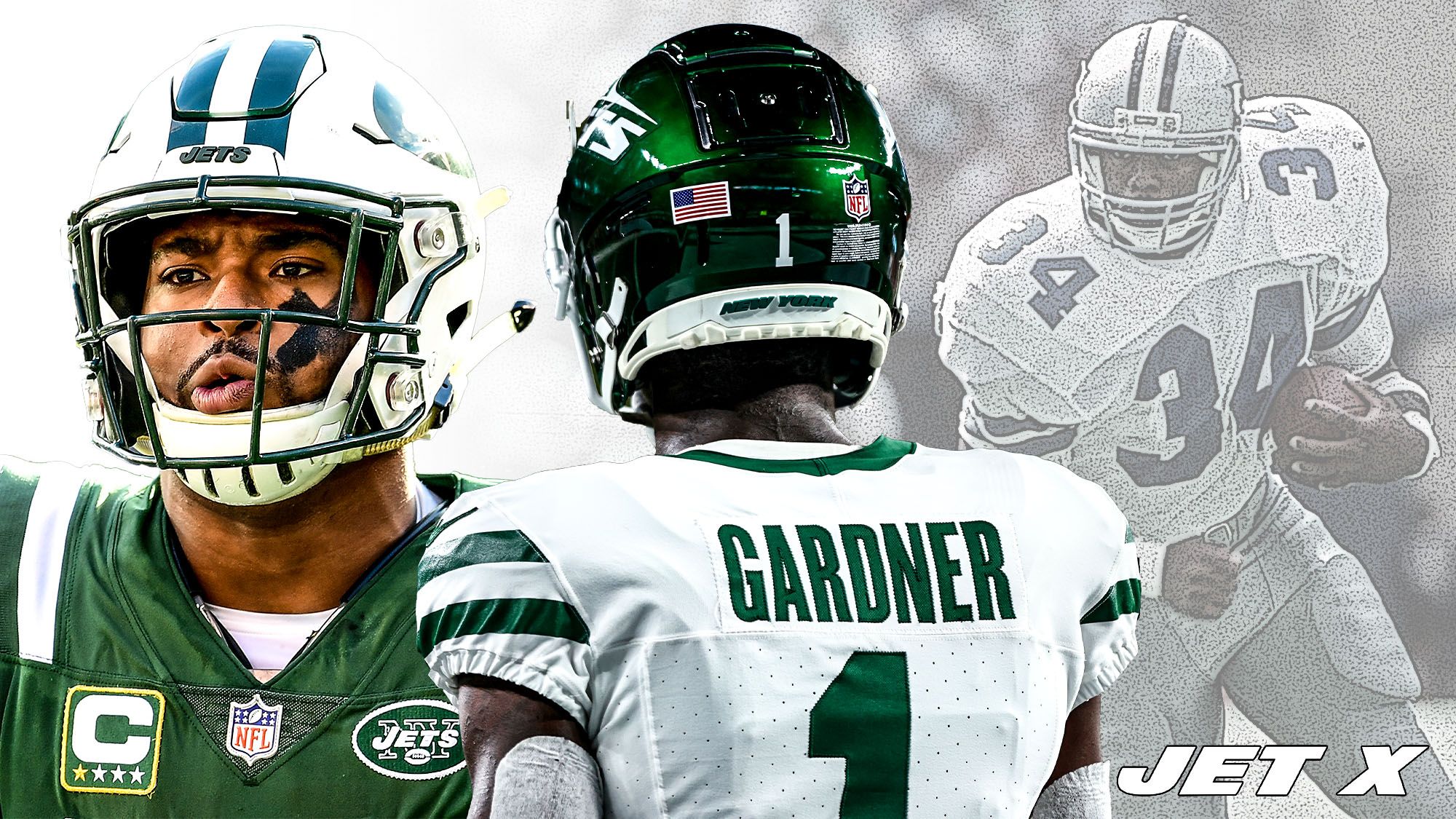
For those old enough to experience it, the Herschel Walker trade remains the gold standard for rebuild kick-starts. On Oct. 13, 1989, the Dallas Cowboys dealt their best player to the Minnesota Vikings.
What they received was nothing short of a magnificent NFL draft haul. While the details of the massive trade are always fun to remember, they serve no purpose for the idea of the day.
In short, a 0-5 Jimmy Johnson-led Cowboys team traded their best player in an NFL where such a thing is hard to fathom. When excluding the San Diego Chargers—the third cog in the wheel—the blockbuster deal featured five players and eight draft picks.
Johnson, a first-year professional football head coach (having previously led the Miami Hurricanes to domination), would go on to use those picks to select the likes of Emmitt Smith, Russell Maryland, and Darren Woodson.
Of course, Dallas’ fortunes ultimately turned around, as evidenced by the early 1990s dynasty that featured three Super Bowl appearances in four seasons. The Walker deal turned out to be such a coup that Jimmy Johnson’s point-driven NFL draft value chart was established—something still in use today.
Thus, the legend of the Herschel Walker trade commenced. Over three decades later, legend remains firmly entrenched in our football hearts.
Our football minds are an entirely different story, however, and it’s this part of the story that introduces the current New York Jets. Dealing a couple of All-Pro defenders at the trade deadline this past season placed Jets fans in the Herschel Walker-esque frame of mind.
There are just a few things to consider if/when believing an organizational move like this is the rebuild appetizer many believe it to represent.
The Jets’ deadline moves are a positive
Make no mistake about it: The New York Jets’ decision to offload Sauce Gardner and Quinnen Williams is a net-positive.
Firstly, the obvious positives come in the form of incremental draft capital. The Jets are now equipped with five first-rounders and three second-rounders in the next two NFL drafts.
That alone is worth the price of long-term packing.
Perhaps more importantly, the idea that the Jets’ lightbulb moment hit the Aaron Glenn regime early in the 2025 season is much more encouraging. Starting a discouraging 0-7 in his first year, it’s possible that the defensive-minded head coach understood what had to be done …
Trade away the best defensive pieces with an eye on loading up the offensive side of the ball—in an offensively efficient football world. This would mean general manager Darren Mougey gets multiple top-of-the-draft cracks at finding the team’s franchise quarterback, along with premium pick versatility in the weapons department.
Of course, that’s only the hope. Either way, it’s safe to say that few would argue against the Sauce and Big Q trades.
At the same time, making those moves does not automatically equate to near-automatic promising status. An organization’s mindset shifting from a win-now to a stockpile approach is a challenging and tricky endeavor—in more ways than one.
Look around the league: This isn’t 30 years ago
Interestingly, as warm and fuzzy as the potential (and unknown) benefits of draft capital may be, the NFL is a foreign land for far too many individuals. Making this move seemingly doesn’t create the same turnaround odds as they once did.
Let’s examine the league for examples where additional draft capital led to a surefire rebuild …
The Kansas City Chiefs surely didn’t rise to prominence by way of a Walker-esque deal. In 2017, the same year the most significant needle-mover was drafted No. 10 overall, Patrick Mahomes, Kansas City had only six selections (one first, one second, and one third).
In fact, the only year the franchise had more than one first-round pick was 2022, when cornerback Trent McDuffie and edge George Karlaftis were chosen. In 2017, 2018, and 2021, KC had no first-rounder to even speak of.
Can the Philadelphia Eagles suffice as the example needed? Not really.
Incredibly, only once in the last 32 drafts has Philadelphia enjoyed the benefit of having an additional first-round selection. Other than defensive tackle Jalen Carter and edge Nolan Smith in 2022 (the same draft year the team had zero second-rounders, and two thirds), the Eagles have either chosen once or not at all in the first round.
Maybe more recent turnaround examples can lift our spirits. How about the Chicago Bears? Ah, ok; this one helps the cause.
Chicago entered the 2025 NFL draft with a first-round pick and three second-round picks (zero third-rounders. The franchise also had two firsts in 2024, yet it didn’t have a single second-rounder and only had five picks total. In 2023, the Bears were loaded with capital. They had a first, two seconds, a third, and two fourths (10 total picks).
All told, the Bears could be described as flipping the script courtesy of extra draft capital. Then again, who was the superstar they used as the chip? The real asset that acquired additional capital was the 2023 No. 1 overall pick they sent to the Carolina Panthers, who ultimately tabbed Bryce Young as their savior.
The Los Angeles Rams are another recent championship squad, yet they’ve been notorious for trading away draft capital. Sean McVay’s team has only had one first-round pick in the last nine years. Acquiring Jalen Ramsey from the Jacksonville Jaguars for two first-round picks in 2019 is just one of the Rams’ many counter-rebuild-culture transactions made in recent years.
The perennially competing Buffalo Bills dished out a first for Stefon Diggs, the Eagles did the same for AJ Brown, and the San Francisco 49ers acquired aging back Christian McCaffrey for a bevy of selections.
What in the world is going on?
There really aren’t modern examples that could even dream of falling under the “superstar trade for draft capital” rebuild kick-start column. In fact, the teams continuously attempting to travel down that road remain stuck in the mud.
We’ve been here before, folks
One of the more misguided fan speak phrases this past offseason was as follows: “Finally, the Jets are doing things the right way. They’re not going the superstar or aging veteran route (via Aaron Rodgers), and they’re going about their business quietly, while coming correct.”
Is everybody three years old? We literally just went through the same thing with Joe Douglas a handful of years ago.
Douglas’s Jets decided to trade several players to acquire additional selections. They traded Jamal Adams to the Seattle Seahawks for two first-rounders, offloaded Leonard Williams to the New York Giants, and packed Sam Darnold’s bags for Carolina.
Ok, so there was no Aaron Rodgers type to deal with, but the team had an actual quarterback in Darnold—as evidenced by what happened to his career since running into the likes of Kyle Shanahan and Kevin O’Connell. And yet, despite hitting on four of their five first-round picks in 2021 and 2022 (Sauce Gardner, Garrett Wilson, Jermaine Johnson, and the oft-injured Alijah Vera-Tucker), they have still stunk up plenty of joints.
We’ll have to monitor the Dallas Cowboys’ post-Micah Parsons future—with a couple of additional firsts—but the Green Bay Packers are still holding strong (despite the unfortunate Parsons injury).
Folks, it’s no longer 1989.
What Aaron Glenn envisions
One usually-contending team that has not yet been mentioned is a franchise near and dear to Aaron Glenn’s heart, and it’s tough to believe this isn’t the vision.
Not only did the Detroit Lions have two first-round selections in 2022 and 2023, but the organization drafted extremely well. Jahmyr Gibbs, Jack Campbell, Aidan Hutchinson, and Jameson Williams were the four collegiate ballers taken in those four slots
Better yet, their presence coincided with the rise of the Lions.
Unfortunately, their presence isn’t the only variable.
Glenn’s second year in Detroit is when the Lions really turned the tide. After starting slow, the 2022 Lions gained momentum en route to a near-postseason berth. Was it simply about the young talent drafted, or was there something more at play?
It was this season when head coach Dan Campbell spotted a hungry young offensive mind. It was this season when Ben Johnson took over for Anthony Lynn as the team’s offensive coordinator.
If the Detroit Lions drafted so well, and the talent is a variable that cannot be disputed, then how in the world did the 15-2 squad from a year ago enter Week 18 in 2025 as an average 8-8 team—most recently falling to Max Brosmer and the Vikings on Christmas Day?
How? How in the world is that fathomable if the idea of football talent is so infallible?
Did center Frank Ragnow make that much of a difference? Or, could it be that the team’s new offensive play-caller in 2022 really drove the results for the team, and for the one-time Pro Bowler in his first four seasons, which suddenly morphed into three-straight Pro Bowls to finish his career under Johnson?
Furthermore, how could a franchise that had two first-round picks in 2024 finish with a meager 5-12 record, only to then start 11-4 the following season, after adding just a singular first-round talent? If anybody were to ask Chicago Bears fans that question, the answer would be near-unanimous at this point.
Here’s the truth: This salary-cap football world spreads the talent much more evenly than we can even notice—which was anything but the case for the early-1990s Cowboys and the competition. It’s just tough to see at times, when considering how an organization’s processes lift and/or drag down player production.
Coaching and process is the religion, not talent
The Herschel Walker deal happened in an entirely different world, yet some New York Jets fans view it as the genesis of positive things to come. Look, I get it; there isn’t much of anything else to hold tightly.
But that’s precisely why the Jets’ pivot from “competitive team in 2025” to “total rebuild” must be examined and viewed appropriately. This not only includes the fan’s perspective but also the organization’s.
Offloading defensive stars in Sauce and Big Q for capital was the right move, in principle. If it were done in the name of “savior status,” however, then it’ll only lead to more pain.
It’s “savior status” that leads to “religion of rebuild,” and it’s “religion of rebuild” that leads to more of the same nonsense. To first solve the problem, an answer must exist that actually identifies the problem.
While the current Jets roster isn’t loaded with talent, the odds that talent alone is the reason for their failures are as slim as any. (Just by accident, courtesy of NFL rosters changing anywhere from 30-40% each offseason, the Jets should have had at least one successful season in the last nine years if talent drove the needle that much.)
The odds that coaching and organizational processes matter most are significantly better.
Attention, Woody Johnson and the New York Jets: Dealing your defensive superstars for draft capital in this highly efficient offensive world is a net positive. Just make sure you don’t unwittingly buy into the “religion of rebuild” idea so many individuals in the NFL misguidingly preach.
That is not what gets it done. Not anymore. Definitely not since the NFL instituted the salary cap in 1994, and most definitely not in the last decade-plus, since play-calling became the creme de la creme of franchise success.
Besides, what’s a rebuild anyway, in this day and age? Just ask fans of the Chicago Bears, Jacksonville Jaguars, and the favorite around these parts, the New England Patriots.
And if you think it’s as simple as, “Hey, they have a quarterback,” well, all I can say to that is the following: You have bought into the “religion of rebuild.” The quarterback position certainly matters—a lot—but having the right people running the show allows for the quarterback to matter the way he should, and that, in turn, allows things to change the quickest.
